KTR marks 14 years of Sagaraharam, Telangana's defining rally
Synopsis
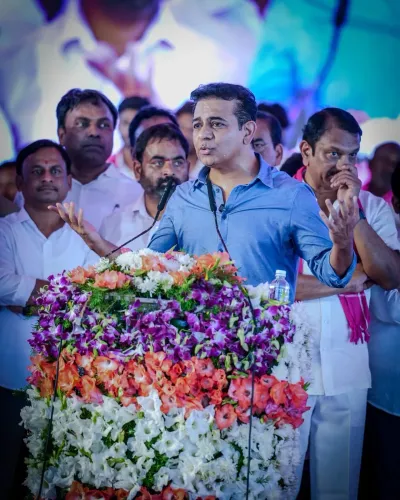
On the 14th anniversary of the historic Sagaraharam rally, BRS working president K. T. Rama Rao saluted the Telangana activists who defied baton charges and barricades to gather at Hussain Sagar on 30 September 2012 — a moment that helped turn a regional agitation into a new state.
Key Takeaways
BRS working president K.
Rama Rao posted a tribute on 30 September 2026 marking 14 years of the Sagaraharam rally.
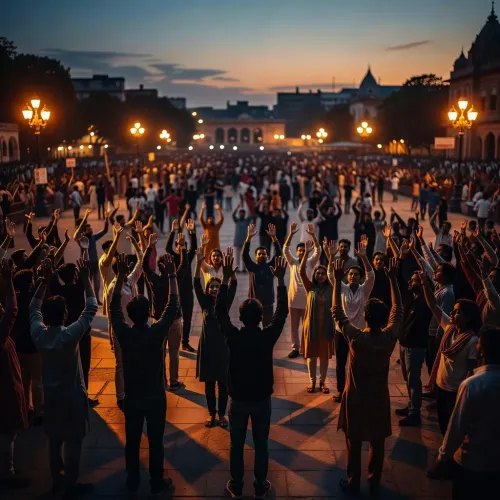
The Sagaraharam of 30 September 2012 saw activists defy restrictions, barricades, baton charges, and rubber bullets to assemble at Hussain Sagar in Hyderabad .
KTR described the rally as a historic moment in which people from all sections of society ('sabbanda vargālu') united to advance the statehood cause.
The agitation intensified after K.
Chandrashekar Rao 's 2009 fast-unto-death and culminated in the Andhra Pradesh Reorganisation Act of 2014 .
Telangana formally became a state on 2 June 2014 , following years of sustained popular movement.
The BRS routinely invokes movement anniversaries as a political assertion of its founding role in Telangana's creation.
Fourteen years after a city's lakeshore became the stage for one of the most defiant moments in Telangana's statehood struggle, BRS working president K. T. Rama Rao paused on 30 September 2026 to salute the movement's spirit — and to remind the state who stood there when it mattered most.
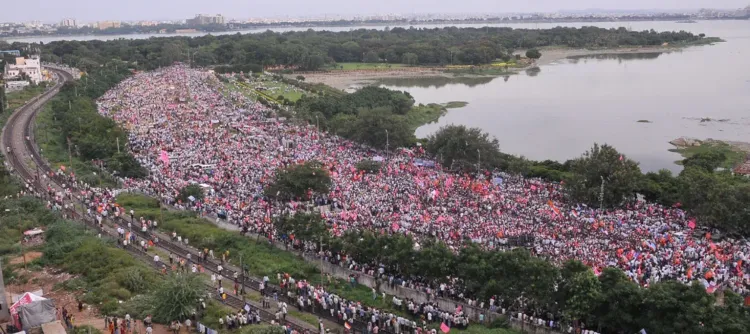
In a post in Telugu, KTR recalled the Sagaraharam rally of 30 September 2012 as a 'historic chapter' (chārithrātmaka ghattam) in which activists and supporters of the Telangana cause defied restrictions, barbed-wire barricades, baton charges, and rubber bullets to assemble on the banks of Hussain Sagar in Hyderabad. 'People from all sections of society,' he wrote, gathered on the lakefront and made the movement soar — thwarting, in his words, the 'conspiracies of the combined rulers' (ummadi pālakula kuttralanu tippikodutū). He closed with a movement salute to the people of Telangana — Jai Telangana ✊ — marking 14 years of the landmark demonstration.
What made the 2012 Hussain Sagar rally a turning point
The Sagaraharam was not simply a protest march. It took place at a moment of acute political pressure, with coastal Andhra leaders and the joint state administration actively working to contain the momentum of the Telangana agitation. Security forces deployed restrictions across the region, yet demonstrators from across castes and communities — what KTR describes as sabbanda vargālu, or people of every class — converged on the Hussain Sagar lakefront in a show of mass resolve that became a defining visual of the statehood struggle.
The agitation had been gathering irreversible force since 2009, when Telangana Rashtra Samithi chief K. Chandrashekar Rao's fast-unto-death re-energised the decades-old demand. Sagaraharam in 2012 was among the high-water marks of that intensified phase — a street-level assertion of regional identity that the TRS and allied voices would point to as proof of the movement's popular, cross-class base.
From Hussain Sagar in 2012 to statehood in 2014
The agitation's persistence ultimately compelled Parliament to act. The Andhra Pradesh Reorganisation Act was passed in 2014, and Telangana formally came into existence on 2 June 2014 — the culmination of a struggle measured in decades, not months. The TRS, which later renamed itself the Bharat Rashtra Samithi, has anchored its political identity to that founding narrative ever since.
Why BRS keeps the movement's memory alive
Anniversary commemorations of agitation milestones are not ceremonial formalities for the BRS — they are political statements. More than a decade after bifurcation, the party routinely invokes the 2009–2014 struggle to assert its legitimacy as the original custodian of Telangana's aspirations. In a state where the Congress now holds power, marking a rally in which activists defied 'combined rulers' carries a pointed, present-tense charge. The lakefront at Hussain Sagar is not just a memory; it is a recurring argument.
Point of View
Not just nostalgia — it repositions the BRS as the moral guardian of Telangana's identity at a moment when the party is in opposition to the Congress government in the state. By evoking 'combined rulers' who tried to suppress the movement, the framing draws an implicit parallel to present-day adversaries. Anniversary posts anchored in street-level sacrifice are a well-worn BRS playbook move that keeps the founding narrative fresh for a younger electorate that did not witness the agitation. Whether such sentiment translates into electoral recovery remains the central question for the party heading into the next assembly cycle.
NationPress
30 Sept 2026
Frequently Asked Questions
What was the Sagaraharam rally of 2012?
The Sagaraharam was a large-scale protest march held on 30 September 2012 on the banks of Hussain Sagar lake in Hyderabad, where Telangana activists and supporters defied police restrictions, barricades, baton charges, and rubber bullets to demand a separate Telangana state.
Why is Sagaraharam significant in the Telangana statehood movement?
Sagaraharam is remembered as one of the defining public demonstrations of the statehood agitation, showcasing mass cross-community participation at a moment of intense political resistance from the combined Andhra Pradesh administration.
When did Telangana become a separate state?
Telangana was formally created on 2 June 2014 following the passage of the Andhra Pradesh Reorganisation Act by Parliament, ending a decades-long agitation for a separate state.
Why does KTR commemorate Telangana movement anniversaries?
As BRS working president, KTR uses movement anniversaries to reinforce the party's identity as the principal architect of Telangana statehood and to sustain regional pride among voters, particularly while the party is in opposition.
What is Hussain Sagar and why is it associated with the Telangana movement?
Hussain Sagar is a large lake in Hyderabad. Its lakefront became the gathering point for the 2012 Sagaraharam rally, making it a landmark site of the Telangana statehood agitation.