Manipur: Kuki-Zo Council renews UT demand, urges Centre for political talks
Synopsis
Three years into Manipur's ethnic conflict, the Kuki-Zo Council is no longer just asking for security — it is demanding a separate Union Territory with a Legislature, and it brought that demand to New Delhi. With 15 civilians reportedly killed and 55 houses burned since March 2026 alone, the Council's five-point charter to the Centre signals that the community's patience with security-only responses has run out.
Key Takeaways
The Kuki-Zo Council (KZC) on 13 July 2026 reiterated its demand for a Union Territory with a Legislature as the only path to lasting peace in Manipur .
KZC Chairman Henlianthang Thanglet urged the Centre to initiate meaningful political dialogue beyond security measures.
Spokesperson Ginza Vualzong claimed at least 15 Kuki-Zo civilians were killed and 55 houses in 14 villages burned since March 2026 .
The Council condemned the killing of six Manipur-Naga hostages but flagged a disparity in official response compared to the alleged killing of 14 Kuki-Zo civilians , including three pastors .
A five-point charter of demands — covering investigations, healthcare access, route reopening, and security — has been submitted to the Central government.
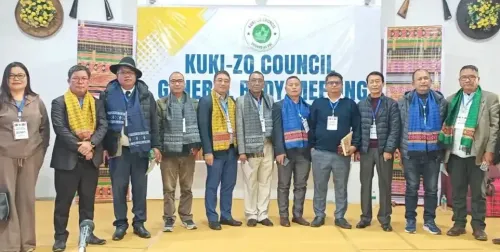
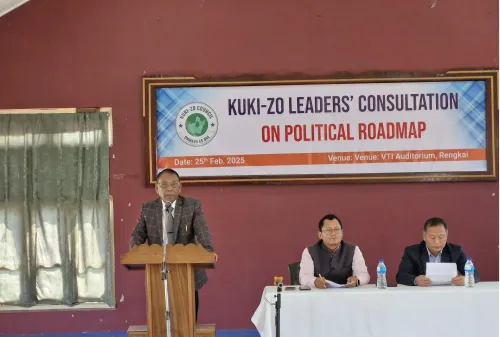
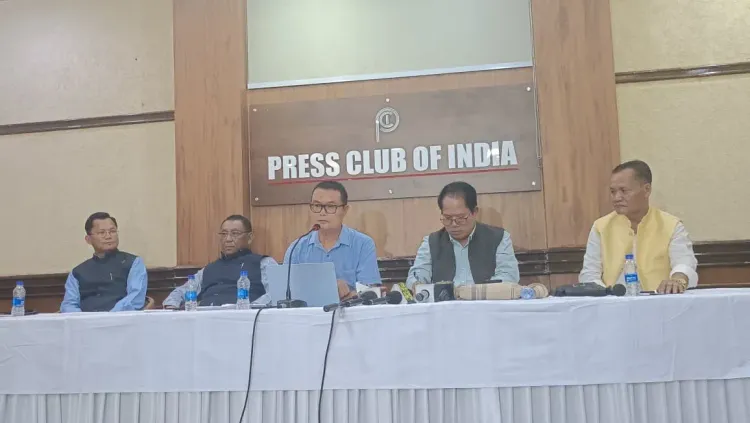
The Kuki-Zo Council (KZC), the apex body of the Kuki-Zo tribal community in Manipur, on Monday, 13 July 2026, reiterated its demand for a Separate Administration in the form of a Union Territory with a Legislature, asserting it remains the only viable path to lasting peace, justice, and the protection of the community's rights and identity. The demand was pressed at a media interaction in New Delhi, signalling the Council's intent to escalate its case directly before the Centre.
KZC's Core Demand and Political Stance
KZC Chairman Henlianthang Thanglet, flanked by Council Spokesperson Ginza Vualzong and Vice Chairmen Len Mate and Yanglet Haokip, stated that the ethnic crisis in Manipur cannot be resolved through security measures alone. He urged the government to expedite meaningful political dialogue to address what the Council describes as the legitimate aspirations of the Kuki-Zo people. The Council called on the Centre to recognise the gravity of the situation and address not only immediate security concerns but also the deeper political issues stemming from the prolonged ethnic conflict.
Scale of Violence: Civilian Casualties and Displaced Communities
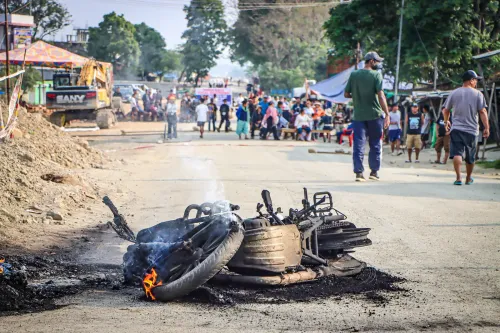
Thanglet alleged that over the past three years, Kuki-Zo people have faced repeated attacks by members of both the Meitei and Naga communities. He said their people have been killed, homes looted and burned, places of worship desecrated, and tens of thousands displaced from their ancestral lands. He added that despite repeated appeals and a change in the Manipur state government, acts of violence, intimidation, and deprivation continue.
Spokesperson Vualzong provided more specific figures, claiming that since March 2026, at least 15 Kuki-Zo civilians have been killed and around 55 houses across 14 Kuki-Zo villages have been set ablaze during the ongoing conflict involving Naga groups. He traced the present cycle of violence to an incident at Litan Sareikhong in February 2026, which the Council regards as the beginning of the latest phase of hostilities.
KZC Condemns Naga Hostage Killings, Flags Unequal Response
The Council unequivocally condemned the killing of six Manipur-Naga hostages, calling it tragic, unacceptable, and contrary to the principles upheld by the Kuki-Zo community. The KZC leaders stated the act was neither authorised nor endorsed by any Kuki-Zo political, social, or community leadership, and demanded that those responsible be identified and prosecuted through a fair, transparent, and impartial investigation.
At the same time, the Council expressed deep concern over what it described as a disparity in official and media responses. According to KZC leaders, while the killing of the six Naga hostages has received significant official attention and investigative focus, the alleged killing of 14 Kuki-Zo civilians, including three pastors, reportedly by Naga militants since 11 March 2026, has not received the same level of urgency or coverage. The Council stressed that justice must be impartial and consistent across all communities.
Five-Point Charter of Demands to the Centre
The KZC has submitted a five-point charter of demands to the Central government. These include a fair, impartial, and time-bound investigation into all incidents of violence — including the killing of 14 Kuki-Zo civilians and the burning of Kuki-Zo villages; unhindered access to healthcare for all citizens while ensuring the safety of Kuki-Zo patients in public institutions; and the reopening of all blocked routes to restore uninterrupted movement of food, medicines, fuel, and essential commodities to Kuki-Zo-inhabited areas. The Council also demanded strengthened security in vulnerable areas and effective measures to ensure the safe return of normalcy in conflict-affected regions.
What Comes Next
The KZC's public appeal in New Delhi marks a deliberate attempt to shift the Manipur crisis onto the national political agenda ahead of any resumed dialogue. Whether the Centre responds with a formal political process or continues to treat the conflict primarily as a law-and-order issue will determine the trajectory of one of India's most protracted ethnic conflicts. The Council has made clear that security deployments, without a political settlement, will not suffice.
Point of View
Rather than through Imphal, is a calculated escalation — it bypasses a state government the community no longer trusts and puts the political burden squarely on the Centre. The disparity the Council highlights between the response to Naga hostage killings and Kuki-Zo civilian deaths is a serious accountability question that neither the government nor mainstream media has adequately answered. Manipur's conflict has now entered its third year with no political framework on the table, only security deployments — and the KZC's charter is a direct indictment of that approach. If the Centre continues to treat this as a law-and-order problem, it risks entrenching a political grievance that security alone cannot extinguish.
NationPress
12 Oct 2026
Frequently Asked Questions
What is the Kuki-Zo Council's demand in Manipur?
The Kuki-Zo Council (KZC) is demanding a Separate Administration for the Kuki-Zo community in the form of a Union Territory with a Legislature. The Council says this is the only viable foundation for lasting peace, justice, and protection of the community's rights and identity in Manipur.
Why has the KZC approached the Centre directly?
The KZC held a media interaction in New Delhi on 13 July 2026 to press its demands directly before the Central government, arguing that the ethnic crisis in Manipur cannot be resolved through security measures alone and requires urgent political dialogue.
How many Kuki-Zo civilians have reportedly been killed in the ongoing conflict?
According to KZC Spokesperson Ginza Vualzong, at least 15 Kuki-Zo civilians have been killed and around 55 houses across 14 Kuki-Zo villages have been set ablaze since March 2026, in the conflict involving Naga groups. The Council traces the latest phase of hostilities to an incident at Litan Sareikhong in February 2026.
What is the KZC's position on the killing of six Naga hostages?
The KZC unequivocally condemned the killing of the six Manipur-Naga hostages, calling it tragic and unacceptable. The Council stated the act was not authorised or endorsed by any Kuki-Zo leadership and demanded a fair, transparent, and impartial investigation to identify and prosecute those responsible.
What are the five demands the KZC has submitted to the Centre?
The KZC's five-point charter includes: a time-bound impartial investigation into all violence including Kuki-Zo civilian killings; unhindered healthcare access for Kuki-Zo patients; reopening of blocked routes for essential supplies; strengthened security in vulnerable Kuki-Zo areas; and effective measures to restore normalcy in conflict-affected regions.