J&K L-G Manoj Sinha: Progress must carry compassion for the weakest
Synopsis
J&K L-G Manoj Sinha used Gandhi Jayanti to deliver a pointed message: India's rush toward AI, smartphones and digital connectivity risks leaving its weakest citizens behind. Speaking in Srinagar, he argued that the real measure of development is how much it improves the lives of the most vulnerable — and that Gandhi's philosophy is more relevant now than ever.
Key Takeaways
J&K L-G Manoj Sinha addressed a Gandhi Jayanti gathering at SKICC, Srinagar on 2 October 2026 .
He stressed that technological progress — including AI, smartphones and social media — must remain rooted in truth, humanity and social responsibility.
Sinha called on youth to use technology for learning, innovation and social good rather than division or misinformation.
He said the real measure of development is improvement in the lives of the weakest and most vulnerable sections of society.
The L-G linked J&K's development to India's 2047 goal, urging a balance of speed, compassion and cultural values.
He emphasised that education must build not just skills but also character, responsibility and social sensitivity.
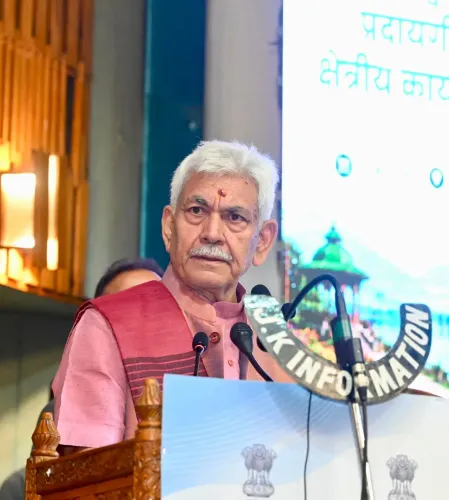
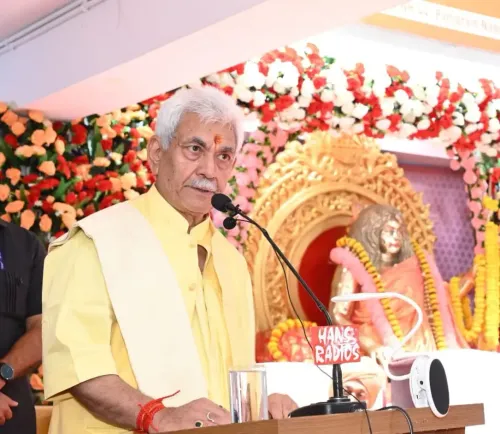
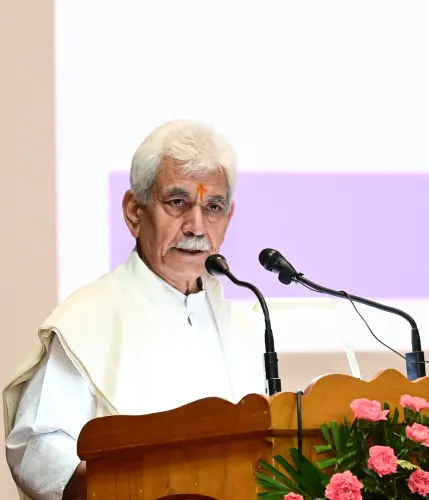
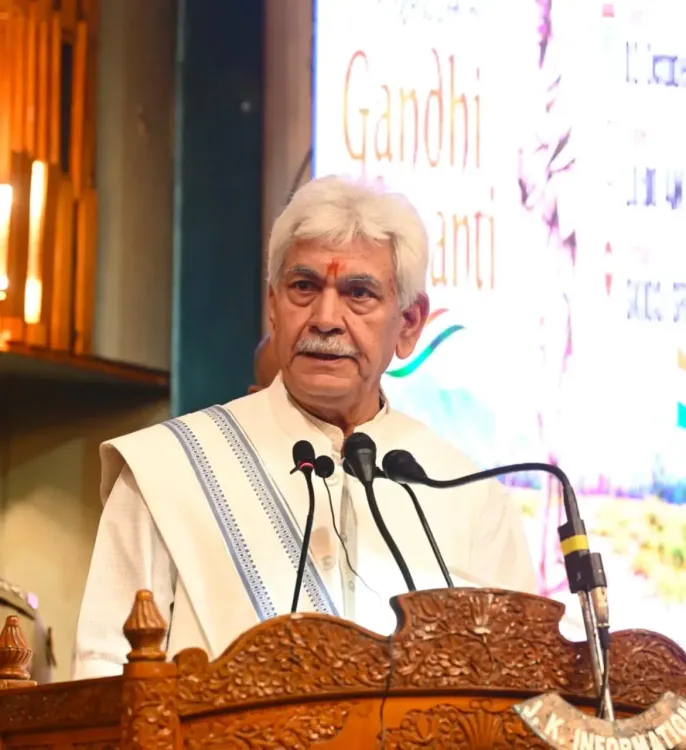
Jammu and Kashmir Lieutenant Governor Manoj Sinha on Friday, 2 October called on society to ensure that economic and technological progress is anchored in compassion and genuine concern for its most vulnerable members. Addressing a gathering at the Sher-e-Kashmir International Convention Centre (SKICC) in Srinagar on the occasion of Gandhi Jayanti, Sinha invoked Mahatma Gandhi's philosophy as a timeless guide for navigating a rapidly digitalising world.
Gandhi's Relevance in a Digital Age
The Lieutenant Governor said the rapid expansion of technology, smartphones, social media and artificial intelligence has fundamentally transformed how people communicate and consume information. He stressed, however, that this transformation must remain rooted in truth, humanity and social responsibility — principles he linked directly to Gandhi's lifelong practice.
Sinha cautioned that while digital technology has brought the world closer, allowing information to cross borders within moments, it also creates serious challenges when content is consumed or shared without verification. 'Technology is a powerful means, but the direction in which it is used determines whether it serves humanity or creates new challenges,' he said.
Call to Youth: Use Tech for Social Good
The Lieutenant Governor appealed to the younger generation to treat technology as a tool for learning, innovation, employment and social advancement — rather than a vehicle for division or misinformation. He underscored that the rapid pace of technological progress presents new opportunities, particularly for children and youth, but warned that inclusivity must remain central to any definition of development.
Notably, this message carries added weight in Jammu and Kashmir, a region that has undergone significant administrative and infrastructural transformation in recent years and is working to bridge digital and economic gaps across its population.
Weakest Sections as the True Measure of Progress
Sinha argued that the real metric of development is not aggregate growth but the measurable improvement in the lives of those who need support the most. He said justice, respect for others and sensitivity towards weaker sections must remain integral to the development process — echoing Gandhi's principle that the last person in a queue must be the first concern of any civilised society.
He tied this to India's broader vision of becoming a developed nation by 2047, saying the journey must combine the speed of economic and technological progress with human values and compassion.
J&K's Role and the Place of Education
The Lieutenant Governor said Jammu and Kashmir bears a specific responsibility to contribute to the national development journey by blending modern education, technology and infrastructure with its rich cultural traditions. He emphasised that modernity and tradition must advance together, and that development should never mean losing touch with one's roots.
Sinha also highlighted the role of teachers and educational institutions in shaping responsible citizens, arguing that schools must cultivate not only knowledge and skills but also character, social responsibility and sensitivity. He cited Gandhi's educational philosophy — which valued learning connected to real life and directed toward societal betterment — as a model still worth following.
Dialogue, Diversity and Collective Responsibility
Closing his address, the Lieutenant Governor stressed that Gandhi's message of respecting differing viewpoints remains vital today, warning that differences of opinion should not become grounds for hostility. He called for greater respect for dialogue, diversity and the dignity of every individual, and said collective effort is indispensable in building an India that is technologically advanced, economically strong, socially inclusive and connected to its human and cultural values.
Sinha said the truest tribute to Mahatma Gandhi lay not in ceremonial commemoration but in translating his principles into everyday conduct — and ensuring that the dividends of development reach every section of society.
Point of View
A region acutely sensitive to misinformation. The 2047 Viksit Bharat framing is now near-ubiquitous in official speeches, but without concrete benchmarks for what 'reaching the weakest' actually means in measurable terms, the rhetoric risks outrunning delivery. The more interesting question is whether these values find expression in J&K's administrative priorities — or remain confined to the podium.
NationPress
2 Oct 2026
Frequently Asked Questions
What did J&K L-G Manoj Sinha say on Gandhi Jayanti 2026?
Lieutenant Governor Manoj Sinha, speaking at SKICC in Srinagar on 2 October 2026, said progress must be achieved with compassion and concern for the weakest in society. He called on citizens — especially youth — to use technology responsibly and to verify information before sharing it on social media.
Why did L-G Sinha invoke Gandhi's philosophy in the context of AI and social media?
Sinha argued that Gandhi's insistence on truth as a lived practice is directly relevant to the challenges posed by AI and social media, where misinformation can spread rapidly. He said technological advancement must remain rooted in humanity and social responsibility, echoing Gandhian principles of non-harm.
What is the significance of the 2047 reference in Sinha's speech?
The reference to 2047 connects to India's national goal of becoming a developed nation — 'Viksit Bharat' — by that year, the centenary of Independence. Sinha said J&K must contribute to this journey by combining modern education, technology and infrastructure with its cultural traditions.
What did the L-G say about education and the role of teachers?
Sinha said educational institutions must develop not only knowledge and skills but also character, responsibility and sensitivity towards society. He cited Gandhi's educational philosophy — which emphasised learning connected to real life — and underlined that teachers play a crucial role in nurturing responsible citizens.
Where was the Gandhi Jayanti event addressed by L-G Sinha held?
The event was held at the Sher-e-Kashmir International Convention Centre (SKICC) in Srinagar, Jammu and Kashmir, on 2 October 2026.