J&K L-G Manoj Sinha Urges Classrooms to Evolve for AI Era
Synopsis
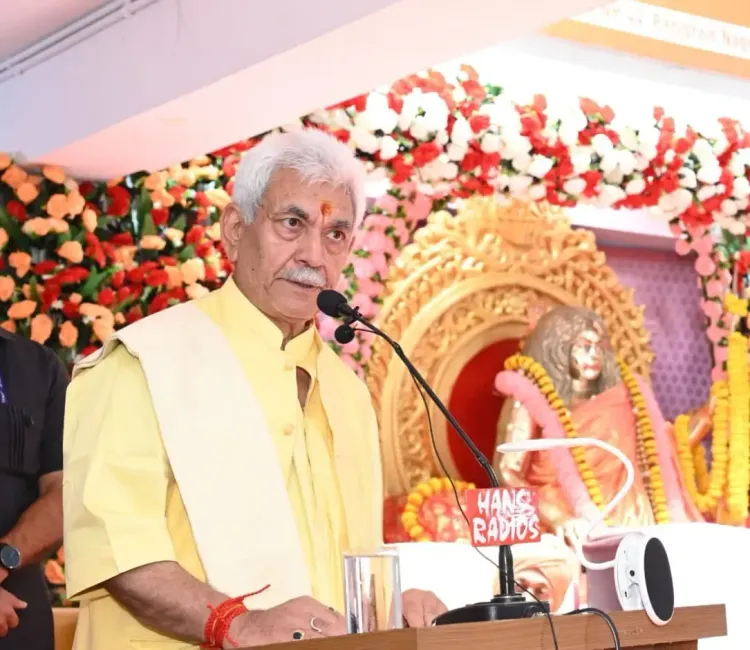
J&K L-G Manoj Sinha inaugurated a new school building in Jammu's Nagrota on April 23, warning that AI and automation demand a radical rethink of classroom education. He called for creativity, critical thinking, and NEP implementation to make India a global knowledge economy — with the school set to serve 1,500 plus students.
Key Takeaways
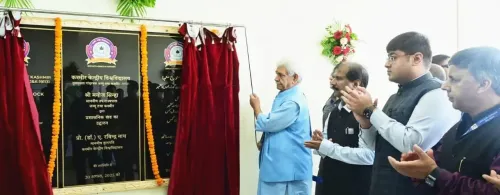
J&K L-G Manoj Sinha on April 23 inaugurated the new building of Swami Pranavanand Vidyamandir in Panjgrain, Nagrota, Jammu .
The school, run by Bharat Sevashram Sangh , has served students since 2014 under the Har Ghar Shiksha programme, with over half its students from poor families .
Once complete, the building will accommodate more than 1,500 students and include residential facilities for 100 boys .
The L-G warned that AI and automation are transforming every industry and that India's human resources must stay ahead through continuous skilling and upskilling.
Sinha championed the National Education Policy (NEP) 2020 as the key instrument to bridge regional and social education gaps in Jammu and Kashmir .
The initiative is financially supported by Indian Oil Corporation Limited and Hindustan Petroleum .
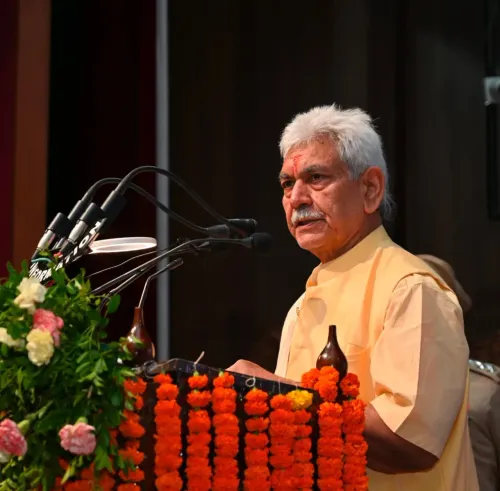
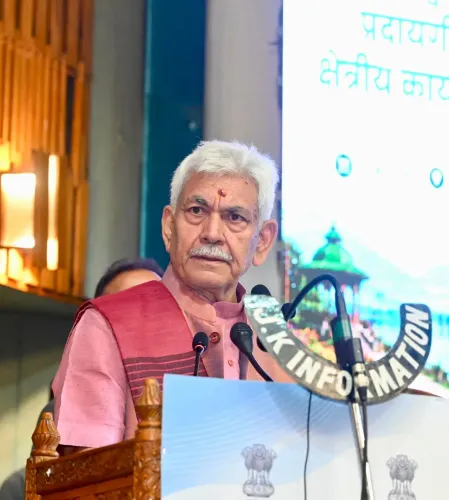
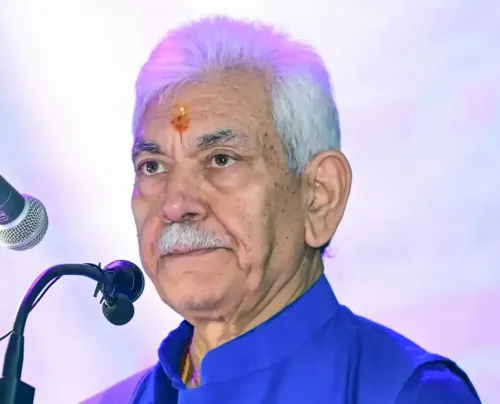
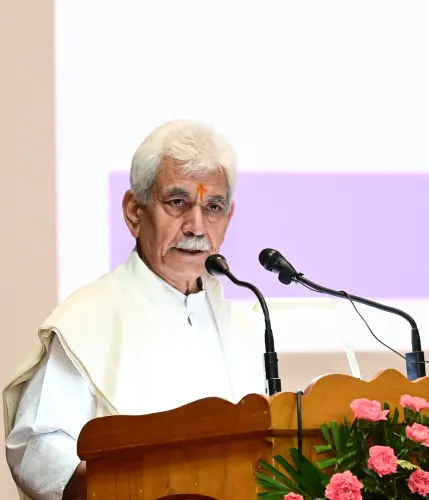
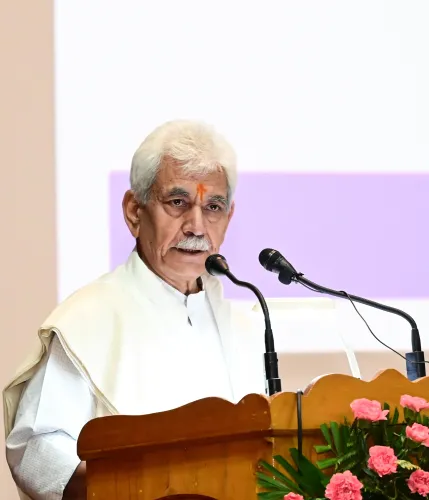
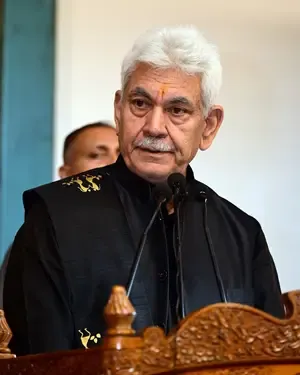
Jammu, April 23: Jammu and Kashmir Lieutenant Governor Manoj Sinha on Thursday issued a clarion call to educators and students across the Union Territory to transform their classrooms in response to a rapidly shifting global landscape driven by artificial intelligence and automation. Speaking at the inauguration of a new school building in Jammu's Nagrota, the L-G stressed that rote learning and marks-centric education are no longer sufficient — and that India's future as a global knowledge economy depends on nurturing creativity, critical thinking, and lifelong learning.
A New School for the Underprivileged in Nagrota
The L-G inaugurated the newly constructed building of Swami Pranavanand Vidyamandir, located in the Panjgrain locality of Nagrota, Jammu. The school is operated by Bharat Sevashram Sangh, a well-established socio-cultural and philanthropic organisation that launched pre-primary to Class 8 education at this site in 2014 under its Har Ghar Shiksha initiative.
More than half the student body comes from economically disadvantaged families, making this institution a critical lifeline for marginalised communities in the region. The initiative receives financial backing from Indian Oil Corporation Limited and Hindustan Petroleum, along with other donors.
L-G Sinha noted that once all floors of the new building are complete, it will serve more than 1,500 students. Planned residential facilities for 100 boys are also expected to stimulate the local economy and accelerate development in backward areas.
L-G Vision: Beyond Marks, Toward Human Capabilities
Addressing a large gathering, Sinha urged teachers to stop measuring student success solely through academic marks. He argued that sidelining art, sports, and vocational skills in favour of narrow academics makes education unfit for the future.
He stated that teachers must recognise education focused solely on marks and narrow academics, sidelining art, sports, and skills, is unfit for the future. Students must be prepared for irreplaceable human capacities like creativity, critical thinking, moral decision-making, collaboration, and lifelong learning which no machine can replace.
He emphasised that every student with a talent in art, craft, music, or entrepreneurship deserves equal respect and equal opportunity — a pointed message at a time when India's education system is under pressure to balance academic rigour with practical, future-ready skills.
AI, Automation, and the Urgency of Continuous Upskilling
The L-G painted a vivid picture of the technological disruption reshaping industries worldwide. He warned that AI and automation is transforming industries, offices, hospitals, and schools and that human resources need to be a step ahead.
Unlike the stable, linear careers of previous generations, today's professional workforce must embrace continuous learning, skilling, and upskilling. This observation aligns with global data: the World Economic Forum has projected that over 85 million jobs could be displaced by automation by 2025, while 97 million new roles may emerge — making adaptability the defining skill of the 21st century.
The L-G's remarks carry particular resonance for Jammu and Kashmir, a Union Territory still navigating post-reorganisation economic integration, where youth unemployment and skill gaps remain persistent challenges.
National Education Policy as J&K's Development Roadmap
Sinha placed the National Education Policy (NEP) 2020 at the centre of his vision for equitable, future-ready education. He described the policy as a potent tool to meet national needs, boost societal capacity, and accelerate economic growth.
He said NEP is a powerful tool to bridge rural-urban and regional-social gaps, a societal asset, and a reliable partner for meritorious students. He added that India will emerge as a robust knowledge economy nurturing generations with scientific temper, moral strength, cultural values, and a spirit of service.
Notably, J&K has been one of the early Union Territories to actively implement NEP 2020 provisions, including foundational literacy programmes and vocational education integration — giving the L-G's remarks on-ground policy weight beyond rhetoric.
Dignitaries Present at the Inauguration
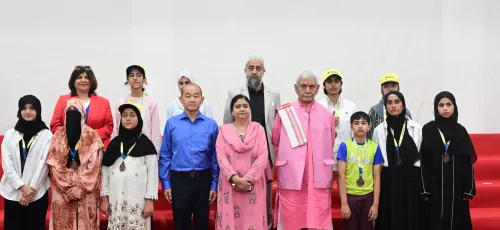
The ceremony was attended by several prominent figures, including Jugal Kishore Sharma, Member of Parliament; Devyani Rana, MLA from Nagrota; Nirmal Singh, former Deputy Chief Minister of J&K; Rashmi Govil, Director HR at Indian Oil Corporation Limited; and Vilas Zode, Executive Director-HR at Hindustan Petroleum.
Senior leaders of Bharat Sevashram Sangh, including Srimat Swami Biswatmanandaji Maharaj (General Secretary) and Srimat Swami Ambarishanandaji Maharaj (Joint Secretary), were also present alongside senior government officials and prominent citizens.
As J&K continues its development trajectory under central administration, events like this signal a deliberate push to position education — particularly for disadvantaged communities — as the cornerstone of long-term regional progress. With the school's residential wing and upper floors yet to be completed, the coming months will determine how swiftly this vision translates into expanded access for the region's most vulnerable students.
Point of View
But the real test lies in execution: J&K's youth unemployment rate and persistent skill gaps demand more than inauguration speeches. With corporate donors like Indian Oil and HPCL funding school buildings while the government champions NEP, the question worth asking is whether systemic state investment in public education is keeping pace with the rhetoric of Viksit Bharat.
NationPress
22 Sept 2026
Frequently Asked Questions
What did J&K L-G Manoj Sinha say about education on April 23?
J&K L-G Manoj Sinha urged teachers and students to move beyond marks-based education and adapt classrooms for the AI era, emphasising creativity, critical thinking, and lifelong learning. He made these remarks at the inauguration of the new Swami Pranavanand Vidyamandir building in Nagrota, Jammu.
What is Swami Pranavanand Vidyamandir in Nagrota Jammu?
Swami Pranavanand Vidyamandir is a school in the Panjgrain locality of Nagrota, Jammu, run by Bharat Sevashram Sangh. It has been providing pre-primary to Class 8 education since 2014 under the Har Ghar Shiksha initiative, primarily serving students from economically disadvantaged families.
How many students will the new school building in Nagrota serve?
Once fully constructed, the new higher secondary building of Swami Pranavanand Vidyamandir will serve more than 1,500 students. It will also include residential facilities for 100 boys, which is expected to boost the local economy in backward areas.
What is the role of NEP 2020 in J&K education system?
L-G Manoj Sinha described NEP 2020 as a powerful tool to bridge rural-urban and social gaps in Jammu and Kashmir. J&K has been among the early Union Territories implementing NEP provisions, including foundational literacy and vocational education integration.
Who funded the Swami Pranavanand Vidyamandir school building in Jammu?
The new school building was supported by Indian Oil Corporation Limited, Hindustan Petroleum, and other donors. The school itself is run by Bharat Sevashram Sangh, a renowned socio-cultural and philanthropic organisation.