Amit Shah in Ahmedabad: Drug-free India, love jihad, Bangladeshi nationals reviewed
Synopsis
Home Minister Amit Shah's Ahmedabad security review went well beyond routine law and order — it put love jihad, illegal Bangladeshi nationals, POCSO enforcement, and a drug-free India target by 2029 on the same table, signalling a broad Centre-state security reset in Gujarat ahead of Diwali.
Key Takeaways
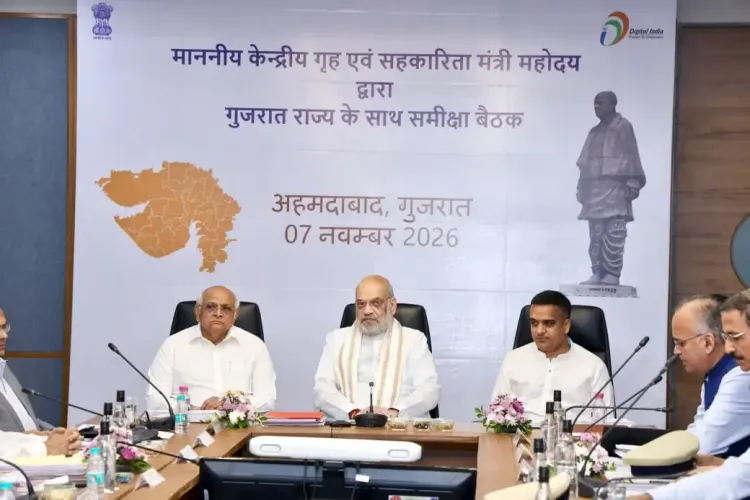
Home Minister Amit Shah chaired a high-level security review in Ahmedabad on 7 November , attended by CM Bhupendra Patel and Deputy CM Harsh Sanghavi .
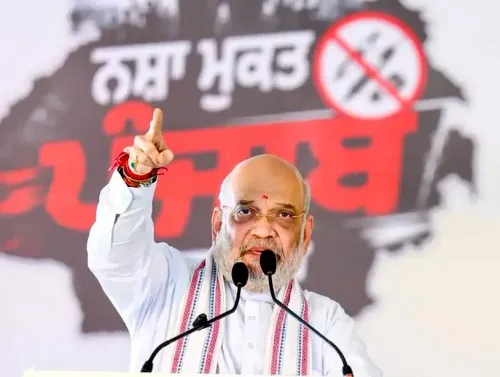
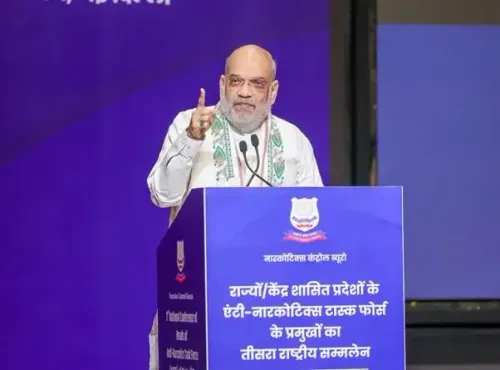
Shah directed all agencies to intensify action against narcotics networks, targeting a drug-free India by 2029 , and ordered expansion of the '1933' control room .
Officials briefed Shah on illegal Bangladeshi nationals in Gujarat, POCSO cases, and NDPS Act enforcement.
Issues of 'love jihad' and border district conditions were discussed, with Shah offering suggestions to the state government.
Cybersecurity measures reviewed included S4C , the '1930' cyber fraud helpline , Cyber Commando , and Mission Prabodh .
DGP G S Malik briefed Shah on 'Operation Mule Hunt' , anti-radicalisation efforts, and actions against 'cyber slavery'.
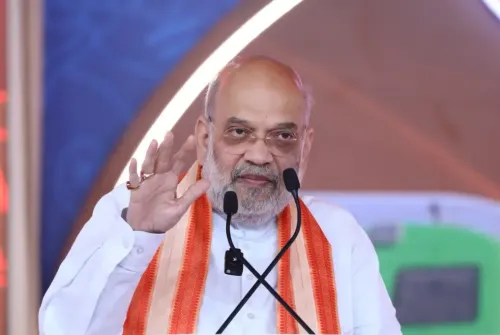
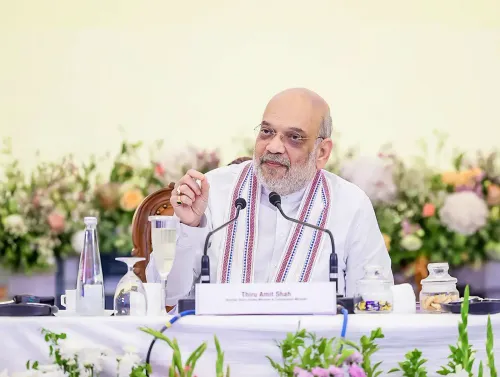
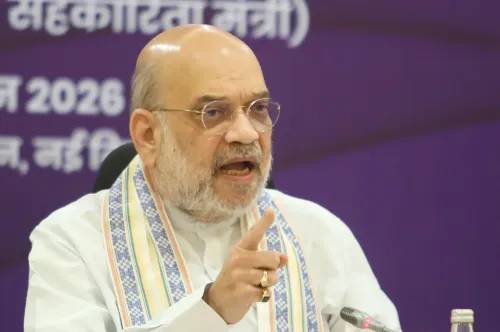
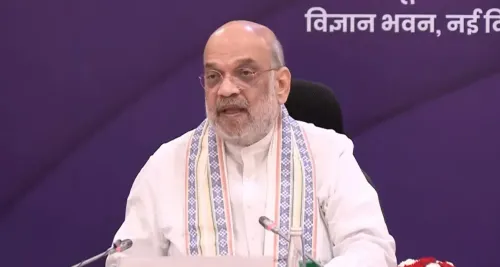
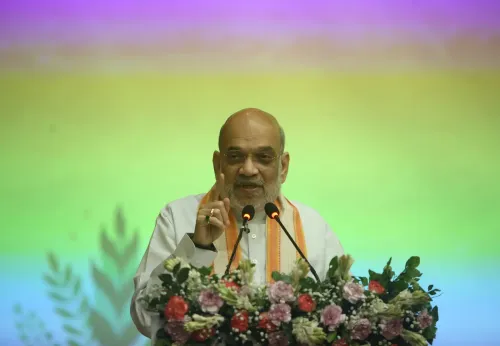
Union Home Minister Amit Shah on Saturday, 7 November chaired a high-level security review meeting in Ahmedabad, directing all enforcement agencies in Gujarat to intensify action against narcotics networks as part of the Centre's goal of achieving a drug-free India by 2029. The meeting, held ahead of Diwali, brought together Chief Minister Bhupendra Patel, Deputy Chief Minister Harsh Sanghavi, and senior officials from both the Union Home Ministry and the state administration.
Key Security Priorities Set by Shah
Shah stressed the need for strict enforcement against narcotic drugs and psychotropic substances, calling for a comprehensive action plan to strengthen inter-agency coordination. He directed officials to expand the '1933' control room and intensify awareness campaigns on drug abuse across the state.
The Home Minister also reviewed Gujarat's broader law and order situation, covering border and coastal security, cybercrime, counter-terrorism measures, and the functioning of the criminal justice system. Discussions on police modernisation, economic offences, infiltration, encroachments in border areas, disaster management, and forensic infrastructure were also part of the agenda.
Love Jihad, POCSO Cases and Illegal Bangladeshi Nationals
Among the more politically sensitive issues on the table, Shah discussed matters concerning 'love jihad' and offered suggestions to the state government. Officials briefed him on the presence of illegal Bangladeshi nationals in Gujarat, cases registered under the Protection of Children from Sexual Offences (POCSO) Act, and enforcement of the Narcotic Drugs and Psychotropic Substances (NDPS) Act.
The review also covered the Foreigners Identification Portal, district-wise data on foreign nationals, citizenship-related data under the Citizenship Amendment Act (CAA), and arrangements for the extradition of fugitives.
Cybersecurity and Counter-Terrorism Measures
Cybersecurity and counter-terrorism featured prominently in the discussions. The meeting examined the establishment of S4C, the '1930' cyber fraud helpline, the Central Investigation Analytical Repository, the Cyber Commando initiative, the UAPA Dedicated Cell, and the proposed Model Anti-Terrorism Squad (ATS) structure.
Director General of Police (DGP) G S Malik briefed Shah on 'Operation Mule Hunt', anti-radicalisation measures, the 112 Janrakshak service, and Mission Prabodh — a programme focused on tackling cyber fraud. Measures to prevent digital arrests, counter-terrorism operations, and actions against 'cyber slavery' were also outlined.
Technology-Driven Criminal Justice and Disaster Management
The implementation of the Inter-Operable Criminal Justice System (ICJS), Crime and Criminal Tracking Network and Systems (CCTNS), e-Sakshya application, and e-summons was reviewed. The meeting also examined the Medico Legal Examination and Postmortem Reporting System (MedLEaPR), mobile forensic vans, and the Investigation Tracking System for Sexual Offences (ITSSO).
On disaster management, discussions covered the capacity-building of the State Disaster Response Force (SDRF), utilisation of the State Disaster Management Fund, and plans to prevent urban flooding in Ahmedabad. Mangrove conservation, fire prevention services, and the status of enemy properties in Gujarat were also examined.
Officials' Briefings and What Comes Next
Chief Secretary Manoj Kumar Das briefed Shah on progress made since previous Union Home Ministry meetings, particularly on security and border management. Principal Secretary Sanjeev Kumar presented details of the state's budgetary provisions and expenditure over the past three years, alongside progress in prison administration, forensic science, Census 2027 preparations, and special courts.
The meeting signals a renewed push from the Centre to tighten security coordination in Gujarat ahead of the festive season, with follow-up action on narcotics, infiltration, and cybercrime expected in the coming weeks.
Point of View
Illegal Bangladeshi nationals, POCSO, narcotics, cybercrime, and coastal security in a single sitting — reflects the Centre's pattern of using high-level state visits to signal political priorities as much as administrative ones. Gujarat, as a BJP stronghold and Shah's home state, is frequently used as a template for rolling out security frameworks before they are replicated elsewhere. The 2029 drug-free India target is ambitious, but the absence of publicly verifiable benchmarks makes it difficult to assess progress. The love jihad discussion, notably, carries no legislative backing at the central level, raising questions about how state agencies are expected to act on the Home Minister's suggestions.
NationPress
7 Nov 2026
Frequently Asked Questions
What was discussed at Amit Shah's security review meeting in Ahmedabad?
The meeting on 7 November covered Gujarat's law and order situation, narcotics enforcement, illegal Bangladeshi nationals, love jihad, POCSO cases, cybercrime, counter-terrorism, border and coastal security, and disaster management. It was chaired by Home Minister Amit Shah and attended by Chief Minister Bhupendra Patel and Deputy Chief Minister Harsh Sanghavi.
What is the Centre's drug-free India target and what steps were announced?
The Centre aims to achieve a drug-free India by 2029. Shah directed all enforcement agencies in Gujarat to coordinate efforts, expand the '1933' control room, and run wider public awareness campaigns against drug abuse.
Why were illegal Bangladeshi nationals discussed at the Gujarat review meeting?
Officials briefed Shah on the presence of illegal Bangladeshi nationals in Gujarat as part of a broader review of infiltration and border security. The meeting also examined the Foreigners Identification Portal and district-wise data on foreign nationals.
What cybersecurity measures were reviewed at the Ahmedabad meeting?
The review covered the '1930' cyber fraud helpline, S4C, the Cyber Commando initiative, Mission Prabodh, the Central Investigation Analytical Repository, the UAPA Dedicated Cell, and the proposed Model ATS structure. DGP G S Malik also briefed Shah on Operation Mule Hunt and measures against cyber slavery.
Who attended the high-level security review chaired by Amit Shah in Gujarat?
The meeting was attended by Chief Minister Bhupendra Patel, Deputy Chief Minister Harsh Sanghavi, Chief Secretary Manoj Kumar Das, Principal Secretary Sanjeev Kumar, DGP G S Malik, and senior officials from the Union Home Ministry, the state Home Department, and various security agencies.