Did French President Macron Defend Free Speech Against Critics?
Synopsis
In a recent address, French President Emmanuel Macron robustly defended his views on free speech amid criticism, advocating for mutual respect in international relations, especially concerning Indo-French defence ties. His remarks highlight the importance of transparency and respect in democratic discourse, setting the stage for stronger global partnerships.
Key Takeaways
Macron advocates for respect and transparency in free speech.
Algorithm-driven platforms face criticism for promoting biased discourse.
The Rafale deal exemplifies the strength of Indo-French defense ties.
Future collaborations are anticipated in various defense sectors.
Macron's remarks aim to enhance global partnerships founded on mutual benefit.
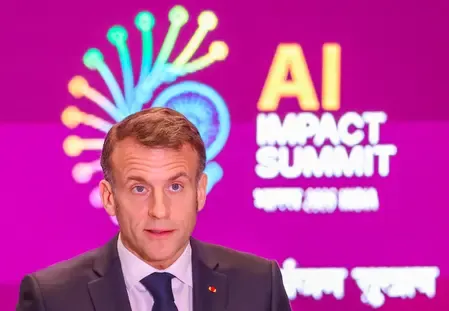
New Delhi, Feb 19 (NationPress) French President Emmanuel Macron has stood by his stance on free speech amid backlash and selective quoting of his previous comments, linking it to wider themes of mutual respect in international relations, particularly in the context of Indo-French defence partnerships.
Macron confronted misconceptions directly, explaining that genuine free speech does not equate to unregulated or algorithm-driven disorder.
He emphasized, "I firmly believe in free speech. But what does it truly entail? Free speech means I will hear you out, and in turn, you will hear me. This represents an equitable relationship."
In his critique of algorithm-based platforms, he remarked, "Many advocates of free speech rely on algorithms lacking transparency, often driven by their own political bias. This is not free speech. When individuals actively promote hate speech and racism, it ceases to be about free speech; it becomes a chaotic environment. Hence, I advocate for free speech grounded in respect and transparency, as this embodies free speech within a democratic framework."
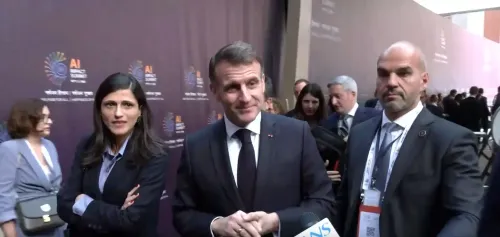
Macron's statements emerged during media inquiries addressing digital regulation, social media accountability, and the Rafale deal, especially as he participated in the AI Impact Summit 2026.
This viewpoint aligns with Macron's broader initiative for equitable global partnerships, where dialogue—similar to defence agreements like Rafale and Tata-Airbus collaborations—is established on mutual benefit and trust rather than unilateral dependency or unchecked influence.
He also detailed plans for enhanced maintenance cooperation and collaborative agreements to strengthen ties.
Macron underscored the strategic advantages of such partnerships, stating, "We are consistently increasing indigenous components. This is part of the dialogue between the company and your government. I fail to see how critics can argue against this, as it empowers your nation, strengthens our strategic relationship, and creates additional jobs locally."
He reaffirmed France's commitment to local production, adding, "We are profoundly dedicated to maximizing the number of Indian components and manufacturing critical devices within India. Thus, we will uphold the same commitment for the Rafale; you can rely on that."
Concerning the Rafale extension, he disclosed that India has recently expressed interest in acquiring 114 additional jets, with co-production under the Make in India initiative.
"Our objective is expansion. India confirmed just days ago its intention to order a new batch of Rafales (114) and co-produce. The Make in India initiative will be central to this new order," Macron stated.
He also hopes for similar progress in submarines, engines, and helicopters, observing, "I aspire for similar advancements in submarines. We are offering additional capabilities, and we are doing this as well with engines and helicopters, through collaboration between Tata and Airbus. Clearly, our cooperation is advancing, paving the way for a new realm of collaboration."
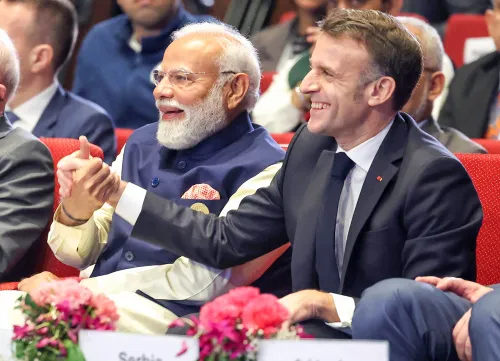
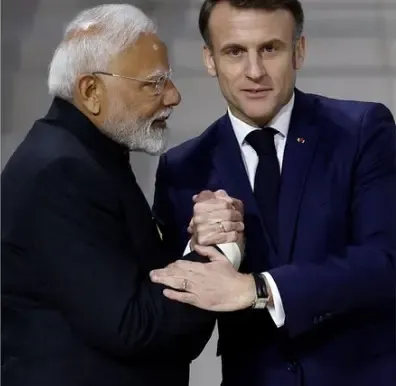
Praising the bilateral relationship, Macron characterized it as at its "peak," evolving into a "special global strategic partnership, which is unique for both India and France."
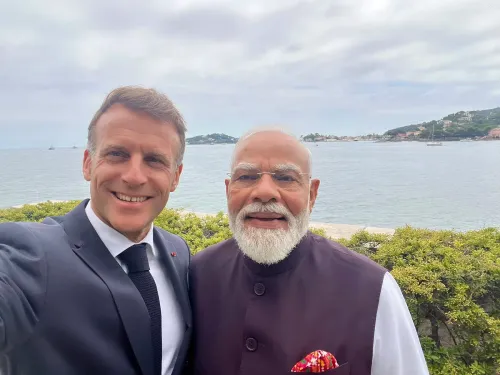
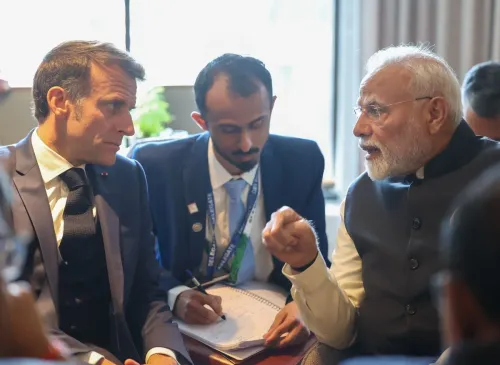
He mentioned inviting Prime Minister Narendra Modi for a state visit to France in June, where Modi will serve as the special guest at the G7 as BRICS president, and also announced his own return visit the following year.
The leaders agreed on enhancing cooperation across defence, innovation, culture, creative industries, and research.
Point of View
Macron's defense of free speech underscores a critical discourse in today's digital age. His emphasis on respect and transparency not only enhances democratic values but also strengthens international partnerships. It's essential for nations, including India, to engage in meaningful dialogue that fosters mutual respect and cooperative growth.
NationPress
19 Sept 2026
Frequently Asked Questions
What did Macron say about free speech?
Macron stated that true free speech involves mutual listening and respect, criticizing algorithm-driven platforms that promote bias and chaos.
How does Macron's view relate to Indo-French relations?
His comments highlight the importance of mutual respect in international partnerships, particularly in defense collaborations between France and India.
What are the implications of Macron's statements?
Macron's remarks could lead to stronger cooperation in defense, technology, and cultural exchanges between France and India.
What is the significance of the Rafale deal?
The Rafale deal represents a key aspect of Indo-French defense relations, with ongoing discussions about co-production under the Make in India initiative.
What future collaborations did Macron mention?
Macron expressed hopes for advancements in submarines, engines, and helicopters, emphasizing the growing cooperation between Tata and Airbus.