Madhi village, Mehsana: Gujarat's ₹100 crore plug nursery capital
Synopsis
A single village in Mehsana district — Madhi — now runs over 200 high-tech nursery units, ships 70 crore seedlings a year across Gujarat, Rajasthan, and Maharashtra, and generates ₹100 crore in annual business. Backed by a government scheme disbursing ₹900 lakh in subsidies, it is one of the most striking examples of horticulture-led rural transformation in India's agricultural belt.
Key Takeaways
Madhi village , Mehsana district , hosts over 200 high-tech plug nursery units producing more than 70 crore seedlings annually.
The cluster generates annual business exceeding ₹100 crore and estimated farmer profits of around ₹50 crore .
Seedlings are supplied to 15 Gujarat districts and farmers in Rajasthan and Maharashtra , supporting cultivation across nearly six lakh acres .
Over 800 women from nearby areas are directly employed in nursery operations.
The Gujarat Hi-Tech Plug Nursery Scheme has disbursed more than ₹900 lakh in subsidies, covering 65% of setup costs for protected nursery structures.
Coco peat-based plug tray cultivation achieves germination rates above 80% with seedlings ready for transplant in about 25 days .
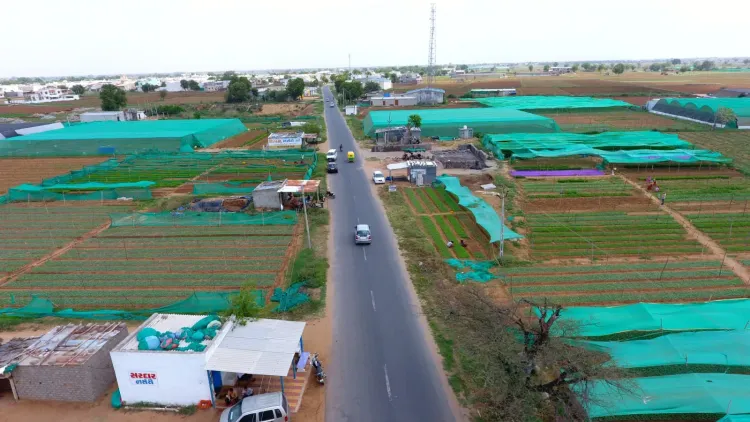
Madhi village in Mehsana district, Gujarat, has quietly grown into one of the state's largest plug nursery hubs, with more than 200 high-tech nursery units collectively producing over 70 crore vegetable and horticultural seedlings annually — generating a business worth over ₹100 crore each year. The cluster, spread across nearly 300 bighas in Vijapur taluka, is now a critical seedling supplier for farmers across multiple states.
Scale and Reach of the Madhi Cluster
According to state government data, the nurseries in Madhi supply seedlings to farmers across 15 districts in Gujarat, as well as Sirohi and Jalore districts in Rajasthan and Nandurbar district in Maharashtra. The seedlings support vegetable cultivation across nearly six lakh acres. Annual profits to farmers from the nursery sector are estimated at around ₹50 crore.
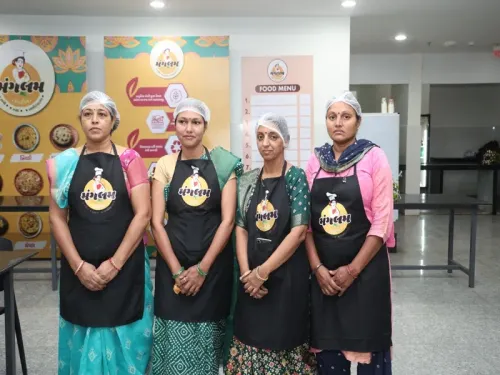
More than 150 families are engaged in nursery operations, while over 800 women from surrounding areas are directly employed — making the cluster a significant rural livelihoods engine.
What the Nurseries Produce
Chilli and tomato account for the bulk of seedling output, though the nurseries also raise papaya, capsicum, cabbage, cauliflower, brinjal, bitter gourd, cucumber, watermelon, muskmelon, and marigold. Hybrid vegetable seedlings of bottle gourd and sweet potato are produced as well.
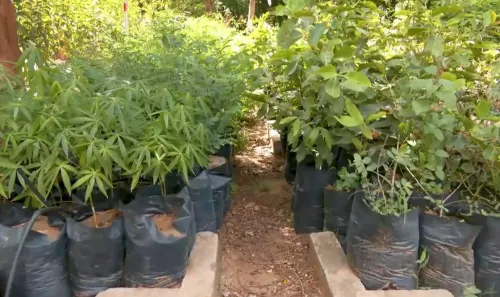
Seedlings are grown in plug trays using coco peat, a soil-less growing medium that promotes healthy root development. The method achieves germination rates of over 80 per cent and delivers transplant-ready seedlings in approximately 25 days, while reducing exposure to soil-borne diseases. Sprinkler irrigation ensures uniform watering and consistent plant growth.
The Government Scheme Behind the Growth
State officials attribute Madhi's rise to the Gujarat Horticulture Department's Hi-Tech Plug Nursery Scheme, which provides financial assistance of 65 per cent for establishing protected nursery structures ranging from 500 to 4,000 square metres. Eligible facilities include net houses, greenhouses, and fan-and-pad greenhouses. More than ₹900 lakh has been disbursed to farmers under the scheme so far, according to the government.
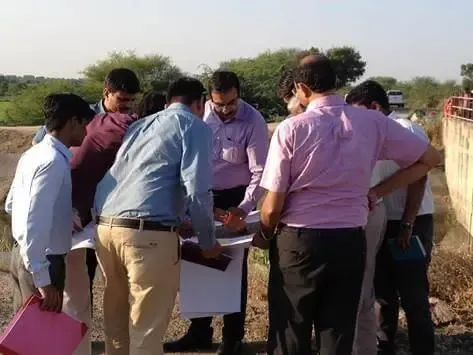
The Centre of Excellence at Vadrad, under the Gujarat Horticulture Department, has provided additional support through training programmes, exposure visits, and field-level technical guidance. The centre has demonstrated technologies including protected cultivation, plug tray seedling production, precision irrigation, fertigation, climate-controlled nursery management, integrated pest and disease management, and the use of high-quality growing media.
Broader Horticulture Push in Gujarat
Madhi's emergence is part of a wider horticulture expansion in Gujarat that has included the promotion of micro-irrigation, protected cultivation, improved nursery infrastructure, expansion of the Narmada canal network, and post-harvest facilities. Officials note that these measures have encouraged farmers to shift toward higher-value horticultural crops, with the plug nursery scheme acting as a catalyst for specialised nursery enterprises.
With demand for quality seedlings rising across western India, Madhi's model is increasingly being cited as a replicable template for horticulture-led rural income growth.
Point of View
But the deeper question is replicability: can the Centre of Excellence at Vadrad extend this model to other districts, or does Madhi's success depend on localised factors — soil, proximity to markets, community networks — that subsidies alone cannot replicate? With over 800 women employed and 150 families anchored to the trade, the social dividend is real. The test now is whether Gujarat's horticulture department has the bandwidth to seed a dozen more Madhis before this window of rural diversification closes.
NationPress
14 Sept 2026
Frequently Asked Questions
What is the Madhi plug nursery cluster in Gujarat?
Madhi is a village in Vijapur taluka, Mehsana district, Gujarat, that has developed into one of the state's largest plug nursery hubs. Over 200 high-tech nursery units there collectively produce more than 70 crore vegetable and horticultural seedlings each year, generating annual business exceeding ₹100 crore.
Which states receive seedlings from Madhi's nurseries?
Madhi's nurseries supply seedlings to farmers across 15 districts in Gujarat, as well as Sirohi and Jalore districts in Rajasthan and Nandurbar district in Maharashtra. The seedlings support vegetable cultivation across nearly six lakh acres.
What government scheme supported the growth of Madhi's nurseries?
The Gujarat Horticulture Department's Hi-Tech Plug Nursery Scheme provided 65% financial assistance for setting up protected nursery structures between 500 and 4,000 square metres. More than ₹900 lakh has been disbursed under the scheme so far.
What crops are produced as seedlings in Madhi?
Chilli and tomato form the bulk of production. The nurseries also raise seedlings of papaya, capsicum, cabbage, cauliflower, brinjal, bitter gourd, cucumber, watermelon, muskmelon, marigold, bottle gourd, and sweet potato.
How does plug tray nursery technology work?
Seedlings are raised in plug trays using coco peat, a soil-less growing medium that encourages healthy root development. The method achieves germination rates above 80% and produces transplant-ready seedlings in around 25 days, while reducing the risk of soil-borne disease and allowing long-distance transport with minimal damage.