Maharashtra soft loan scheme for cooperative sugar mills: ₹2,000 crore corpus, by-product policy incoming
Synopsis
Maharashtra is moving to inject ₹2,000 crore into cash-strapped cooperative sugar mills via a soft loan scheme — and pairing it with a first-of-its-kind by-product policy covering ethanol, green hydrogen, and sustainable aviation fuel. With ₹200 crore in farmer dues already overdue, the twin interventions signal a structural rethink of how India's most water-intensive crop can sustain itself financially.
Key Takeaways
Maharashtra plans a ₹2,000 crore soft loan corpus for cooperative sugar mills, with a 7-year repayment window and the state bearing roughly ₹100 crore in annual interest.
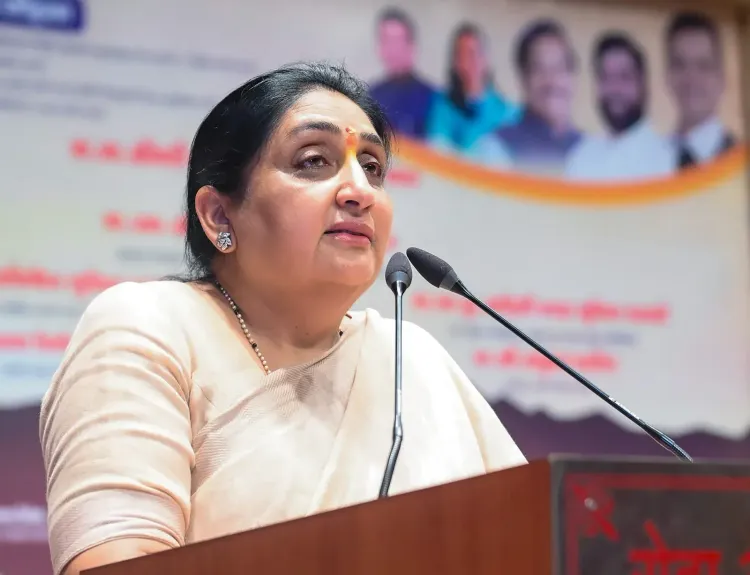
Deputy Chief Minister Sunetra Pawar has directed officials to place the proposal before the State Cabinet for immediate approval.
Sugar mills owe approximately ₹200 crore in FRP dues to farmers from the previous crushing season.
Loans will be disbursed through DCCBs and the Maharashtra State Cooperative Bank (MSCB) based on each mill's crushing capacity and financial health.
A standalone by-product policy will cover solar power, co-generation, 1G and 2G ethanol , CBG , Green Hydrogen , and Sustainable Aviation Fuel (SAF) .
Sugarcane uses an estimated 60–70% of Maharashtra's irrigation water while occupying only 4% of cultivated land.
The Maharashtra government is set to introduce a Soft Loan Scheme worth approximately ₹2,000 crore for cooperative sugar mills, modelled on the Central government's policy framework, aimed at restoring financial stability to the sector and ensuring timely Fair and Remunerative Price (FRP) payments to sugarcane farmers. Deputy Chief Minister Sunetra Pawar has directed officials to place a formal proposal before the State Cabinet for approval without delay.
Key Features of the Soft Loan Scheme
Under the proposed scheme, eligible cooperative sugar mills will gain access to a low-interest loan corpus of roughly ₹2,000 crore, repayable over a 7-year window. The state government will absorb the annual interest burden — estimated at approximately ₹100 crore per year. Disbursements will be routed through District Central Cooperative Banks (DCCBs) and the Maharashtra State Cooperative Bank (MSCB), with each mill's crushing capacity and financial health assessed before funds are released.
Why the Intervention Is Urgent
State sugar mills are currently grappling with severe liquidity stress, with outstanding FRP dues of around ₹200 crore owed to farmers from the previous crushing season. The central government's FRP framework mandates that mills pay farmers within 14 days of cane delivery — a timeline that routinely clashes with the slower pace of domestic sugar sales realisations, creating recurring working capital shortfalls. The soft loan infusion is designed to help mills clear pending arrears and enter the upcoming crushing season on stable footing.
A Standalone By-Product Policy on the Anvil
Deputy Chief Minister Pawar also directed officials to draft a comprehensive, standalone policy dedicated to sugar by-products — a move intended to reduce the industry's dependence on raw sugar and open alternative revenue streams. The policy roadmap is expected to accelerate manufacturing and processing capabilities across solar power, co-generation electricity, first-generation (1G) and second-generation (2G) ethanol, Compressed Bio-Gas (CBG), Green Hydrogen, and Sustainable Aviation Fuel (SAF).
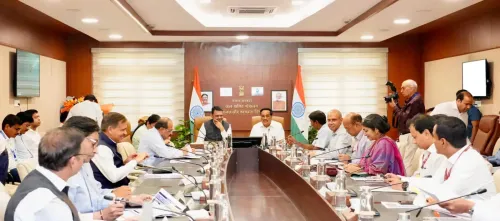
Speaking at a high-level review meeting on Tuesday, Pawar said that diversification into value-added by-products would build long-term economic resilience, create new revenue channels, and shield sugarcane farmers from seasonal price volatility.
The Structural Challenge Behind the Crisis
Sugarcane occupies roughly 4% of Maharashtra's cultivated land yet consumes an estimated 60–70% of the state's irrigation water — a disproportion that has fuelled ongoing debates over crop diversification and drip irrigation mandates. Overproduction in bumper years depresses domestic prices, forcing state and central intervention through export quotas and concessional loans to prevent defaults on farmer payments. This is not the first time Maharashtra has leaned on soft loan mechanisms; the recurrence underscores the structural fragility of a sector caught between regulated output prices and market-linked input costs.
The Shift Toward Integrated Biorefineries
Mills are increasingly pivoting to integrated biorefineries to insulate revenues from sugar price volatility. Converting B-heavy molasses and direct sugarcane juice into ethanol under India's Ethanol Blending Programme (EBP) offers faster liquidity than white sugar sales. Burning bagasse — the fibrous residue left after crushing — generates renewable power for internal use and grid supply. Expansion into CBG, Green Hydrogen, and SAF aligns with state plans to modernise factory revenue models well beyond raw sugar production, and with India's broader clean energy transition targets.
With Cabinet approval pending, the sector will be watching closely to see whether the scheme's design includes verifiable farmer payment milestones — the mechanism most likely to determine whether the liquidity injection actually reaches growers on time.
Point of View
At its core, an admission that the FRP framework — well-intentioned as it is — has created a structural mismatch between regulated farmer payments and market-driven sugar revenues that the industry cannot bridge on its own. Recurring bailouts without reform risk becoming a permanent subsidy. The by-product policy is the more interesting half of this package: if mills can genuinely monetise ethanol, CBG, and SAF at scale, the sector's dependence on sugar price cycles could diminish meaningfully. But policy announcements in this space have a long history of outpacing implementation. The Cabinet proposal's fine print — particularly whether loan disbursement is tied to verified farmer payment timelines — will determine whether this is a genuine structural fix or another liquidity patch ahead of the crushing season.
NationPress
3 Sept 2026
Frequently Asked Questions
What is Maharashtra's proposed soft loan scheme for cooperative sugar mills?
It is a state-backed low-interest loan scheme with a corpus of approximately ₹2,000 crore, designed to provide working capital to financially stressed cooperative sugar mills. Loans carry a 7-year repayment period, with the Maharashtra government bearing around ₹100 crore in annual interest costs. Funds will be routed through District Central Cooperative Banks and the Maharashtra State Cooperative Bank.
Why are Maharashtra's cooperative sugar mills in financial distress?
Mills are struggling because the central government's FRP framework requires them to pay sugarcane farmers within 14 days of cane delivery, while domestic sugar sales realisations are slower, creating working capital gaps. Mills currently owe around ₹200 crore in FRP dues from the previous crushing season.
What is the by-product policy that Deputy CM Sunetra Pawar has directed?
It is a standalone, comprehensive policy to accelerate sugar mills' diversification into alternative revenue streams beyond raw sugar. The policy is expected to cover solar power, co-generation electricity, 1G and 2G ethanol, Compressed Bio-Gas (CBG), Green Hydrogen, and Sustainable Aviation Fuel (SAF).
Who will be eligible for loans under the soft loan scheme?
Eligible cooperative sugar mills in Maharashtra will qualify, subject to an assessment of each factory's crushing capacity and financial health. Disbursements will be made through District Central Cooperative Banks (DCCBs) and the Maharashtra State Cooperative Bank (MSCB).
What happens next before the scheme is implemented?
Deputy Chief Minister Sunetra Pawar has directed officials to prepare a formal proposal for the State Cabinet's approval. The scheme is modelled on the Central government's policy framework and requires Cabinet clearance before it can be operationalised ahead of the upcoming crushing season.