Maharashtra CMO launches Maha Arogya Shibir for Kartiki Wari pilgrims
Synopsis
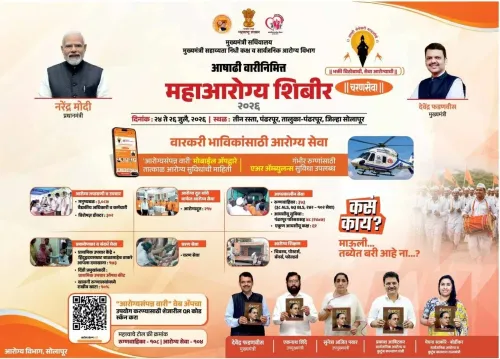
The Chief Minister's Office of Maharashtra has announced a 'Maha Arogya Shibir' — a large health camp — for Warkari pilgrims attending the Kartiki Wari 2026 at Pandharpur, with CM Devendra Fadnavis and PM Narendra Modi both tagged in the announcement.
Key Takeaways
The CMO Maharashtra announced a 'Maha Arogya Shibir' (grand health camp) for Kartiki Wari 2026 pilgrims at Pandharpur .
The post tags both PM Narendra Modi and CM Devendra Fadnavis , indicating coordination across state and central leadership.
Pandharpur in Solapur district is the destination of the annual Warkari pilgrimage, one of Maharashtra's most significant religious events.
Maharashtra has a history of providing medical facilities for Warkari pilgrims during prior Wari events.
The Kartiki Wari draws lakhs of pilgrims — many elderly and travelling on foot — making dedicated health infrastructure a public welfare priority.
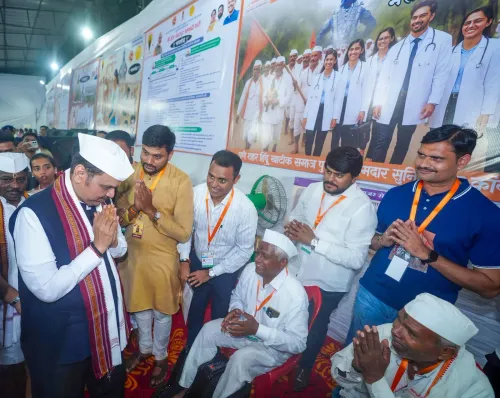
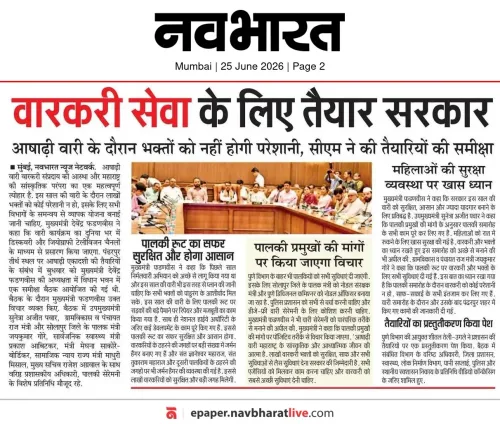
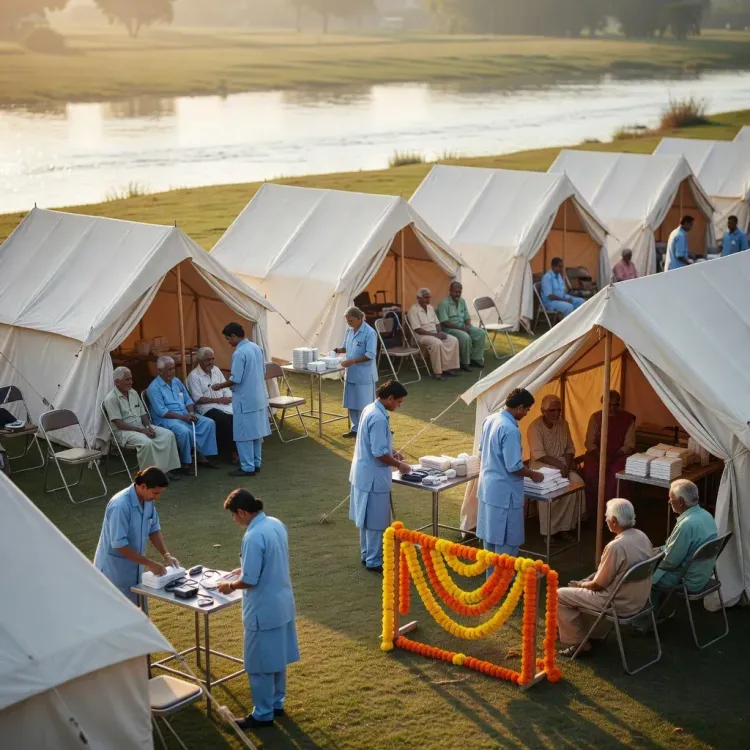
As lakhs of Warkari pilgrims converge on Pandharpur for the Kartiki Wari 2026, the Chief Minister's Office of Maharashtra has announced a large-scale 'Maha Arogya Shibir' — a dedicated health camp — to serve the medical needs of the devout making the sacred journey to the Vithoba temple.
A health camp at the heart of Maharashtra's holiest pilgrimage
The post, shared by the CMO Maharashtra on Saturday, 21 November 2026, tags both Prime Minister Narendra Modi and Chief Minister Devendra Fadnavis, signalling coordination across both state and central leadership. The Kartiki Wari — observed in the Hindu month of Kartik — draws hundreds of thousands of Warkari devotees annually to Pandharpur, the spiritual heartland of Maharashtra's Bhakti tradition. That scale of congregation is both a celebration of faith and a logistical challenge for public health.
The Maha Arogya Shibir (literally 'grand health camp') is Maharashtra's response to that challenge. State governments have arranged medical facilities for Warkari pilgrims during multiple prior Wari events, but the branding and apparent scope of this 2026 edition point to a more structured, prominently publicised effort. Pilgrims — many elderly, many travelling long distances on foot — face fatigue, dehydration, and exposure-related ailments along the route and at the main gathering site.
Why Pandharpur demands purpose-built health infrastructure
Pandharpur sits in Solapur district on the banks of the Bhima river, and the Wari pilgrimage is one of the oldest living religious traditions in the subcontinent. The sheer density of pilgrims — arriving in dindis (procession groups) from across Maharashtra and beyond — routinely strains local medical facilities. Temporary health camps positioned along pilgrimage routes and at the main gathering ground are not new, but the 'Maha Arogya' designation suggests a consolidated, government-coordinated model rather than piecemeal arrangements.
Across India, state administrations have learned — sometimes through painful lessons at the Kumbh Mela and other large gatherings — that proactive, visible health infrastructure is both a welfare imperative and a political signal. Maharashtra's pattern of integrating health services with Wari events reflects that broader national lesson.
Fadnavis and Modi tagged as pilgrims prepare
The CMO's decision to tag Devendra Fadnavis and Narendra Modi publicly is deliberate: it frames the health camp as a priority of the current Maharashtra government and positions it within the wider Ayushman Bharat and state health outreach ecosystem. Pilgrims and local volunteers will be watching the camp's actual reach — how many medical personnel are deployed, what services are offered, and whether the announcement translates to on-ground capacity when the crowds peak.
For the Warkari community, the promise of accessible healthcare at Pandharpur is not just administrative — it is a statement that the state sees their devotion as deserving of protection and dignity. That message, delivered at scale during Kartiki Wari 2026, is what the CMO is betting on.
Point of View
The CMO frames this as a convergence of central and state health outreach — drawing an implicit connection to the Ayushman Bharat ecosystem. For the Warkari community, a numerically and politically significant demographic in Maharashtra, tangible health services at Pandharpur carry both humanitarian and electoral weight. The real test, as always, will be execution: whether the camp's on-ground staffing and reach match the prominence of the announcement.
NationPress
21 Nov 2026
Frequently Asked Questions
What is the Maha Arogya Shibir at Kartiki Wari 2026?
The Maha Arogya Shibir is a large-scale government health camp announced by the Maharashtra Chief Minister's Office to provide free medical services to Warkari pilgrims attending the Kartiki Wari 2026 at Pandharpur.
What is the Kartiki Wari pilgrimage?
The Kartiki Wari is an annual religious pilgrimage by Warkari devotees to the Vithoba temple in Pandharpur, Maharashtra, held during the Hindu month of Kartik. It is one of the oldest and largest pilgrimage traditions in India.
Where is Pandharpur located?
Pandharpur is a pilgrimage town in Solapur district, Maharashtra, situated on the banks of the Bhima river. It is home to the famous Vithoba temple, the central destination of the Wari pilgrimage.
Why does the Maharashtra government set up health camps during Wari?
The Wari pilgrimage attracts lakhs of pilgrims, many of whom are elderly and travel long distances on foot. State governments set up health camps to address fatigue, dehydration, heat exposure, and other medical needs of the large crowd.
Is Devendra Fadnavis involved in the Maha Arogya Shibir announcement?
Yes. The CMO Maharashtra's post announcing the health camp tags CM Devendra Fadnavis along with PM Narendra Modi, indicating the initiative is backed at the highest levels of state and central government.