Maharashtra govt issues session guidelines for Nagpur winter legislature Dec 7
Synopsis
Maharashtra has issued a sweeping Government Resolution laying down precise accountability rules for every ministerial department ahead of the Nagpur winter session from 7 to 18 December — mandating daily gallery presence, same-day assurance recording, and weekly Secretary-level review meetings, signalling a push to tighten legislative discipline.
Key Takeaways
The Parliamentary Affairs Department, Maharashtra issued a Government Resolution on 21 November ahead of the Nagpur winter session .
The session is scheduled from 7 to 18 December in Nagpur .
All departments must follow deadlines under Legislative Assembly Rule 93 for starred questions, unstarred questions, calling attention motions, and other instruments.
Designated officers must be present in both House galleries daily from commencement to adjournment.
Departmental Secretaries must hold a weekly review meeting during the session and a post-session meeting to clear pending instruments.
Delays in acting on assurances given by Ministers or the Chief Minister will be the direct responsibility of the concerned department .
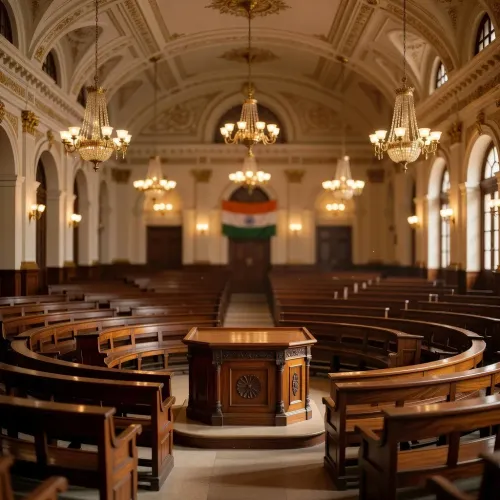
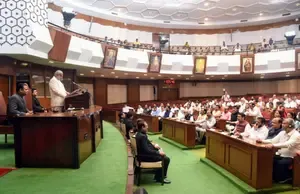
The Parliamentary Affairs Department of the Government of Maharashtra on Friday, 21 November issued a Government Resolution (GR) directing all ministerial departments to handle legislative business for the upcoming Nagpur winter session with urgency, coordination, and top priority. The session is scheduled to run from 7 to 18 December at Nagpur.
Key Directives in the Government Resolution
The GR sets out detailed operational and accountability standards for every department ahead of the session. Departments are required to strictly observe deadlines prescribed by the Maharashtra Legislature Secretariat under Legislative Assembly Rule 93 and the corresponding Legislative Council rules. The directive covers the full spectrum of legislative instruments — starred questions, unstarred questions, calling attention motions, half-hour discussions, points of order, special mentions, cut motions, government bills, and non-government business.
Replies to legislative instruments must be factual, accurate, complete, and submitted in the prescribed format within stipulated timelines, both physically and through the computer system. If a question or motion received by a department falls outside its jurisdiction, it must be transferred immediately at the Secretary level to the appropriate department, in line with General Administration Department (Structure and Function) instructions.
Officer Presence and Monitoring Requirements
Departments must appoint designated officers to monitor proceedings in both House galleries throughout the entire session — from commencement to adjournment — ensuring a responsible departmental officer is present in each gallery every day. Simultaneously, departments are required to track proceedings via computer or television within their offices, with designated officers logging relevant items and flagging important developments to the concerned Minister, Secretary, and coordination branch without waiting for separate instructions.
On quorum, the GR is explicit: departmental coordination officers must ensure the Minister is present in the House and senior officers are present in the gallery whenever departmental business is taken up. If a member raises an objection over the absence of a Minister or Secretary during relevant business, the matter must be reported promptly to the respective offices to secure attendance.
Assurances and Order of Business
Presiding officers may direct departments to table information or act urgently during debates. Similarly, the Chief Minister or Ministers may give assurances to make statements, table information, or convene meetings. The GR directs departments to record such assurances immediately — without waiting for official proceedings records — and act within stipulated timelines. Delays will be the direct responsibility of the concerned department.
Departments must also obtain the next day's Order of Business for both the Legislative Council and Legislative Assembly — along with question priorities — the previous evening, alert concerned officers at once, and brief the Minister and Secretary to ensure smooth conduct of business.
Post-Session Review Obligations
Departmental Secretaries are required to hold a weekly review meeting during the session to assess session-related work. A separate meeting must be convened after the session concludes to ensure no parliamentary instrument remains pending and all assurances are disposed of promptly. All departments have been urged to treat legislative business with the seriousness it warrants, ensuring that answers to members' queries are relevant, complete, and dispatched to the Legislature Secretariat and concerned members within the prescribed timeframe.
Point of View
Same-day assurance recording, and Secretary-level weekly reviews — suggests that past sessions have seen lapses in departmental responsiveness that embarrassed the government on the floor. The timing, issued weeks before the session opens, signals that the Mahayuti administration wants tighter legislative discipline heading into what is likely to be a politically charged winter session. Whether departments actually implement these standards or treat the GR as routine paperwork will be the real test — and that accountability gap is precisely what such circulars historically fail to close.
NationPress
21 Nov 2026
Frequently Asked Questions
When is the Maharashtra Nagpur winter session 2024?
The Maharashtra legislature's Nagpur winter session is scheduled from 7 to 18 December 2024 . It will be held at Nagpur, as is the established practice for the state's winter assembly sitting.
What is the Government Resolution issued by Maharashtra's Parliamentary Affairs Department?
It is a directive issued on 21 November instructing all ministerial departments to handle session-related legislative business with urgency, coordination, and top priority. It sets standards for timely replies, officer presence in House galleries, and recording of ministerial assurances.
What legislative instruments are covered under the GR's deadline requirements?
The GR covers starred questions, unstarred questions, calling attention motions, half-hour discussions, points of order, special mentions, cut motions, government bills, and non-government business — the full range of instruments handled during a legislative session.
What happens if a department delays acting on a Minister's assurance?
The GR makes the concerned department directly responsible for any delay. Departments must record assurances immediately — without waiting for official proceedings records — and act within the stipulated timelines.
What post-session obligations do departments have under the GR?
Departmental Secretaries must hold a review meeting after the session concludes to ensure no parliamentary instrument remains pending and all assurances are disposed of promptly. A weekly review meeting is also mandatory during the session itself.