Maharashtra Government Approves Major Staffing Overhaul for Revenue Department
Synopsis
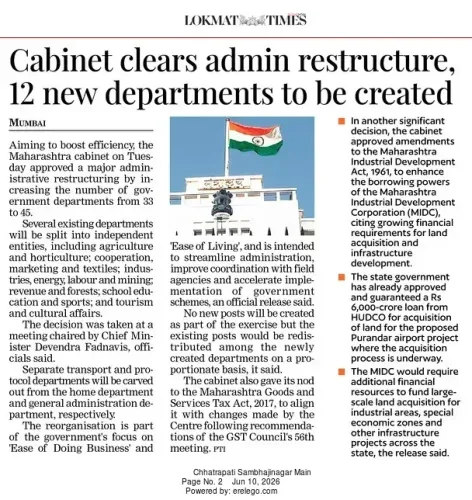
In a groundbreaking move, the MahaYuti government has restructured the Revenue Department, sanctioning 35,876 posts to streamline operations and improve citizen services. This overhaul aims to enhance administrative efficiency and responsiveness.
Key Takeaways
35,876 posts approved for the Maharashtra Revenue Department.
New structure aims for more efficient citizen services.
Includes three key divisions: Stamp Duty and Registration, Land Records, Revenue.
First major staffing change in nearly 20 years.
Expedited processes for establishing new offices.
Mumbai, April 2 (NationPress) In a significant step to address the growing demands on the state's revenue administration and provide expedited services to its residents, the MahaYuti government has sanctioned a revamped staffing framework for the Revenue Department.
This decision represents a substantial transformation in the departmental structure, with a total of 35,876 positions now officially approved.
The newly structured framework includes three essential divisions: Stamp Duty and Registration, Land Records, and the Revenue Department itself.
This initiative aspires to create a more citizen-centric and efficient revenue system.
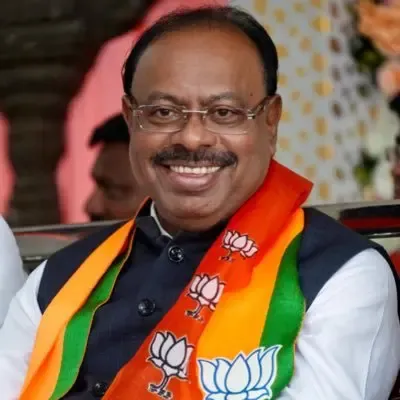
Revenue Minister Chandrashekhar Bawankule stated, “The Revenue Department serves as the backbone of our administration. This new staffing plan has been formulated keeping in mind the increasing workload over the years and the changing requirements of the populace. It will ensure greater coordination in administrative tasks, prevent citizens from having to travel long distances to reach new offices, and significantly enhance operational efficiency. This is an essential move toward transparent and responsive governance.”
After nearly two decades, the government has finalized the revised staffing plan for field employees, with the official Government Resolution (GR) issued today, as the last restructuring occurred in 2006.
Recognizing the significant transformations in both revenue and non-revenue responsibilities over the past twenty years, Minister Bawankule collaborated with Chief Secretary Rajesh Aggarwal and Additional Chief Secretary (Revenue) Vikas Kharge.
Following this, a high-level committee led by the Chief Secretary provided its endorsement.
The Maharashtra Government has approved a total of 35,876 roles, consisting of 34,576 regular posts and 1,300 outsourced positions, as detailed in the GR.
A new structural hierarchy has been established for the Revenue Department, covering divisional, district, and taluka levels.
The sanctioned framework comprises 6 Divisional Commissionerates, 36 Collector Offices, 192 Revenue Sub-Divisional Offices, 360 Tehsildar Offices, 2,625 Circle Offices (field level), and 15,747 Talathi Saza posts.
To further enhance administrative efficiency, the government has authorized the creation of 11 new Additional Collector Offices, 8 new Sub-Divisional Offices, 2 new Tehsildar Offices, and 69 Additional Tehsildar Offices, as stated in the GR.
The revised plan, which is informed by the recommendations of the Umakant Dangat Committee, also seeks to infuse modernity and speed into departmental processes.
The determination of headquarters and jurisdictions for the newly established offices will now be expedited at the District Collector level.
Point of View
Reflecting a commitment to citizen service and operational excellence.
NationPress
19 Sept 2026
Frequently Asked Questions
What is the total number of posts sanctioned for the Revenue Department?
The Maharashtra government has sanctioned a total of 35,876 posts for the Revenue Department.
When was the last staffing restructuring before this approval?
The last restructuring of the Revenue Department's staffing occurred in 2006.
What are the main divisions included in the new staffing structure?
The new staffing structure comprises three main divisions: Stamp Duty and Registration, Land Records, and the Revenue Department.
Who is the Revenue Minister of Maharashtra?
The current Revenue Minister of Maharashtra is Chandrashekhar Bawankule.
How will this staffing overhaul benefit citizens?
This overhaul aims to enhance administrative efficiency, reduce travel distances for citizens to access services, and improve overall governance.