Maharashtra passes Women Farmers Empowerment Bill 2026
Synopsis
The Maharashtra Legislative Assembly passed the Mahila Shetkari Sakshamikaran Bill, 2026 on 2 July, pledging dignified recognition and equal opportunity to every woman farmer in the state — a landmark step in India's long-running effort to close the gender gap in agriculture.
Key Takeaways
The Maharashtra Mahila Shetkari Sakshamikaran Bill, 2026 was passed by the Maharashtra Legislative Assembly on 2 July 2026 .
The bill aims to provide every woman farmer in Maharashtra with formal dignified identity and equal opportunity.
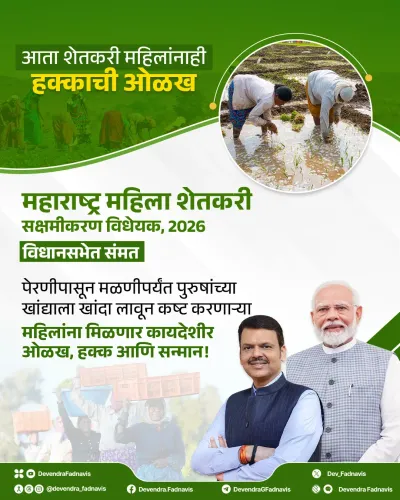
The announcement was made by the Chief Minister's Office of Maharashtra via an official post in Marathi on X.
The legislation builds on the central Mahila Kisan Sashaktikaran Pariyojana (2010-11) and the 2005 Hindu Succession Act amendments that granted daughters equal property rights.
Women in agrarian-distress regions such as Vidarbha and Marathwada are among the key intended beneficiaries.
Implementation rules, budget allocation, and gazette notification are the next steps to watch.
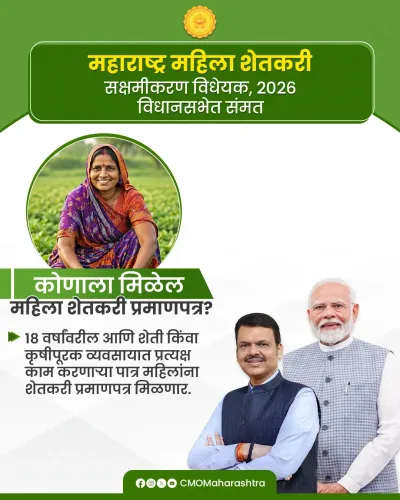
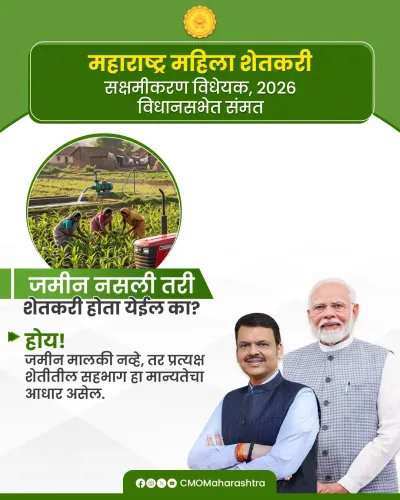
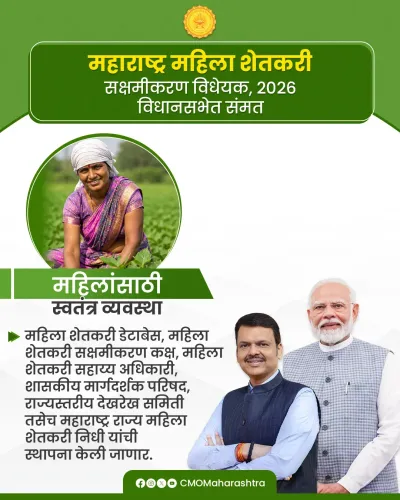
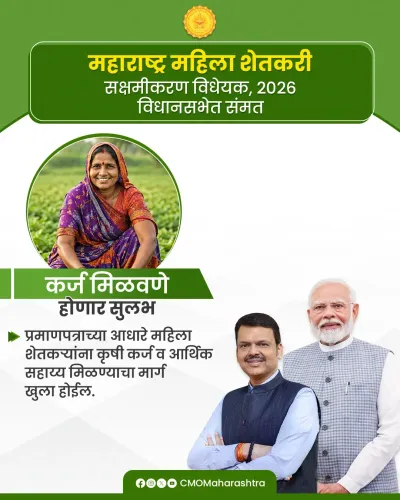
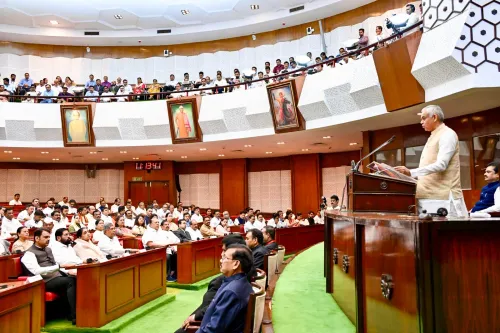
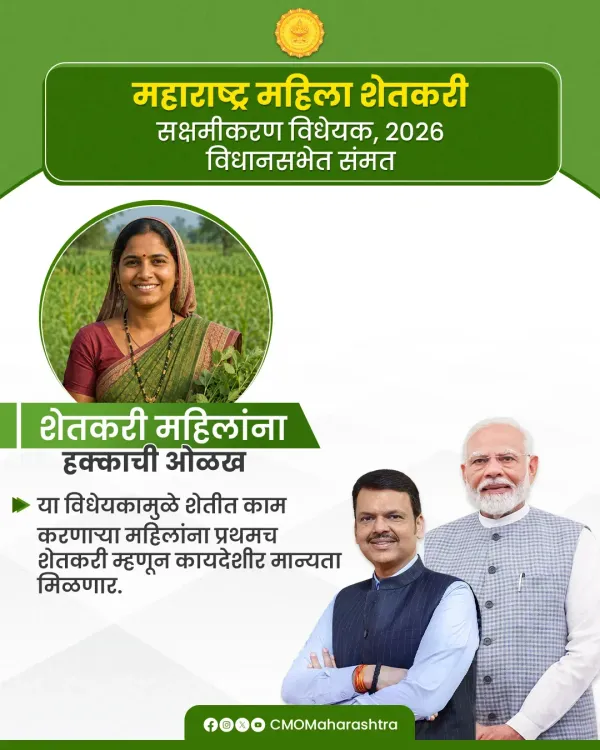
The Chief Minister's Office of Maharashtra announced on Thursday, 2 July 2026 that the Maharashtra Mahila Shetkari Sakshamikaran Bill, 2026 — the Maharashtra Women Farmers Empowerment Bill — was passed by the state legislative assembly, marking what the office called a historic step toward recognition and equal opportunity for every woman farmer in the state.
Context
The CMO's post, written in Marathi, declared: 'महिला शेतकरी सक्षमीकरणाच्या दिशेने ऐतिहासिक पाऊल' ('A historic step toward women farmer empowerment'), adding that the bill guarantees every woman farmer 'dignified identity and equal opportunity.' The hashtags #महिला_शेतकरी_सक्षमीकरण and #MahilaShetkariSakshamikaran accompanied the announcement, signalling a coordinated public outreach effort around the legislation. The Maharashtra Legislative Assembly is the lower house of the state legislature and holds authority over state-level bills on agriculture and social welfare. The passage of this bill represents a formal legislative commitment — not merely a scheme or executive order — to the empowerment of women in the farming sector.Policy Backdrop
India's policy landscape has long grappled with a stark gender gap in agriculture. Women perform a disproportionately large share of farm labour — from sowing and weeding to post-harvest processing — yet hold a fraction of land titles and have limited access to credit, inputs, and institutional decision-making. At the central level, the Mahila Kisan Sashaktikaran Pariyojana (MKSP), launched in 2010-11 under the Ministry of Rural Development, sought to build capacity and improve resource access for women in agriculture through skill development and credit linkage. Separately, the 2005 amendments to the Hindu Succession Act granted daughters equal coparcenary rights in ancestral property — a foundational legal shift that influenced subsequent state-level efforts on women's land rights. Maharashtra, a western Indian state with a large agricultural workforce where women constitute a substantial share of cultivators and labourers, now advances that arc with dedicated state legislation.Stakeholders and Impact
The primary beneficiaries are women farmers across Maharashtra, a group that has historically faced barriers to formal recognition as 'farmers' — a classification that determines eligibility for crop insurance, subsidised inputs, institutional credit, and government relief in times of drought or crop failure. Legal recognition under a dedicated state act could unlock these entitlements more directly than scheme-based approaches. Agricultural households in Vidarbha, Marathwada, and other agrarian-distress regions of the state stand to be particularly affected, given the high proportion of women who shoulder farming responsibilities in those areas. Civil society organisations working on women's land rights and rural livelihoods will also watch implementation closely, as the gap between legislative intent and on-ground delivery has historically been significant in this domain.What's Next
The passage of the bill in the assembly is the first step; the legislation must now receive assent and be notified in the official gazette before it takes legal effect. State government notifications detailing implementation rules, grievance mechanisms, and budget allocations will be critical to watch. Observers will also track whether the bill catalyses parallel legislative action in other state assemblies where similar gender gaps in agriculture persist. If implemented with adequate resources, the Maharashtra Mahila Shetkari Sakshamikaran Bill, 2026 could serve as a legislative template for gender-responsive agrarian reform across India.Point of View
A qualitatively different commitment. It arrives at a moment when agrarian distress and women's economic participation are both high on the national policy agenda, lending the legislation political as well as social weight. The real test will be in the implementation: whether formal recognition translates into measurable gains in credit access, land titling, and institutional voice for women cultivators. If Maharashtra moves swiftly on gazette notification and resource allocation, it could pressure other large agrarian states to follow with comparable legislation.
NationPress
2 Jul 2026
Frequently Asked Questions
What is the Maharashtra Mahila Shetkari Sakshamikaran Bill 2026?
The Maharashtra Mahila Shetkari Sakshamikaran Bill, 2026 is a state legislation passed by the Maharashtra Legislative Assembly on 2 July 2026, aimed at providing women farmers in Maharashtra with formal recognition, dignified identity, and equal opportunity in agriculture.
When was the Maharashtra Women Farmers Empowerment Bill passed?
The bill was passed by the Maharashtra Legislative Assembly on 2 July 2026 , as announced by the Chief Minister's Office of Maharashtra.
How does this bill help women farmers in Maharashtra?
The bill is designed to give women farmers a formal, dignified identity and equal opportunities — which can improve their access to crop insurance, institutional credit, subsidised inputs, and government relief programmes that currently require proof of farmer status.
What is the Mahila Kisan Sashaktikaran Pariyojana and how is it related?
The Mahila Kisan Sashaktikaran Pariyojana (MKSP) is a central government scheme launched in 2010-11 to empower women in agriculture through skill development and credit linkage. The Maharashtra bill builds on this national policy foundation by creating a dedicated state law rather than relying on scheme-based support.
What happens after the Maharashtra Women Farmers Bill is passed in the assembly?
After assembly passage, the bill requires gubernatorial assent and official gazette notification before it becomes law. The state government will then need to issue implementation rules and allocate a budget for the bill's provisions to take effect on the ground.