CM Fadnavis to Reveal Budget Amid Rising Debt and Ambitious Goals for Maharashtra 2047
Synopsis
As Maharashtra grapples with a staggering Rs 9.32 lakh crore debt, CM Fadnavis prepares to unveil the 2026-27 budget, aiming for a balanced approach between welfare and fiscal discipline to achieve ambitious economic targets.
Key Takeaways
Record debt : Maharashtra faces a debt of Rs 9.32 lakh crore.
Ambitious economic goals : Aiming for a one trillion dollar economy by 2030.
Key welfare schemes : Includes monthly allowances for women and grants for farmers.
Fiscal discipline : Commitment to maintaining fiscal deficit below 3% of GSDP.
Innovative revenue strategies : Exploring options like asset recycling for financial management.
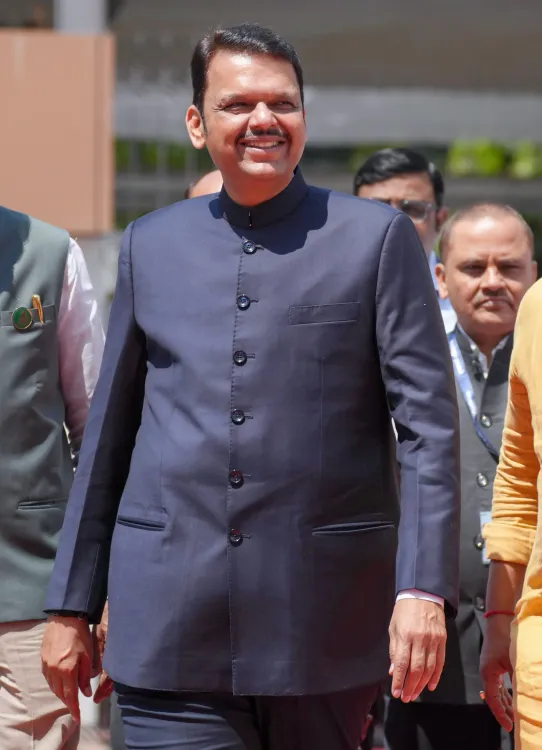
Mumbai, March 6 (NationPress) Facing an unprecedented debt of Rs 9.32 lakh crore and the ambitious target of achieving a one trillion dollar economy by 2030, along with a five trillion dollar vision under the Viksit Maharashtra 2047 initiative, Maharashtra Chief Minister Devendra Fadnavis, who oversees both the planning and finance portfolios, is set to unveil the state's annual budget for 2026-27 this Friday.
The chief minister finds himself in a challenging position as the budget is anticipated to emphasize “Reform over Rhetoric” — a delicate balance between preserving investor confidence and addressing the social costs associated with a rural economy grappling with climate-related challenges and stagnant minimum support price (MSP) demands.
Despite Maharashtra's status as India's growth engine, projected to grow at 7.9% in 2025-26, it is under immense financial pressure due to escalating liabilities and significant infrastructure investment needs. The government aims to keep the fiscal deficit under 3% of GSDP, complying with the Fiscal Responsibility and Budget Management (FRBM) Act, while also maintaining the revenue deficit below 1%.
In his budget, the chief minister is expected to prioritize fiscal prudence while ensuring adequate funding for welfare initiatives and necessary capital expenditures to enhance state assets.
A considerable part of the budget, estimated at Rs 60,000 crore, is earmarked for three flagship schemes that are considered essential despite fiscal constraints. These include the Ladki Bahin Yojana, which provides a monthly allowance of Rs 1,500 to eligible women (totaling Rs 36,000 crore annually), the Namo Shetkari Yojana, offering an annual grant of Rs 6,000 to farmers, and the Free Electricity for Farmers program, ensuring free power for over 40 lakh farmers using pumps up to 7.5 HP until 2029.
To balance populist expenditures, the state intends to rely on substantial capital investments, supported by Rs 1 lakh crore in central tax devolution and special project allocations for initiatives including high-speed corridors, metro expansions, and the development of Tier II and Tier III cities.
The chief minister has indicated that tough decisions will be made, which will be reflected in the budget.
To reconcile the Rs 60,000 crore annual cost of populist programs with the need for fiscal discipline, the chief minister is likely to emphasize structural efficiency rather than increasing taxes. The government has begun to streamline the Ladki Bahin Yojana beneficiary list, reducing it from 24.5 million to 22.5 million and employing AI and Aadhaar-linked cross-verification with Income Tax and GST data to automatically disqualify ineligible claimants. This process may save the state between Rs 3,000 to Rs 5,000 crore annually while still supporting those in genuine need.
Instead of depending solely on tax revenue, CM Fadnavis might consider an “Asset Recycling” strategy. This could involve leasing underutilized government land, prime real estate in Mumbai/Pune, or selling Transferable Development Rights for government properties. Additionally, future toll revenues from the Samruddhi Expressway and the upcoming Coastal Road may be leveraged to generate immediate funds for debt repayment.
Thanks to a favorable tax devolution formula, Maharashtra is projected to receive a record Rs 98,306 crore from the Union Government. This unexpected influx will likely be utilized to protect welfare programs from potential cuts. The CM has a unique chance to shift substantial infrastructure costs onto the Union Budget, thereby allowing state-level Tax Revenue (OTR) to address the revenue deficit.
By concentrating on these “back-end” reforms, CM Fadnavis is expected to maintain the political goodwill associated with welfare schemes while preventing the state’s debt-to-GSDP ratio from escalating further.
CM Fadnavis has frequently championed the concept of “transformative leadership”, and this budget is expected to demonstrate that the state can be both supportive of its farmers and reliable to its creditors.
(For inquiries, contact Sanjay Jog at sanjay.j@ians.in)
Point of View
As CM Fadnavis must navigate the complexities of substantial debt while aiming to achieve ambitious economic targets. The focus on welfare amidst fiscal discipline reflects a commitment to both growth and social responsibility.
NationPress
7 Oct 2026
Frequently Asked Questions
What is the current debt of Maharashtra?
Maharashtra's current debt stands at an unprecedented Rs 9.32 lakh crore.
What are the key goals for Maharashtra by 2047?
Maharashtra aims to achieve a five trillion dollar economy by 2047.
What are the significant schemes in the 2026-27 budget?
Key schemes include the Ladki Bahin Yojana, Namo Shetkari Yojana, and Free Electricity for Farmers.
How is Maharashtra planning to manage its fiscal deficit?
The state aims to keep its fiscal deficit below 3% of GSDP, adhering to the FRBM Act.
What is 'Asset Recycling' in the context of this budget?
Asset Recycling refers to leveraging underutilized government assets to generate revenue for debt servicing.