Jayant Patil Demands Maharashtra Government to Halt DPT Vaccine Strain Sale

Synopsis
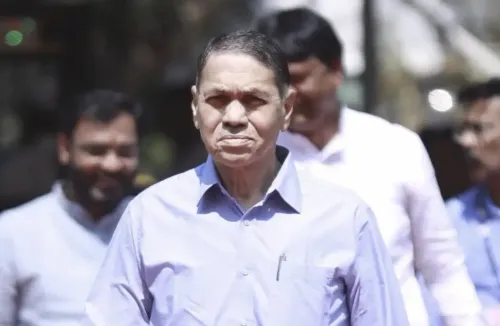
In a recent letter, NCP MLA Jayant Patil has urged the Maharashtra government to cancel the proposed sale of the DPT vaccine strain, emphasizing the historical and financial significance of this biological asset and advocating for Haffkine's independent production.
Key Takeaways
Jayant Patil opposes the sale of the DPT vaccine strain.
He urges the Maharashtra government to retract the proposal.
The Haffkine Institute possesses the capability to produce vaccines independently.
The vaccine strain is deemed a rare and valuable biological asset.
Concerns over privatization could affect public health accessibility.
Mumbai, April 9 (NationPress) NCP (SP) MLA Jayant Patil has expressed his disapproval in a letter addressed to Maharashtra Chief Minister Devendra Fadnavis regarding the suggested transfer of the DPT (diphtheria, pertussis, and tetanus) vaccine seed strain to a private firm. He strongly urged the government to retract this proposal immediately.
Patil emphasized that the Haffkine Bio-Pharmaceutical Corporation is crucial in the vaccination process and possesses the capability to manufacture DPT vaccines.
He described the seed strain as a rare and highly valued biological asset, with a market worth in the thousands of crores, and voiced his objections to its sale.
The Haffkine Institute was founded in honor of scientist Waldemar Haffkine, who created vaccines aimed at benefiting humanity, deliberately choosing not to patent his innovations. Patil argued that pursuing the sale without respecting these foundational principles would tarnish Haffkine's legacy.
He called for the government to cancel the initiative to sell the vaccine seed strain to any private entity, suggesting that Haffkine should be instructed to independently commence vaccine production to ensure affordable access and bolster the public healthcare system.
Previously, during the budget session on March 24, Maharashtra Congress Legislature Party leader Vijay Wadettiwar had raised similar concerns about the potential transfer of the historically significant vaccine strain from the Haffkine Institute to a private firm.
In a point of information raised in the State Assembly, Wadettiwar questioned the swift invitation for an Expression of Interest by the institute.
“The DPT vaccine strain held by Haffkine is an extremely rare and historic bio-resource worth hundreds of crores. Yet, the institute rushed into this process without proper discussion,” he noted.
Wadettiwar also questioned why a public institution capable of independently producing vaccines would consider transferring such a valuable asset to a private organization.
“If Haffkine can manufacture vaccines on its own, why is a biological asset valued at around Rs 1,500 crore being handed to a private entity?” he queried.
He cautioned about the broader implications, stating that privatization of the strain could lead to increased vaccine costs, which would adversely affect the general public and weaken the public health system.
“Allowing a private company to control the state's valuable biological resources poses a serious threat. The process for transferring the strain must be halted immediately, and Haffkine should be empowered to enhance its own production capabilities,” he added.
Founded in 1899, the Haffkine Institute is one of India's oldest biomedical research institutions, dedicated to training, research, and testing relating to infectious diseases.
Point of View
If not reconsidered, could undermine public health and accessibility. The debate highlights the necessity of maintaining public control over essential health resources while ensuring the legacy of scientific contributions is honored.
NationPress
19 Sept 2026
Frequently Asked Questions
What is the DPT vaccine?
The DPT vaccine protects against diphtheria, pertussis (whooping cough), and tetanus.
Who is Jayant Patil?
Jayant Patil is an NCP (SP) MLA representing Maharashtra, advocating for public health and vaccine production.
Why is the DPT vaccine strain important?
The DPT vaccine strain is a rare biological asset vital for public health, with significant historical and financial value.
What is the Haffkine Institute?
The Haffkine Institute is one of India's oldest biomedical research institutes, focused on infectious diseases.
What are the potential consequences of privatizing the vaccine strain?
Privatizing the vaccine strain could lead to increased costs for vaccines, negatively impacting public health access.