Jayant Patil slams Maharashtra govt over ₹7,500 crore bridge landslide, 26 deaths in 7 days
Synopsis
NCP-SP legislator Jayant Patil told the Maharashtra legislature that 26 people died in just seven days of rain, a ₹7,500 crore expressway bridge — advised by consultants from six countries — suffered a landslide in its very first monsoon, and tree-root damage from road concretisation killed a child named Vihan. His indictment goes beyond monsoon mismanagement: it is a challenge to the credibility of every major infrastructure project the current government has announced.
Key Takeaways
NCP-SP legislator Jayant Patil raised the issue in the Maharashtra legislature on 9 July 2026 , targeting the state government over monsoon preparedness failures.
At least 15 people died in Mumbai and 11 in Raigad district between 30 June and 6 July 2026 ; a 13-year-old drowned in Nalasopara and a building collapse in Moshi trapped 18 people .
A landslide struck the Mumbai–Pune Expressway 'Missing Link' bridge, which cost ₹7,500 crore — more than double its original ₹3,500 crore budget — during its first monsoon season.
Patil invoked the Madhav Gadgil Committee report, warning that unregulated hill excavation in the Western Ghats is causing escalating landslides.
The Chief Minister had projected ₹12 lakh crore in investments for Maharashtra in 2018 ; Patil demanded accountability for that commitment.
A child named Vihan died after a tree fell, which Patil linked to road concretisation work cutting tree roots — a claim disputed by the Municipal Commissioner .
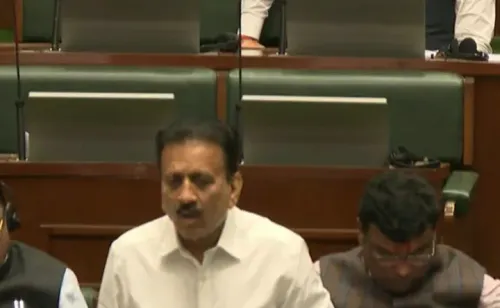
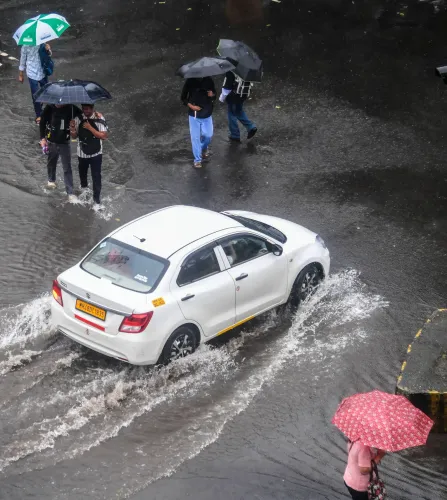
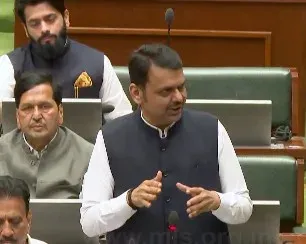
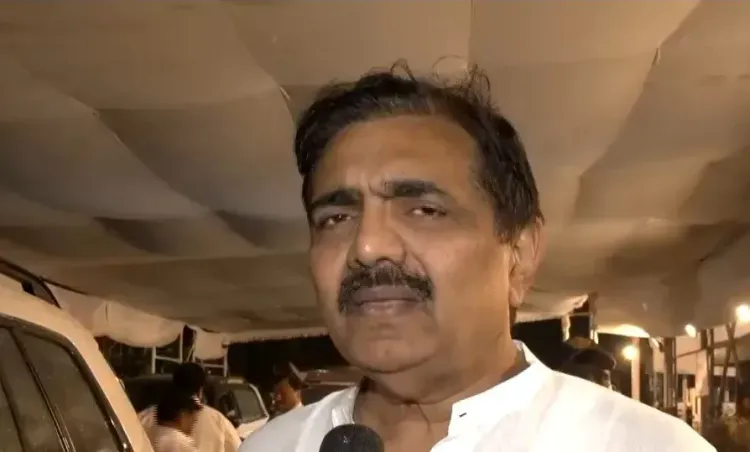
Nationalist Congress Party (Sharadchandra Pawar) legislator Jayant Patil on Thursday, 9 July 2026, launched a sharp attack on the Maharashtra government in the state legislature, citing the deadly toll of torrential rains on 5 and 6 July 2026 and demanding accountability for what he called a systemic failure of infrastructure planning and climate preparedness. At least 26 people lost their lives across Mumbai and surrounding districts in just seven days, from 30 June to 6 July 2026, according to Patil.
The Human Cost of the Rains
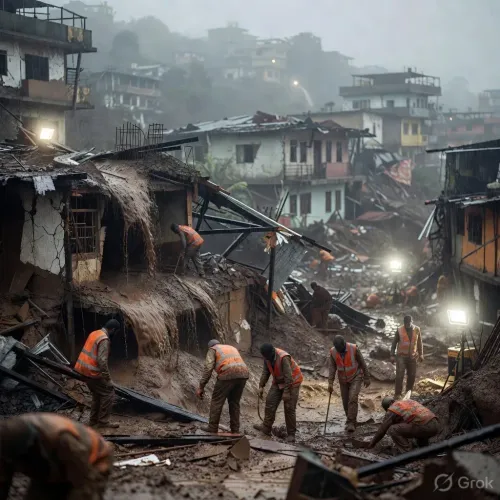
Patil told the House that 15 citizens died in various rain-related accidents across Mumbai between 30 June and 6 July 2026, while 11 people perished in Raigad district alone. In Nalasopara, a 13-year-old boy drowned in floodwaters. A building collapse in Moshi trapped 18 people. One person died in the Sangameshwar floods, and two others lost their lives in a landslide at Dahivadi. Thousands of gas cylinders were reportedly seen floating down the Patalganga river due to flooding.
Patil also highlighted the death of a young child named Vihan, who was killed when a tree fell — a tragedy he linked directly to road concretisation work that, he argued, suffocates tree roots and destabilises them. The Municipal Commissioner attributed the tree falls to heavy rain and wind, but Patil countered: 'When the primary roots of trees are cut down during roadworks, reducing their structural support, will they not collapse?'
The Mumbai–Pune Expressway Landslide
A centrepiece of Patil's criticism was a landslide on the Mumbai–Pune Expressway — specifically on the 'Missing Link' project — which forced the closure of a highway he said had never previously shut down. The bridge involved was originally budgeted at ₹3,500 crore but was completed at a cost of ₹7,500 crore, with consultants from six countries advising the government. Construction has been ongoing since 2018.
'The government claims to have used state-of-the-art technology, and a bridge initially budgeted at ₹3,500 crore was completed at a whopping ₹7,500 crore. Yet, a landslide occurred on it. Was the structural stability of the hill examined beforehand?' Patil asked. He noted that no vehicle was trapped under the debris — averting a potential mass-casualty event — but called it a damning indictment of quality control that a landslide struck during the very first spell of rain.
'The justification given is that this is the first rain. But surely, they have experienced the rains of the last four years. This is a failure of the consultants and engineers on site. The government must stop defending everything,' he said.
Western Ghats and the Gadgil Report
Patil argued that unchecked excavation of hills in the Western Ghats is loosening soil and triggering landslides onto major highways. He invoked the report of the Madhav Gadgil Committee, a landmark ecological study on the Western Ghats, as a crucial reference that the government has largely ignored. 'If innocent lives are to be lost every year despite spending crores of rupees, who is responsible for this corrupt system?' he asked.
He also noted that instances of heavy rainfall and cloudbursts are rising across Maharashtra, questioning why construction standards and practices have not been updated to reflect this climate reality.
Accountability and Political Context
Patil recalled that the Chief Minister had, in 2018, projected investments of ₹12 lakh crore into Maharashtra. 'We did not question it then, but there must be accountability now,' he said. He stressed that the opposition was not targeting individuals personally but was discharging its constitutional duty to highlight failures and demand rectification.
He traced Mumbai's metro expansion to the tenures of former Prime Minister Manmohan Singh and former Maharashtra Chief Minister Vilasrao Deshmukh, arguing that the current government's infrastructure record must be judged against a longer baseline. 'We are not opposed to infrastructure, but what is built must be of global standards,' he said.
With the monsoon season far from over, the pressure on the Maharashtra government to demonstrate improved emergency response and infrastructure accountability is set to intensify in the weeks ahead.
Point of View
500 crore Mumbai–Pune Expressway 'Missing Link' is the most damaging detail in Patil's speech — not because a landslide happened, but because it happened in the first monsoon after completion, on a project advised by consultants from six countries and built over eight years. That is not bad luck; it is a procurement and quality-assurance failure. The broader pattern Patil surfaces — rising cloudburst frequency against static construction standards, ignored Gadgil Committee recommendations, and a ₹12 lakh crore investment pledge with no public accountability framework — suggests Maharashtra's infrastructure governance is running a deficit that monsoon deaths are now making visible. The opposition's challenge is to convert legitimate grievance into a specific legislative demand; without that, the critique risks being absorbed as seasonal noise.
NationPress
8 Oct 2026
Frequently Asked Questions
What did Jayant Patil say about the Mumbai–Pune Expressway landslide?
Patil said the 'Missing Link' bridge on the Mumbai–Pune Expressway suffered a landslide during its very first monsoon, despite costing ₹7,500 crore — more than double its original ₹3,500 crore budget — and being designed with input from consultants across six countries. He questioned whether the structural stability of the hill had been assessed before construction began.
How many people died in the Maharashtra rains between 30 June and 6 July 2026?
According to Patil, at least 26 people died across Mumbai and surrounding districts in that seven-day period — 15 in Mumbai and 11 in Raigad district. Additional fatalities were reported in Nalasopara, Sangameshwar, and Dahivadi.
What is the Madhav Gadgil Committee report and why did Patil cite it?
The Madhav Gadgil Committee submitted a landmark ecological report on the Western Ghats, recommending strict limits on development and excavation in ecologically sensitive zones. Patil cited it to argue that unregulated hill excavation is loosening soil and triggering the landslides that are increasingly hitting Maharashtra's major highways.
Why did Patil raise the issue of tree deaths in Mumbai?
Patil argued that road concretisation work in Mumbai cuts the primary roots of trees, weakening their structural support and making them vulnerable to toppling. He linked this directly to the death of a child named Vihan, killed when a tree fell — a claim the Municipal Commissioner disputed, attributing the falls to heavy rain and wind.
What is the NCP (Sharadchandra Pawar) party's broader political argument on infrastructure?
The NCP-SP, led by Sharad Pawar, is not opposing infrastructure development but is demanding global-standard quality and public accountability. Patil reminded the House that the Chief Minister had pledged ₹12 lakh crore in investments for Maharashtra in 2018, and argued that citizens now have the right to demand measurable outcomes against that commitment.