Maharashtra Intensifies Efforts Against Drug Trafficking with MCOCA in Play
Synopsis
In a bold move, the Maharashtra government has adopted a 'Zero Tolerance' policy on drug trafficking, invoking MCOCA in multiple cases to combat the narcotics crisis. A dedicated task force has been established to dismantle the drug supply chain and ensure a safer, drug-free state.
Key Takeaways
Maharashtra's Zero Tolerance policy against drug trafficking.
MCOCA invoked in 14 cases.
Dedicated task force established to dismantle drug supply chains .
Collaboration between Police and MIDC for inspections.
Measures to address coal pollution and its health impacts.
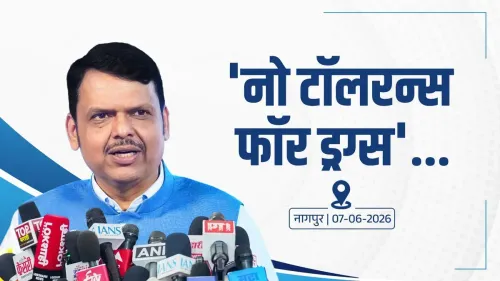
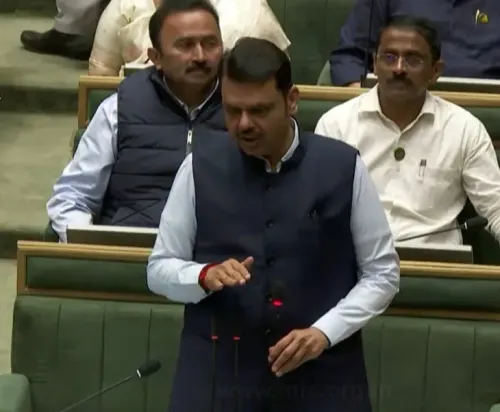
Mumbai, March 11 (NationPress) The Maharashtra government has initiated a comprehensive offensive against drug trafficking, implementing a “Zero Tolerance” approach towards the narcotics crisis.
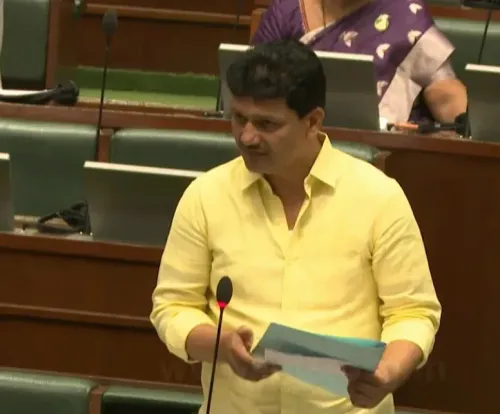
The stringent Maharashtra Control of Organised Crime Act (MCOCA) has been enforced in 14 separate cases, as Minister of State for Home, Yogesh Kadam, revealed during the Question Hour in the Legislative Council on Wednesday.
In response to a question from member Shashikant Shinde, other council members, including Satej Patil, Anil Parab, and Pravin Darekar, posed additional inquiries concerning the escalating drug issues.
Minister Kadam highlighted that the government has formed a specialized task force dedicated to dismantling the entire drug supply network, targeting everyone from producers to street-level sellers.
Notably, actions are not confined to distributors; those supplying raw materials and offering any support to drug syndicates are also being prosecuted under MCOCA.
He reiterated the government's pledge towards achieving a drug-free state and assured that the administration will pursue the most severe legal measures necessary.
Referring to a significant case in the Jawali taluka of Satara district, the Minister confirmed the arrest of 11 suspects.
All individuals involved in this case are facing MCOCA charges, with an intensive investigation ongoing to uncover further connections.
He pointed out a worrying trend of drug manufacturing sites being established in deserted factories or sheds located in rural regions.
“To counteract this, the Police department alongside the Maharashtra Industrial Development Corporation (MIDC) has commenced joint inspection operations. The police apparatus across rural Maharashtra is on high alert to locate and dismantle these illegal laboratories. This aims to undermine the financial and logistical support of organized drug cartels operating within the state,” he stated.
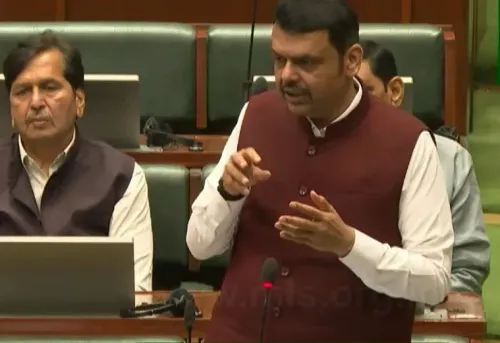
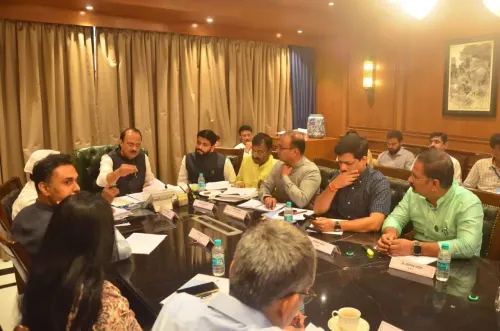
Meanwhile, Minister Shambhuraj Desai shared in the Legislative Council that a joint meeting of relevant departments will be organized shortly to tackle pressing concerns in Chandrapur district, including pollution from coal transport, overloaded vehicles, and deteriorating road conditions.
During the Question Hour, he mentioned that the meeting, which will involve the Environment, Transport, and Home departments, is set to occur immediately after the current assembly session.
This information was shared in response to a query from member Uma Khapre, with supplementary questions following from members Pravin Darekar, Abhijit Vanjari, Krupal Tumane, and Parinay Phuke.
Minister Desai outlined several strategic measures the government is undertaking.
“To tackle the issue of heavy vehicles transporting coal beyond allowable limits, the Police Traffic Branch and the Transport Department have been instructed to enforce strict measures. New regulations will mandate high-quality coverings for all coal-carrying vehicles. The Environment Department will provide specific technical guidelines for these coverings to ensure effective dust suppression,” he elaborated.
He also announced that directives have been issued to increase the number of “Flying Squads” from both the Police and RTO departments to monitor and halt overloaded transport. Road maintenance projects in Chandrapur have already been authorized using the District Mineral Foundation (DMF) funds.
Additionally, water-sprinkling systems are being installed along roadsides to minimize dust emissions.
Minister Desai noted that to alleviate the pressure on road infrastructure, Western Coalfields is executing a project valued at approximately Rs 480 crore.
This initiative aims to transition the transportation of nearly 10 million tonnes of coal from roadways to railway lines.
Addressing public health concerns, Minister Desai further indicated, “To tackle health issues stemming from coal pollution, directives will be issued to establish specialized health units in district hospitals funded by the Corporate Social Responsibility (CSR) initiatives of the respective companies.”
Point of View
This decisive action by the Maharashtra government reflects a growing recognition of the urgent need to tackle drug-related issues. The rigorous enforcement of MCOCA underscores the commitment to public safety and the well-being of citizens, aiming for a drug-free future.
NationPress
29 Sept 2026
Frequently Asked Questions
What is the Zero Tolerance policy?
The Zero Tolerance policy is an initiative by the Maharashtra government aimed at completely eliminating drug trafficking and related activities.
How many cases have been filed under MCOCA?
Currently, 14 cases have been filed under MCOCA in relation to drug trafficking.
What measures are being taken to address drug manufacturing?
The government has launched joint inspection drives and established a task force to identify and shut down illegal drug manufacturing sites.
What are the health implications of coal pollution?
Coal pollution can lead to various health issues, prompting the government to establish specialized health units to address these concerns.