Maharashtra Government to Utilize MCOCA for Food Adulterators
Synopsis
In a bid to enhance food security, Maharashtra's FDA Minister Narhari Zirwal announced that food adulterators will face legal actions under MCOCA. The state plans to intensify inspections and address issues related to untreated sewage affecting agriculture.
Key Takeaways
Maharashtra FDA plans to combat food adulteration.
Legal actions under MCOCA for offenders.
Special focus on milk supplies .
Efforts to enhance sewage treatment facilities.
New policies for redevelopment of PMC colonies.
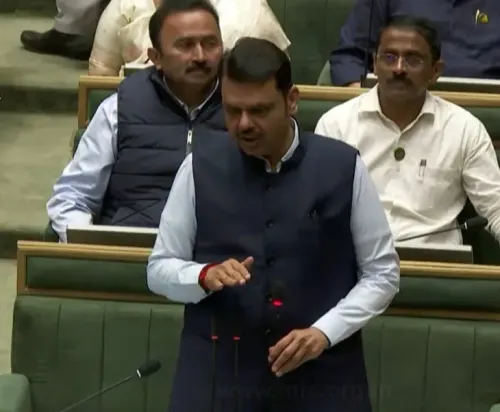
Mumbai, March 23 (NationPress) The Maharashtra Food and Drug Administration (FDA) Minister Narhari Zirwal announced in the State Legislative Council on Monday that to enhance food security across the state, inspection operations will be amplified, and those implicated in food adulteration will be prosecuted under the Maharashtra Control of Organised Crime Act (MCOCA).
Shiv Sena MLC Manisha Kayande posed the inquiry during the Question Hour.
Minister Zirwal reported that 14 individuals have been charged following raids conducted in Vasai and Andheri.
Efforts are underway to extern (deport) four individuals involved in these activities.
There is a specific focus on monitoring milk supplies entering Mumbai and other primary cities.
To tackle workforce shortages, a proposal has been presented to the Finance Department.
Recently, 197 new employees were hired and assigned after undergoing training.
The Minister also mentioned that a meeting will soon be arranged to discuss concerns regarding scented betel nuts.
In another legislative session, Radhakrishna Vikhe-Patil, the State Water Resources Minister, revealed that a decision will be made to impose penalties against the Pune and Pimpri Chinchwad Municipal Corporations for releasing untreated sewage into natural river systems, which has compromised water quality used in agriculture.
NCP MLA Dnyaneshwar Katke raised a motion of attention concerning the contaminated water affecting farm lands along the riverbanks in Haveli taluka.
Responding to this motion, Minister Vikhe-Patil emphasized that controlling escalating water usage and enhancing sewage treatment facilities is imperative.
"Measures will be implemented to ensure farmers obtain appropriately treated water suitable for agricultural purposes. A substantial volume of sewage is generated in Pune, with only 6.2 TMC being processed. The remaining sewage is discharged directly into the Mula-Mutha river, resulting in pollution," he stated.
"According to regulations, it is essential to treat sewage fully before discharging it into natural streams. Non-compliance incurs fines and charges at double the normal rate," Vikhe-Patil added.
Currently, nine treatment plants with a capacity of 477 MLD are operational in Pune.
New facilities are being established in collaboration with the Japan International Cooperation Agency (JICA), with several projects expected to finish by 2026. Additionally, sewage projects for recently merged villages are underway under 'AMRUT 2.0.'
Minister Vikhe-Patil also noted that a governmental policy will be developed to remove silt from large dams like Ujani and Jayakwadi, as well as smaller ones like Kukadi.
In response to a question from BJP member Hemant Rasane, Madhuri Misal, the Minister of State for Urban Development, informed the State Assembly that an independent policy is being formulated to address the redevelopment challenges of deteriorating Pune Municipal Corporation (PMC) colonies.
"Many municipal colonies are in a severely dilapidated condition, and temporary repairs are inadequate. Structural audits have highlighted the urgent need for comprehensive redevelopment. Work on 152 houses within an 11-storey building in Sane Guruji Colony is nearing completion, with allotments to be made via a lottery system," she stated.
Minister Misal further indicated that under the current policy, employees are expected to return the houses post-retirement.
However, demands for ownership rights and residents' reluctance to relocate to transit camps have delayed several projects, including the tender for Rajendranagar.
"Given that various colonies have distinct layouts, challenges related to FSI (Floor Space Index) arise. A comprehensive policy is being crafted for approximately 4,000 houses to speed up the redevelopment process," she concluded.
Point of View
Authorities are aiming to deter malpractices and ensure that citizens receive safe and nutritious food.
NationPress
26 Sept 2026
Frequently Asked Questions
Why is the Maharashtra government intensifying inspections?
The government aims to strengthen food security and ensure that food products are safe for consumers.
What actions are being taken against food adulterators?
Individuals involved in food adulteration will face prosecution under MCOCA, with ongoing inspections and legal actions being implemented.
How is untreated sewage affecting agriculture?
Discharging untreated sewage into rivers contaminates water used for agriculture, posing risks to crop quality and public health.
What initiatives are being taken for sewage treatment?
The Pune Municipal Corporation is working on expanding sewage treatment facilities to ensure proper management of wastewater.