What Were the Key Developments in Maharashtra in 2025?
Synopsis
In 2025, Maharashtra experienced significant political consolidation and economic ambitions despite facing social and fiscal challenges. With the ruling Mahayuti coalition in control, the state dealt with infrastructure growth, agrarian distress, and public safety concerns. What does this mean for the future of Maharashtra?
Key Takeaways
Maharashtra witnessed political consolidation under the Mahayuti coalition.
The state continued to attract significant economic investments.
Fiscal pressures and agrarian distress persisted.
Law and order issues remained a major concern.
Infrastructure projects advanced significantly, despite urban governance challenges.
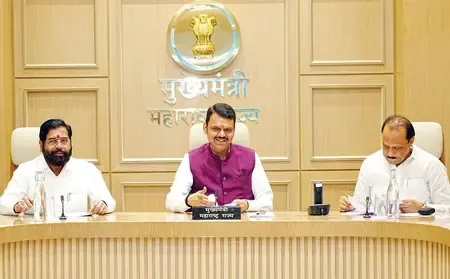
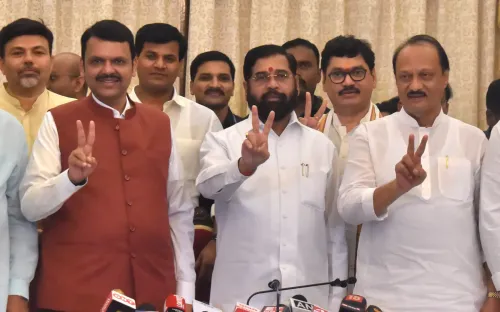
Mumbai, Dec 30 (NationPress) In 2025, Maharashtra emerged as a pivotal year of political consolidation, ensuring robust governance and an ambitious drive for economic growth, albeit with notable social and fiscal strains. The state maneuvered through the year under the stronghold of the ruling Mahayuti coalition, facing a diminished Opposition, ongoing infrastructure development, and persistent issues surrounding agrarian distress, public safety, and fiscal prudence.
This year was characterized by significant political realignments, an aggressive push for infrastructure and industrial growth, and continuous rural challenges, all while grappling with law and order issues. From local body elections to budgetary constraints, and major investment announcements to climate-related disruptions, Maharashtra experienced a multifaceted year defined by both stability and upheaval.
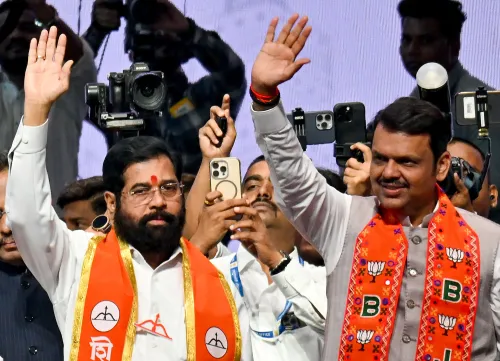
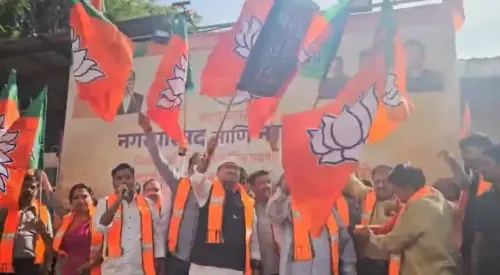
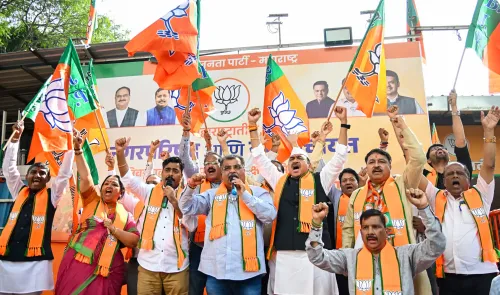
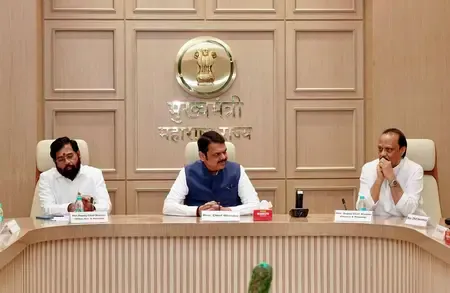
The political landscape was predominantly shaped by the sustained influence of the Bharatiya Janata Party-led MahaYuti alliance. The local body elections, such as those for municipal councils and nagar panchayats, showcased the organizational prowess of the ruling parties, particularly the BJP, while the Opposition struggled to reclaim its footing at the grassroots level.
Political vibrations continued as leaders and party workers shifted allegiances, particularly at the district and taluka levels. Although these changes did not immediately alter power dynamics, they underscored the perception of a fragmented Opposition and a politically unified ruling entity. The Opposition has yet to recover from its Assembly election defeat and recent setbacks in Nagar Parishad and Nagar Panchayat elections.
Agitations concerning Maratha and OBC reservations dominated political discussions. Prominent figures like pro-Maratha activist Manoj Jarange-Patil and senior OBC leader and Mahayuti minister Chhagan Bhujbal represented their respective stances. The government acted swiftly to address Jarange-Patil's concerns by implementing measures related to issuing Kunbi certificates to eligible Maratha community members and establishing a Cabinet committee to tackle OBC issues.
On the economic front, Maharashtra maintained its status as one of India’s critical growth engines. The state continued to draw investments in manufacturing, logistics, renewable energy, and services, bolstered by industrial corridors, urban infrastructure initiatives, and incentives for investors.
The government announced that numerous Memoranda of Understanding, valued at over Rs 15 lakh crore and signed during the World Economic Forum summit in Davos earlier this year, are at various stages of execution. Confidence was expressed in finalizing additional high-value MoUs at the upcoming WEF summit scheduled for January 2026.
Maharashtra led the nation in attracting foreign direct investment, contributing over 34 percent to the national share.
However, fiscal pressures remained an ongoing concern. A mounting public debt of Rs 9.34 lakh crore, a revenue deficit of Rs 45,891 crore, and a fiscal deficit of Rs 1,36,235 crore, combined with rising expenditures on salaries, pensions, and interest payments, kept the state's finances under scrutiny. The supplementary demands presented during the year indicated the government's efforts to reconcile developmental spending with revenue limitations.
Maharashtra also ranked among the top contributors to Goods and Services Tax (GST) collections nationally, reflecting the strength of its formal economy. Nonetheless, queries regarding revenue sustainability and long-term fiscal discipline continued to engage economists and policy analysts.
For rural areas, 2025 proved to be a mixed bag. Erratic weather patterns, including inconsistent rainfall and localized flooding, adversely affected crop yields in several regions. Farmers in Vidarbha, Marathwada, and parts of western Maharashtra faced distress due to crop failures and price fluctuations. The state government announced a relief package of nearly Rs 32,000 crore, alongside financial aid and insurance claims. However, farmer organizations continued to demand more extensive support, including loan waivers and improved procurement frameworks.
Law and order issues persisted as well. Crime statistics and high-profile incidents kept public focus on safety, especially concerning crimes against women and children. Urban centers like Mumbai, Pune, and Nagpur struggled with organized crime, cybercrime, and drug-related offenses, while rural areas experienced incidents linked to social tensions and land disputes.
The state police undertook recruitment drives and modernization initiatives, with numerous aspirants vying for limited government positions, reflecting both employment aspirations and underlying economic uncertainties among the youth. The government was compelled to enhance its efforts to combat the rising threat of cybercrime.
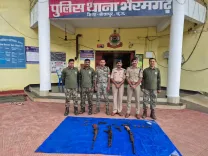
Anti-Maoist operations in parts of eastern Maharashtra showed progress, although officials recognized that long-term solutions would necessitate sustained developmental and governance interventions. The government reiterated its commitment to eradicating Left-Wing Extremism by next year, aligning with the Centre’s expressed objectives.
Infrastructure development emerged as one of the government's strongest focal points in 2025. Major road projects, metro expansions, coastal road initiatives, and urban transport upgrades advanced across Mumbai and other cities. Renewable energy and power transmission projects also gained traction, aligning with national climate and energy objectives.
Despite these advancements, urban governance challenges persisted. Heavy monsoon rains again revealed deficiencies in drainage systems, especially in Mumbai and surrounding areas. Housing affordability, traffic congestion, and environmental concerns remained pressing issues for urban residents.
In the social sector, health and education required ongoing attention. While enhancements in public health infrastructure were underway, service delivery gaps—particularly in tribal and remote areas—drew criticism. Incidents related to malnutrition and access to healthcare highlighted enduring inequalities.
In education, the government’s proposal to introduce Hindi as a third language sparked strong opposition from political parties, educators, and civil society groups. Although the move was eventually retracted, it led to a notable political moment as estranged cousins Uddhav and Raj Thackeray united to champion Marathi pride. This rapprochement resulted in an alliance for the Brihanmumbai Municipal Corporation elections, aimed at countering the BJP’s influence and safeguarding the interests of the Marathi ‘manoos’ and Mumbai.
As Maharashtra approaches 2026, the past year leaves a sense of cautious continuity. The year ahead will test whether the lessons learned in 2025 translate into more profound reforms or if the state continues along a path of gradual change in pursuit of the ambitious ‘Viksit Maharashtra 2047’ mission—to evolve into a five-trillion-dollar economy.
(Sanjay Jog can be contacted at sanjay.j@ians.in)
Point of View
I view Maharashtra's 2025 developments through a lens of cautious optimism. The state's political landscape has undergone notable shifts, with a dominant ruling coalition navigating significant economic challenges. While fiscal pressures and social strains persist, the government's commitment to infrastructure and investment signals a potential pathway for growth. It's crucial for Maharashtra to balance these dynamics to ensure a sustainable future.
NationPress
21 Sept 2026
Frequently Asked Questions
What were the main political events in Maharashtra in 2025?
In 2025, Maharashtra saw significant political consolidation under the ruling Mahayuti coalition, with local body elections showcasing the BJP's organizational strength, while the Opposition struggled to regain its footing.
How did Maharashtra perform economically in 2025?
Maharashtra retained its status as a key economic driver for India, attracting investments across various sectors and leading in foreign direct investment, although it faced ongoing fiscal pressures.
What were the main challenges faced by farmers in Maharashtra?
Farmers in Maharashtra encountered distress due to erratic weather patterns affecting crop yields, prompting the government to announce relief measures, although demands for more comprehensive support continued.
How did law and order issues affect Maharashtra in 2025?
Law and order challenges persisted, with increasing crime rates and high-profile cases raising public safety concerns, particularly in urban centers like Mumbai, Pune, and Nagpur.
What were the key infrastructure developments in Maharashtra in 2025?
Maharashtra made significant strides in infrastructure development, including major road projects, metro expansions, and renewable energy initiatives, aligning with national climate goals.