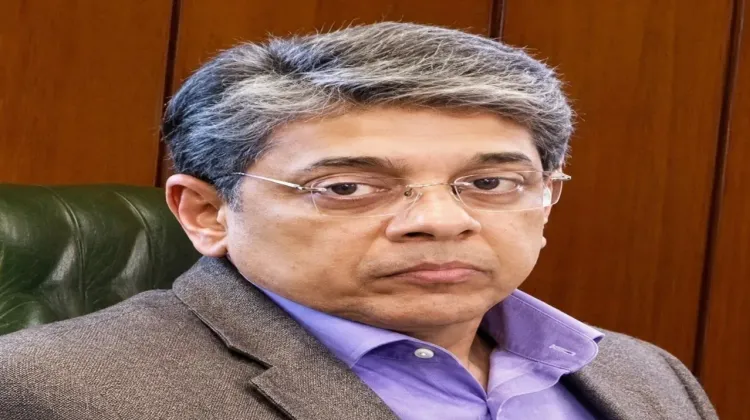
IPS officer Mahesh Dixit appointed new Intelligence Bureau chief
Synopsis
The Cabinet's Appointments Committee, chaired by PM Modi, has named Mahesh Dixit — a 1993-batch IPS officer with deep roots in J&K counter-intelligence — as the new Intelligence Bureau Director. His elevation comes with a two-year mandate to steer India's oldest and most sensitive domestic spy agency at a time of persistent internal security challenges.
Key Takeaways
Mahesh Dixit , a 1993-batch IPS officer from the Andhra Pradesh cadre , was appointed Intelligence Bureau Director on 25 June .
The appointment was cleared by the Appointments Committee of the Cabinet , chaired by Prime Minister Narendra Modi .
Dixit succeeds Tapan Kumar Deka , a 1988-batch IPS officer from the Himachal Pradesh cadre .
His tenure is fixed at two years from the date of assumption of charge, or until further orders.
Dixit previously led the IB's Subsidiary Intelligence Bureau (SIB) in Srinagar , overseeing operations across Jammu, Kashmir, and Ladakh post the 2019 Article 370 abrogation.
His expertise spans counter-terrorism, Pakistan-backed infiltration networks , radicalisation monitoring, and Left-Wing Extremism .
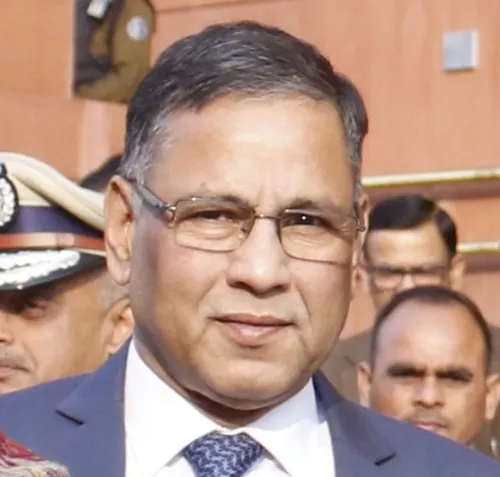
Senior Indian Police Service (IPS) officer Mahesh Dixit was appointed as the new Intelligence Bureau (IB) Director on Thursday, 25 June, succeeding incumbent chief Tapan Kumar Deka as head of India's primary internal security and counter-intelligence agency. The Appointments Committee of the Cabinet, chaired by Prime Minister Narendra Modi, cleared the appointment.
Key Details of the Appointment
Dixit, a 1993-batch IPS officer from the Andhra Pradesh cadre, has been appointed for a tenure of two years from the date of assumption of charge, or until further orders — whichever is earlier. The appointment was granted under the provisions of FR 56(d) and Rule 16 (1A) of the All India Services (Death cum Retirement Benefits) Rules, 1958.
He takes over from Tapan Kumar Deka, a 1988-batch IPS officer from the Himachal Pradesh cadre, who had been leading the IB in recent years.
Dixit's Career and Expertise
Prior to his elevation, Dixit was serving as Special Director in the Intelligence Bureau and is widely regarded as one of the agency's most experienced officers in intelligence gathering and internal security operations.
A significant portion of his career was spent in Jammu and Kashmir, where he led the IB's Subsidiary Intelligence Bureau (SIB) in Srinagar. In that capacity, he oversaw intelligence operations across Jammu, Kashmir, and Ladakh, and played a key role in monitoring security developments following the abrogation of Article 370 in 2019.
Dixit's portfolio has encompassed counter-terrorism operations, tackling Pakistan-backed infiltration networks, monitoring radicalisation activities, and addressing threats linked to Left-Wing Extremism (LWE) — a breadth of experience that positions him to handle the full spectrum of the IB's mandate.
About the Intelligence Bureau
The Intelligence Bureau operates under the Ministry of Home Affairs and is responsible for gathering domestic intelligence, conducting counter-terrorism operations, and protecting critical infrastructure. Often described as the oldest intelligence organisation in the world, the IB functions as the nerve centre of India's internal security architecture.
What This Means Going Forward
Dixit's appointment comes at a time when India's internal security landscape remains complex, with ongoing counter-insurgency operations in the northeast, residual militancy concerns in Jammu and Kashmir, and persistent LWE activity in central India. His deep operational experience in the most sensitive theatres is expected to shape the agency's priorities in the near term. The new IB chief is expected to assume charge shortly, after which his two-year tenure will formally commence.
Point of View
Including the post-Article 370 transition, make him a known quantity in the most sensitive theatre of India's internal security. What is notable is the relative seniority gap: Dixit is from the 1993 batch, succeeding a 1988-batch officer, which suggests the government prioritised domain expertise over conventional batch precedence. With elections in several states on the horizon and the J&K political situation still in flux, the new IB chief's institutional memory of the region could prove decisive. The real test will be whether the agency adapts its intelligence architecture to emerging threats — cyber-enabled radicalisation and hybrid warfare — beyond its traditional human intelligence strengths.
NationPress
24 Sept 2026
Frequently Asked Questions
Who is the new Intelligence Bureau Director?
Mahesh Dixit, a 1993-batch IPS officer from the Andhra Pradesh cadre, has been appointed as the new Intelligence Bureau Director. He was previously serving as Special Director within the IB and succeeds Tapan Kumar Deka.
When was Mahesh Dixit appointed as IB chief?
The Appointments Committee of the Cabinet cleared Mahesh Dixit's appointment on Thursday, 25 June. His two-year tenure begins from the date he formally assumes charge of the post.
Who did Mahesh Dixit succeed as IB Director?
Dixit succeeds Tapan Kumar Deka, a 1988-batch IPS officer from the Himachal Pradesh cadre, who was the incumbent Intelligence Bureau chief.
What is Mahesh Dixit's background and expertise?
Dixit has extensive experience in counter-terrorism, internal security, and intelligence operations. A significant part of his career was spent in Jammu and Kashmir, where he led the IB's Subsidiary Intelligence Bureau in Srinagar and monitored security developments after the abrogation of Article 370 in 2019. He has also worked on countering Pakistan-backed infiltration networks, radicalisation, and Left-Wing Extremism.
What is the Intelligence Bureau and what does it do?
The Intelligence Bureau is India's primary internal security and counter-intelligence agency, operating under the Ministry of Home Affairs. It is responsible for domestic intelligence gathering, counter-terrorism operations, and protecting critical infrastructure, and is often described as the oldest intelligence organisation in the world.