Mahua Moitra Accuses Modi Govt of Divide-and-Rule on Ladakh
Synopsis
TMC MP Mahua Moitra on 24 July 2026 accused the Modi government of a three-step divide-and-rule playbook against the Ladakh statehood agitation — co-opting Sonam Wangchuk, offering hollow talks to the Opposition, and branding protesters as anarchists — and demanded the resignation of a minister she called 'Pradhan'.
Key Takeaways
TMC MP Mahua Moitra posted on 24 July 2026 accusing the Modi government of a three-pronged 'divide and rule' strategy against the Ladakh agitation.
She alleged the government sought to broker a compromise with Ladakhi activist Sonam Wangchuk to neutralise him as a protest leader.
Moitra accused the Centre of offering a vague 'discussion' deal to the Opposition while simultaneously labelling protesters as violent anarchists.
Ladakh has been a Union Territory without a legislature since August 2019 , with residents demanding statehood and Sixth Schedule constitutional protections.
Moitra ended her post with a direct demand: the resignation of a minister she referred to as 'Pradhan'.
The issue is expected to be raised in Parliament, with the Ministry of Home Affairs response on Ladakh's core demands closely watched.
TMC MP Mahua Moitra on Friday, 24 July 2026 sharply criticised the Narendra Modi government, accusing it of deploying a three-pronged 'divide and rule' strategy to neutralise the ongoing agitation over Ladakh's demands for statehood and constitutional safeguards. The Krishnanagar MP also called for the resignation of a minister she identified only as 'Pradhan' in her post on X.
Context
Moitra outlined what she described as a deliberate sequencing of tactics by the central government. First, she alleged, the government sought to 'broker a compromise' with climate activist and Ladakhi agitation leader Sonam Wangchuk in order to neutralise him. Second, she claimed the government was dangling a vague 'discussion' offer to the broader Opposition as a 'lollipop deal.' Third, she accused the administration of painting protesters as 'violent anarchists' to justify a crackdown.
Posting in English, she concluded with a direct demand: 'Pradhan must resign.' The post did not elaborate on which specific incident or development triggered the statement, but the framing pointed to an escalation in the Ladakh standoff.
Policy Backdrop
The Ladakh agitation has its roots in the August 2019 abrogation of Article 370 and the subsequent bifurcation of the erstwhile state of Jammu and Kashmir. Ladakh was carved out as a Union Territory without a legislature, a decision that triggered sustained demands from residents for full statehood and inclusion under the Sixth Schedule of the Constitution, which provides autonomous governance protections to tribal areas.
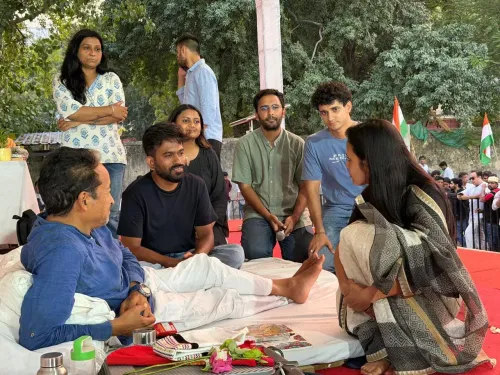
Sonam Wangchuk, the Ladakhi innovator best known for his work in education and sustainable technology, emerged as a prominent face of this movement. He has undertaken hunger strikes and long marches to press the demands, drawing national and international attention. The central government has periodically engaged in dialogue with delegations from Ladakh, but no formal legislative commitment on statehood or Sixth Schedule inclusion has been announced.
Stakeholders and Impact
The Ladakh agitation represents a convergence of interests: indigenous communities seeking constitutional protections for their land and culture, elected representatives demanding a legislature to give the region a democratic voice, and environmental activists concerned about unchecked development in a fragile Himalayan ecosystem. Wangchuk's prominence has given the movement a non-partisan face, complicating the government's ability to frame it in purely political terms.
Opposition parties, including the All India Trinamool Congress, have sought to align themselves with the Ladakhi demands, framing the government's response as emblematic of a broader pattern of managing dissent through selective engagement followed by coercion. Moitra's intervention signals that the issue is likely to find a prominent place in parliamentary proceedings.
What's Next
Any formal response from the Ministry of Home Affairs to Ladakh's core demands — statehood and Sixth Schedule inclusion — will be closely watched. With Parliament in session, Opposition members are expected to press the government on both the substance of the Ladakh talks and the treatment of protesters. Moitra's call for 'Pradhan's' resignation adds a personnel dimension to what has largely been a policy debate, suggesting the Opposition intends to sharpen its political attack on the issue.
Point of View
The broader Opposition engagement, and the law-and-order response to protests — into a single narrative of authoritarian management. By naming this as 'divide and rule,' the Opposition is borrowing a historically charged phrase to frame the Centre's approach as structurally colonial rather than merely tactical. The demand for 'Pradhan's' resignation personalises the attack, shifting pressure from policy to personnel. If the Ladakh issue surfaces prominently in the next parliamentary session, this framing could become the Opposition's dominant line of attack on the government's handling of border Union Territories.
NationPress
24 Jul 2026
Frequently Asked Questions
Why is Mahua Moitra criticising the Modi government over Ladakh?
Mahua Moitra accused the Modi government of using a divide-and-rule strategy against the Ladakh statehood agitation, alleging it sought to neutralise activist Sonam Wangchuk, offer hollow talks to the Opposition, and brand protesters as anarchists.
What are Ladakh's main demands from the central government?
Ladakh's core demands are full statehood — restoring a legislature — and inclusion under the Sixth Schedule of the Constitution, which provides autonomous governance and land protections to tribal areas. These demands arose after Ladakh was made a legislature-less Union Territory in 2019.
Who is Sonam Wangchuk and why is he mentioned?
Sonam Wangchuk is a Ladakhi innovator and activist who became a leading face of the movement demanding statehood and Sixth Schedule protections for Ladakh. Moitra alleged the government attempted to broker a compromise with him to weaken the agitation.
Who is 'Pradhan' that Moitra wants to resign?
Moitra's post called for the resignation of someone she referred to as 'Pradhan' without further elaboration. The specific identity and the precise reason for the resignation demand were not detailed in her post.
What is the Sixth Schedule of the Indian Constitution?
The Sixth Schedule provides for autonomous district and regional councils in certain tribal areas of northeast India, giving local bodies powers over land, forests, and customary law. Ladakhi activists want similar protections to safeguard indigenous land rights and culture.