Mahua Moitra Blasts Supreme Court Over Political Violence

Synopsis
TMC MP Mahua Moitra on November 19, 2026 publicly accused the Supreme Court of greenlighting political violence, citing a reported court remark comparing freedom fighters facing bullets to politicians facing eggs, and declaring the judiciary had 'failed democracy.'
Key Takeaways
TMC MP Mahua Moitra posted a sharp attack on the Supreme Court of India on November 19, 2026 .
She quoted a reported court remark — 'Freedom fighter faced bullets.
Go face eggs!' — as evidence of judicial indifference to violence against opposition figures.
Moitra accused the court of giving a 'green signal' for political violence through what she described as its casual contempt standards.
She declared: 'You have failed to protect us.
You have failed democracy.' — among the most direct public condemnations of the apex court by a sitting MP.
The Supreme Court has issued contempt notices against public figures for remarks on judges since at least 2019 , a pattern opposition leaders call selectively enforced.
Any contempt proceedings against Moitra over this post, or a judicial response, will be the next flashpoint to watch.
A Supreme Court quote about freedom fighters facing bullets has detonated into a full-throated political confrontation — and TMC MP Mahua Moitra is pointing the finger squarely at India's apex judiciary. On Thursday, November 19, 2026, the Krishnanagar MP posted a blistering indictment of the Supreme Court of India, accusing it of enabling political violence through what she called a reckless contempt standard that silences critics while leaving elected representatives unprotected.
The Court Quote That Lit the Fuse
Moitra quoted — with pointed sarcasm — what she described as words from the Supreme Court: 'Freedom fighter faced bullets. Go face eggs!' The remark, presented as a dismissal of complaints about political intimidation, became the centrepiece of her attack. 'Famous words of the Supreme Court who hold us in contempt at the drop of a hat,' she wrote, drawing a sharp contrast between the court's readiness to punish speech and its apparent indifference to physical attacks on opposition figures.
The charge is specific and stinging: Moitra argued that by telling targeted politicians to simply endure projectile attacks the way freedom fighters endured bullets, the court had effectively given a 'green signal' for violence. Her words — 'This is the judiciary's fault. You have failed to protect us. You have failed democracy.' — are among the most direct accusations levelled by an elected MP at the Supreme Court in recent memory.
A Recurring Fault Line Between Opposition MPs and the Judiciary
This is not an isolated outburst. Indian opposition leaders have increasingly accused the judiciary of asymmetric enforcement — swift contempt action against those who criticise courts, but slow or absent intervention when ruling-party supporters allegedly target opposition figures. The Supreme Court has issued contempt notices and orders against MPs and public figures for remarks on judges since at least 2019, a pattern that opposition benches argue has a chilling effect on legitimate political speech.
Trinamool Congress, West Bengal's ruling party and a key pillar of the opposition INDIA alliance, has long operated in a tense relationship with central institutions, including investigative agencies and courts. For Moitra personally, the stakes are especially charged: she is no stranger to high-profile institutional confrontations and has previously been at the centre of parliamentary and judicial proceedings.
What Moitra Is Actually Demanding
Strip the anger away and the underlying demand is constitutional: that the same institution empowered to punish contempt also exercise its Article 21 duty to protect the life and liberty of citizens — including elected representatives. The post's closing line, 'You have failed democracy,' frames this not as a party grievance but as a systemic indictment. Whether the Supreme Court responds — through clarification, through contempt proceedings against Moitra herself, or through silence — will itself become the next chapter of this confrontation.
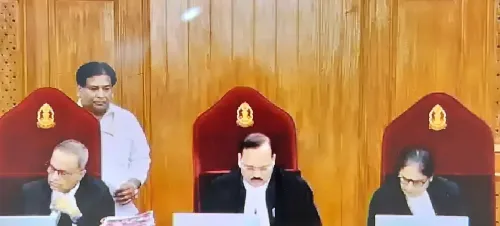
The post, which included a video, was shared on November 19, 2026 and quickly drew attention across political and legal circles. Expect the debate over judicial accountability and the limits of contempt law to sharpen considerably in the days ahead.
Point of View
Rhetorically, into evidence of institutional double standards. By anchoring her attack in a specific court quote rather than a general grievance, she is making a legal argument dressed as political outrage — forcing observers to ask whether the court's Article 21 obligations extend to proactive protection of elected representatives. The escalation fits a broader INDIA alliance strategy of framing institutional conflicts as democratic backsliding rather than mere partisan disputes. If contempt proceedings follow, Moitra becomes a martyr to the very dynamic she is describing — a political outcome her post may well be designed to invite.
NationPress
19 Nov 2026
Frequently Asked Questions
What did Mahua Moitra say about the Supreme Court?
On November 19, 2026, Moitra accused the Supreme Court of enabling political violence, citing a reported court remark — 'Freedom fighter faced bullets. Go face eggs!' — as proof of judicial indifference, and declared the court had 'failed democracy.'
What is the 'bullets vs eggs' Supreme Court quote Mahua Moitra referenced?
Moitra attributed the remark 'Freedom fighter faced bullets. Go face eggs!' to the Supreme Court, presenting it as a dismissal of complaints about physical attacks on opposition politicians. The specific case and proceeding in which it was made could not be independently verified from available information.
Can the Supreme Court take contempt action against Mahua Moitra for this post?
Yes. The Supreme Court has the power to initiate suo motu contempt proceedings for statements that scandalise the court or lower its authority. It has done so against MPs and public figures on multiple occasions since 2019. Whether it acts on Moitra's post is a key development to watch.
Why is TMC in conflict with the Supreme Court?
Trinamool Congress has clashed with central institutions — including courts and investigative agencies — over issues ranging from political violence in West Bengal to central agency actions against party figures. Opposition leaders, including TMC MPs, have accused the judiciary of asymmetric enforcement of contempt laws.
What does 'failed democracy' mean in Mahua Moitra's post?
Moitra used the phrase to argue that the Supreme Court, by allegedly shrugging off violence against opposition representatives while aggressively using contempt powers against critics, has abdicated its constitutional role as a protector of fundamental rights and democratic participation.