Mahua Moitra cites records to defend Suhrawardy Avenue's name
Synopsis
TMC MP Mahua Moitra posted archival evidence on 22 June 2026 asserting that Suhrawardy Avenue in Kolkata is named after Dr. Hassan Suhrawardy, Vice Chancellor of Calcutta University, directly accusing the BJP of letting anti-Muslim bias override basic historical research.
Key Takeaways
Mahua Moitra shared two images of what she called historical evidence on 22 June 2026 regarding Suhrawardy Avenue in Kolkata .
The post asserts the avenue was named after Dr.
Hassan Suhrawardy , Vice Chancellor of Calcutta University , and no other figure.
Moitra directly accused the BJP of allowing 'hatred for Muslims' to override the need for basic historical research.
The post credited @honubroto for research assistance in surfacing the archival material.
The dispute reflects a broader pattern of TMC–BJP clashes over Muslim-associated public heritage in West Bengal .
Any formal resolution would require a response from the Kolkata Municipal Corporation or academic institutions such as Calcutta University .
TMC MP Mahua Moitra on Monday, 22 June 2026, shared what she described as historical evidence establishing that Suhrawardy Avenue in Kolkata was named after Dr. Hassan Suhrawardy, who served as Vice Chancellor of Calcutta University — and not any other figure as some have claimed. The post, accompanied by two images of documentary evidence, directly accused the Bharatiya Janata Party of letting anti-Muslim bias override the need for basic historical research.
Context
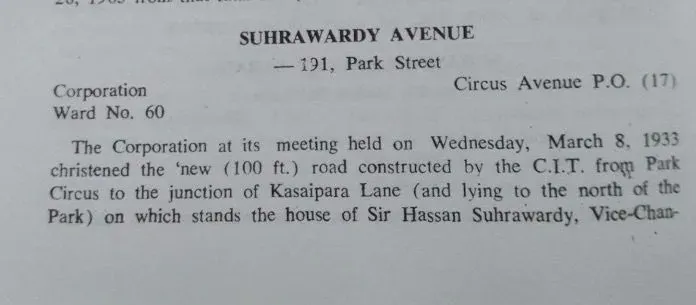
Moitra wrote: 'Here is historical evidence to show Suhrawardy Avenue was named after Dr. Hassan Suhrawardy, Vice Chancellor of Calcutta University and NOT anyone else. BJP's hatred for Muslims overshadows necessity for basic research.' The post credited a user identified as @honubroto for the research assistance. The two images attached to the post appear to contain archival or documentary records supporting the attribution to Dr. Hassan Suhrawardy.
Dr. Hassan Suhrawardy was a prominent academic figure associated with Calcutta University, where he held the position of Vice Chancellor. The avenue bearing the Suhrawardy name has periodically become a flashpoint in debates over public nomenclature in West Bengal, with competing claims about which historical figure the road actually commemorates.
Policy Backdrop
Disputes over street names, monuments, and institutional legacies linked to Muslim historical figures have recurred across several Indian states since the mid-2010s. In West Bengal specifically, the Trinamool Congress and the BJP have clashed repeatedly over the framing of partition-era personalities and the preservation — or revision — of public names tied to them.
Such contestations typically pit local historical records and municipal archives against broader national political narratives. The Kolkata Municipal Corporation holds authority over official avenue nomenclature, and any definitive resolution would ordinarily require a formal archival review or civic declaration.
Stakeholders and Impact
Kolkata residents, urban historians, and archivists are the most directly affected stakeholders in this nomenclature dispute. For the academic community, the episode raises questions about the standard of historical verification applied before political claims about public spaces are made or amplified.
For the BJP, the accusation cuts to a recurring vulnerability — that the party's positions on Muslim-associated heritage are driven by ideology rather than documented fact. For the TMC, the episode reinforces its identity as a defender of West Bengal's pluralist civic heritage ahead of ongoing electoral competition in the state.
What's Next
Attention will now turn to whether the BJP responds with a counter-rebuttal or additional archival evidence of its own, and whether the Kolkata Municipal Corporation issues any formal clarification on the official basis for the avenue's name. Academic institutions, particularly Calcutta University, may also be drawn into the debate given their direct connection to Dr. Hassan Suhrawardy's legacy.
The episode is unlikely to remain confined to social media: in West Bengal's politically charged environment, street-name disputes have a track record of escalating into formal petitions, civic hearings, and legislative floor exchanges — making this an early marker in what could become a wider archival and political reckoning over Kolkata's public memory.
Point of View
She attempts to shift the debate from sentiment to verifiable record, a posture that places the burden of rebuttal squarely on the BJP. The episode fits a wider TMC playbook of defending pluralist civic identity in a state where that identity is itself an electoral asset. How the BJP responds — or whether it chooses silence — will signal how confident it is in the historical basis of its original claim.
NationPress
22 Jun 2026
Frequently Asked Questions
Who was Dr. Hassan Suhrawardy?
Dr. Hassan Suhrawardy was a prominent academic who served as Vice Chancellor of Calcutta University. Mahua Moitra's post asserts that Suhrawardy Avenue in Kolkata was named in his honour, citing historical documents as evidence.
Why is Suhrawardy Avenue in the news?
Suhrawardy Avenue is in the news because TMC MP Mahua Moitra shared archival evidence on 22 June 2026 contesting claims about who the Kolkata road was named after, directly accusing the BJP of spreading historically inaccurate narratives.
What did Mahua Moitra say about the BJP?
Mahua Moitra accused the BJP of allowing its 'hatred for Muslims' to overshadow the need for basic historical research, arguing the party had misidentified the person after whom Suhrawardy Avenue in Kolkata is named.
Is Suhrawardy Avenue named after Huseyn Shaheed Suhrawardy?
Mahua Moitra's post explicitly argues it is not. She presented what she described as historical evidence that the avenue was named after Dr. Hassan Suhrawardy, Vice Chancellor of Calcutta University, and 'NOT anyone else.' The specific BJP claim being rebutted has not been independently verified.
What authority decides street names in Kolkata?
The Kolkata Municipal Corporation holds formal authority over official avenue and street nomenclature in the city. Any definitive public ruling on the naming of Suhrawardy Avenue would need to come from the corporation or an official archival body.