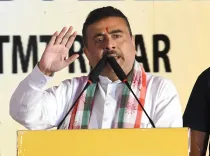
Mahua Moitra Flags Aadhaar Limits as Nilekani Gets New Role

Synopsis
TMC MP Mahua Moitra cautioned the public on 26 July 2026 about Nandan Nilekani's new government assignment, pointing out that his last major task — Aadhaar — is legally not proof of citizenship, domicile, or date of birth.
Key Takeaways
Mahua Moitra , TMC MP from Krishnanagar , posted a public caution about Nandan Nilekani on 26 July 2026 .
She described Aadhaar as 'a picture card which is neither proof of date of birth nor domicile nor citizenship.' Nilekani chaired UIDAI from 2009 and led the rollout of Aadhaar to over 1.3 billion residents.
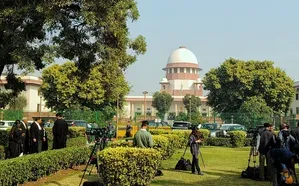
The Supreme Court's 2018 Puttaswamy ruling confirmed Aadhaar does not establish citizenship or domicile.
The specific new government assignment given to Nilekani has not been officially detailed and remains unverified.
Parliamentary oversight through questions and committee reports is expected once the new mandate is formalised.
Trinamool Congress MP Mahua Moitra on Sunday, 26 July 2026, took to X to issue a pointed caution about Nandan Nilekani, the co-founder of Infosys and architect of the Aadhaar biometric identity programme, as Nilekani was reported to have been entrusted with a new high-powered assignment by the government. Moitra warned the public to 'beware,' drawing a direct line between Nilekani's current mandate and his previous one — the creation of Aadhaar — which she described as 'a picture card which is neither proof of date of birth nor domicile nor citizenship.'
Context
Moitra's post arrives at a moment when Nilekani's name has re-entered public conversation in connection with a fresh government-backed digital or governance initiative. Without elaborating on the specifics of the new assignment, the Krishnanagar MP invoked Nilekani's most prominent past role — chairing the Unique Identification Authority of India (UIDAI) — as a cautionary reference point. Her sign-off, 'Just saying :-),' signals the remark is framed as political commentary rather than a formal allegation.
Nilekani was appointed the first chairman of UIDAI in 2009 and oversaw the rollout of Aadhaar, which has since been issued to over 1.3 billion Indian residents. The project was positioned as a foundational digital public infrastructure, but its legal scope has been the subject of sustained debate.
Policy Backdrop
The evidentiary limits of Aadhaar that Moitra references are not merely political talking points — they are settled in law. The Supreme Court of India, in its landmark 2018 Puttaswamy judgment, upheld Aadhaar's constitutional validity but simultaneously clarified that it cannot be made mandatory for services beyond government welfare schemes. Crucially, the card does not establish citizenship, domicile, or date of birth — facts that successive governments have acknowledged even while expanding its use.
This distinction has become politically significant in the context of debates over the National Register of Citizens (NRC), electoral roll verification, and welfare eligibility. Opposition parties, including the Trinamool Congress, have consistently argued that treating Aadhaar as an all-purpose identity document risks excluding vulnerable populations who lack supplementary documentation.
Stakeholders and Impact
The immediate stakeholders in any new Nilekani-led initiative would be the Indian residents and digital identity ecosystem participants who interact with government-backed verification infrastructure. If the new assignment involves expanding or deepening digital identity architecture, civil society groups and opposition lawmakers are likely to scrutinise its evidentiary scope closely.
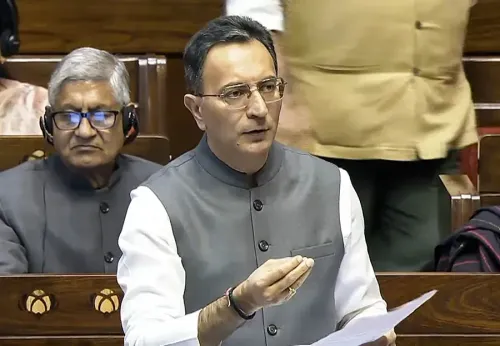
Moitra's intervention signals that parliamentary oversight — through questions, debates, or committee proceedings — may follow once the contours of the new assignment become clearer. Her track record of raising technology-governance issues in the Lok Sabha gives the post weight beyond social-media commentary.
What's Next
The specifics of the task Nilekani has reportedly been assigned remain to be officially confirmed and detailed by the government. Any formal announcement is likely to trigger scrutiny over whether the new mandate addresses the well-documented gaps in Aadhaar's evidentiary framework or risks replicating them at scale. Parliamentary questions and committee reports examining the scope of new digital-identity or verification projects involving private-sector technologists will be the key forums to watch in the months ahead.
Point of View
She sets a benchmark against which any new assignment will be judged before it is even announced. This is a recurring opposition tactic — using settled legal precedent (the 2018 Supreme Court ruling) to cast doubt on the credibility of a new initiative rather than waiting to critique its specifics. The intervention also reflects the TMC's broader posture on digital identity infrastructure, which the party views as a potential instrument of exclusion in citizenship and welfare contexts. Expect this framing to resurface in parliamentary proceedings once the government formally details Nilekani's new role.
NationPress
27 Jul 2026
Frequently Asked Questions
Why is Mahua Moitra warning about Nandan Nilekani?
Moitra is cautioning the public that Nilekani's last major government task produced Aadhaar, which she notes is legally not proof of citizenship, domicile, or date of birth, as he is reportedly being entrusted with a new high-powered assignment.
Is Aadhaar proof of citizenship in India?
No. The Supreme Court's 2018 Puttaswamy judgment confirmed that Aadhaar is proof of identity and address only, and cannot be used to establish citizenship, domicile, or date of birth.
What was Nandan Nilekani's role in Aadhaar?
Nilekani was appointed the first chairman of the Unique Identification Authority of India (UIDAI) in 2009 and led the design and rollout of the Aadhaar biometric identity system.
What new task has Nandan Nilekani been given in 2026?
The specific details of the new government assignment have not been officially confirmed; the task is referenced in Moitra's post but its scope remains publicly undetailed as of 26 July 2026.
What are the legal limits of Aadhaar as an identity document?
Under the Supreme Court's 2018 ruling, Aadhaar cannot be made mandatory beyond government welfare schemes and does not serve as proof of citizenship, date of birth, or domicile.