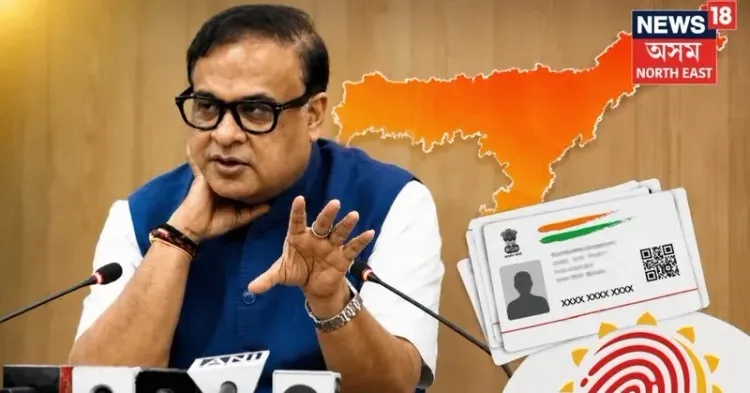
Assam Cabinet bars certain residents from Aadhaar cards
Synopsis
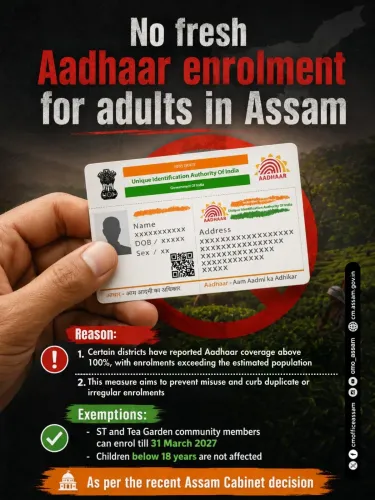
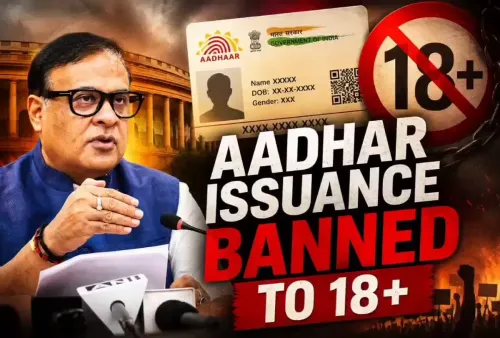
The Assam Cabinet has resolved to deny Aadhaar cards to a specific category of residents, the Chief Minister's Office announced on 14 June 2026. The move extends the state's citizenship-verification logic — rooted in the 2019 NRC — to India's core biometric identity system, with wide implications for welfare access.
Key Takeaways
The Assam Cabinet took a significant decision on 14 June 2026 to restrict Aadhaar card issuance to a specific category of people in the state.
The announcement was made by the Chief Minister's Office of Assam via its official handle.
The move builds on the logic of the National Register of Citizens (NRC) , whose final list published in August 2019 excluded over 19 lakh people.
Aadhaar denial could cut affected individuals off from banking, subsidies, ration cards, and direct benefit transfers.
A formal state government notification detailing the excluded categories and implementation timeline is awaited.
The decision may face legal scrutiny over its intersection with UIDAI 's centrally governed enrolment rules.
The Chief Minister's Office of Assam announced on Sunday, 14 June 2026 that the Assam Cabinet has taken a significant decision restricting Aadhaar card issuance to a specific category of residents in the state. The decision marks one of the most consequential governance moves by the state in recent years, directly linking identity documentation to citizenship status.
Context
The post, shared by the official CMO Assam handle, states in Assamese: 'আধাৰ কাৰ্ড সন্দৰ্ভত অসম কেবিনেটত গুৰুত্বপূৰ্ণ সিদ্ধান্ত, এতিয়াৰ পৰা ৰাজ্যত এইসকল লোকে নাপাব আধাৰ কাৰ্ড' — which translates to: 'Important decision in Assam Cabinet regarding Aadhaar cards; henceforth, these people in the state will not receive Aadhaar cards.' While the post does not name the excluded category explicitly, the Cabinet decision signals a formal policy shift in how the state intends to regulate access to Aadhaar, India's biometric-based unique identity system managed by the Unique Identification Authority of India (UIDAI).
Policy Backdrop
Aadhaar is the backbone of India's welfare delivery architecture, used for verification in banking, subsidies, and government services. Assam has progressively tightened the link between welfare entitlements, documentation, and citizenship verification since 2016, aimed at curbing leakages and ensuring benefits reach only verified residents. The state's approach draws from the logic of the National Register of Citizens (NRC), whose final list — published in August 2019 — excluded over 19 lakh people suspected of being illegal immigrants. The 1985 Assam Accord, which set 24 March 1971 as the citizenship cut-off date, remains the legal and political foundation for these measures.
Cabinet decisions of this nature typically follow a pattern in Assam: as NRC-related adjudications proceed through Foreigners Tribunals, the state simultaneously tightens access to identity documents to prevent those with unresolved citizenship status from entrenching themselves in the welfare system.
Stakeholders and Impact
The decision directly affects Assam's residents whose citizenship status remains under scrutiny — particularly the over 19 lakh individuals excluded from the final NRC list and those whose cases are pending before Foreigners Tribunals. For these individuals, denial of Aadhaar could mean loss of access to banking services, direct benefit transfers, ration cards, and a range of central and state government schemes. Civil society groups and legal advocates working on citizenship rights in the state are expected to closely scrutinise the formal notification for the Cabinet decision, particularly the precise criteria used to define the excluded category. UIDAI, as the central authority governing Aadhaar enrolment, may also need to align its protocols with the state's directive.
What's Next
The state government is expected to issue a formal notification detailing the categories of persons excluded and the implementation mechanism. Any divergence between state policy and UIDAI's existing enrolment guidelines — which are governed by central law — could invite legal challenges before the Gauhati High Court or the Supreme Court of India. Advocacy groups and affected individuals may also approach courts seeking interim relief. The decision will be a test of how far a state government can restrict access to a centrally administered identity system on grounds of citizenship verification.
Point of View
The decision reaches further than previous measures: Aadhaar is the gateway to virtually all formal services. The central-state tension over Aadhaar governance — a union subject — will be the critical fault line to watch, as any state-level exclusion must ultimately be operationalised through UIDAI's enrolment infrastructure. If upheld, the decision could serve as a template for other border states grappling with similar immigration concerns.
NationPress
13 Sept 2026
Frequently Asked Questions
Who will not get Aadhaar card in Assam after the Cabinet decision?
The Assam Cabinet has decided to deny Aadhaar cards to a specific category of residents, though the state government's formal notification detailing the exact excluded categories is yet to be released publicly.
What is the Assam Cabinet's decision on Aadhaar cards in 2026?
On 14 June 2026, the Assam Cabinet resolved to bar a certain group of people in the state from receiving Aadhaar cards, a decision announced by the Chief Minister's Office of Assam.
Is Aadhaar card linked to NRC in Assam?
Assam has progressively linked welfare documents and benefits to citizenship verification since 2016, drawing on the logic of the NRC whose final list was published in August 2019 and excluded over 19 lakh people.
Can the Assam government restrict Aadhaar card issuance?
Aadhaar is governed by central law and administered by UIDAI, so any state-level restriction will need to align with UIDAI's enrolment protocols and may be subject to legal challenge before higher courts.
What happens if someone is denied Aadhaar in Assam?
Denial of Aadhaar can cut individuals off from banking services, direct benefit transfers, subsidised rations, and a wide range of central and state government welfare schemes that require Aadhaar-based verification.