Assam Cabinet halts adult Aadhaar enrolment, approves Guwahati Satellite City body

Synopsis
The Assam Cabinet on 13 June 2026 resolved to stop Aadhaar enrolment for adults above 18, requiring state permission in exceptional cases. ST and Tea Garden communities are exempt until 31 March 2027. The cabinet also approved the Guwahati Satellite City Development Authority.
Key Takeaways
The Assam Cabinet has decided to discontinue Aadhaar enrolment for adults aged 18 years and above , citing near-saturation coverage.
Adults above 18 seeking Aadhaar in exceptional cases will now require permission from the State Government .
Members of Scheduled Tribe (ST) communities and Tea Garden communities are exempted from this restriction until 31 March 2027 .
The cabinet approved the formation of the Guwahati Satellite City Development Authority to guide planned urban expansion around Guwahati .
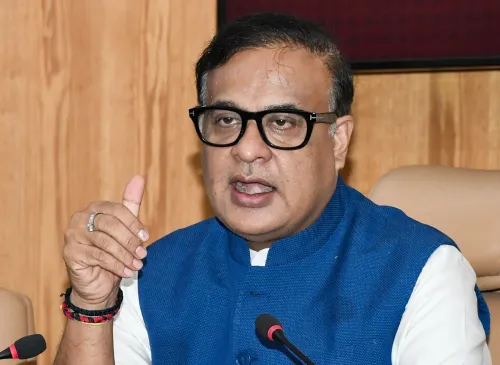
The decisions were announced by CM Dr.
Himanta Biswa Sarma after the cabinet meeting on 13 June 2026 .
The Chief Minister's Office of Assam announced on Saturday, 13 June 2026, that the Assam Cabinet, chaired by Chief Minister Dr. Himanta Biswa Sarma, has resolved to discontinue fresh Aadhaar enrolment for adults aged 18 years and above, citing near-saturation coverage across the state. The cabinet also approved the formation of the Guwahati Satellite City Development Authority, a new body to guide planned urban expansion around the state capital.
Context
Addressing the media after the cabinet meeting, CM Himanta Biswa Sarma stated that Assam has reached a near-saturation level of Aadhaar coverage, making continued open enrolment for adults redundant. Under the new decision, individuals above 18 years who seek Aadhaar enrolment in exceptional circumstances will require prior permission from the State Government. This marks a significant shift in how the state manages identity documentation at the grassroots level.
Policy Backdrop
Aadhaar, India's national biometric identity system, was initiated in 2009 and is governed by the Aadhaar Act, 2016, administered by the Unique Identification Authority of India (UIDAI). Assam began linking multiple welfare schemes to Aadhaar authentication from 2015 onward to improve targeting and reduce leakages. The state's decision to cap adult enrolment reflects a broader national trend of Aadhaar saturation, while also embedding a layer of state-level oversight that is particularly significant given Assam's longstanding concerns around demographic documentation.
The cabinet has carved out a specific exemption: members of Scheduled Tribe (ST) communities and Tea Garden communities will remain eligible for Aadhaar enrolment without the new permission requirement until 31 March 2027. This exemption acknowledges that these communities may still have residents who lack identity documentation and ensures they are not excluded from welfare access during the transition period.
Stakeholders and Impact
The decision directly affects adult residents of Assam who do not yet hold an Aadhaar card and were planning to enrol. For the general population, the path to enrolment now runs through a state-level permission process, raising questions about the mechanism and turnaround time for such approvals. ST communities and Tea Garden workers — among the state's most economically vulnerable populations — retain unrestricted access to enrolment for nearly another year, shielding them from immediate disruption to welfare entitlements linked to Aadhaar authentication.
The approval of the Guwahati Satellite City Development Authority signals the state's intent to manage rapid urban growth around Guwahati through a dedicated institutional framework. The Guwahati Metropolitan Development Authority, constituted in 1992, has historically overseen the capital region; the new satellite city body suggests the government sees expansion pressures that require a separate, focused mandate beyond the existing authority's remit.
What's Next
Operational guidelines for the Guwahati Satellite City Development Authority — including its jurisdictional boundaries, funding structure, and development mandate — are expected to be notified in the coming weeks. For the Aadhaar provision, the State Government will need to define the process by which individuals above 18 years may seek exceptional enrolment permission, and whether the 31 March 2027 exemption deadline for ST and Tea Garden communities will be extended or allowed to lapse. Both decisions will be closely watched by civil society groups, urban planners, and welfare administrators across Assam.
Assam's twin moves — capping identity enrolment and creating a new urban development body — point to a governance posture that increasingly seeks state-level control over processes that have historically been driven by central mandates, with implications for how other states with similar demographic sensitivities may respond.
Point of View
And it sits squarely within the state's broader effort to manage demographic documentation with precision. The carve-out for ST and Tea Garden communities until March 2027 is politically calibrated — these are electorally significant and economically vulnerable groups where a blunt cutoff could have triggered welfare disruption and backlash. The simultaneous creation of a satellite city authority for Guwahati reflects a pattern of institution-building that the Sarma administration has pursued to give the state direct levers over urban and demographic futures, rather than relying on inherited central or legacy state bodies. Together, the two decisions signal a government comfortable using cabinet resolutions to reshape both identity governance and urban planning in one sitting.
NationPress
19 Sept 2026
Frequently Asked Questions
Why has Assam stopped Aadhaar enrolment for adults above 18?
The Assam Cabinet decided to discontinue Aadhaar enrolment for adults above 18 because the state has reached a near-saturation level of Aadhaar coverage, making continued open enrolment unnecessary for the general adult population.
Can adults in Assam still get Aadhaar after this decision?
Yes, but only in exceptional cases and with prior permission from the State Government. The new rule does not apply to members of ST communities and Tea Garden communities, who remain exempt until 31 March 2027.
Who is exempt from Assam's Aadhaar enrolment restriction?
Members of Scheduled Tribe (ST) communities and Tea Garden communities in Assam are exempt from the new restriction and can continue to enrol for Aadhaar without state permission until 31 March 2027.
What is the Guwahati Satellite City Development Authority?
It is a newly approved state body whose formation was cleared by the Assam Cabinet on 13 June 2026. It is tasked with planning and managing urban development in areas around Guwahati, separate from the existing Guwahati Metropolitan Development Authority constituted in 1992.
When did the Assam Cabinet announce these decisions?
Chief Minister Dr. Himanta Biswa Sarma announced these decisions while addressing the media after the Assam Cabinet meeting on Saturday, 13 June 2026.