CM Himanta flags Aadhaar anomaly, restricts issuance in Assam

Synopsis
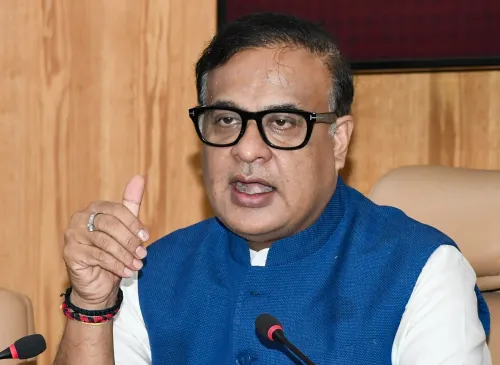
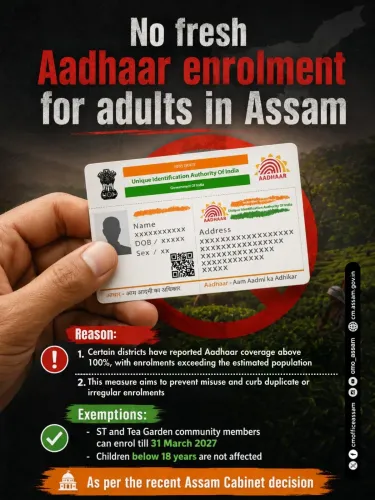
Assam Chief Minister Himanta Biswa Sarma has flagged that Aadhaar enrolments in certain districts exceed the total population, calling it a demographic conspiracy. The state has restricted Aadhaar issuance to adults above 18 years as a countermeasure, escalating Assam's long-running documentation controls in border areas.
Key Takeaways
CM Himanta Biswa Sarma disclosed on June 17, 2026 that Aadhaar enrolments in certain Assam districts have surpassed the total population.
He described the anomaly as evidence of a 'larger demographic conspiracy' in a border state.
The Assam government has placed restrictions on Aadhaar issuance to individuals above 18 years of age in the affected districts.
Assam's 2019 NRC excluded over 1.9 million people and remains the foundation of the state's citizenship-verification framework.
Any formal change to enrolment protocols will require coordination between the state government and UIDAI , the central Aadhaar authority.
The move could set a precedent for similar documentation controls in other border states across India.
Assam Chief Minister Himanta Biswa Sarma on Wednesday, June 17, 2026, revealed that Aadhaar enrolments in certain Assam districts have exceeded the total population, calling the pattern a 'larger demographic conspiracy.' The state government has responded by placing restrictions on Aadhaar issuance to individuals above 18 years of age in the affected areas.
Context
In a post on X, CM Sarma stated: 'In certain districts of Assam, Aadhar enrolment has surpassed the total population, which in a border State like ours, reeks of a larger demographic conspiracy.' He added that to ensure 'no undeserving person acquires Aadhar,' the state has imposed restrictions on issuance to those above 18 years. The statement signals a significant escalation in Assam's ongoing efforts to tighten identity-document controls in its border districts.
Assam shares a long and porous border with Bangladesh, and concerns over illegal immigration have shaped the state's politics and policy for decades. The anomaly flagged by CM Sarma — enrolments exceeding census population figures — points to possible misuse of the Aadhaar enrolment infrastructure, a concern the state government says it is now acting on directly.
Policy Backdrop
Aadhaar, India's national biometric identity system administered by the Unique Identification Authority of India (UIDAI), is the backbone of welfare delivery across the country. It is not, by design, a citizenship document — but in border states it has acquired outsized significance as a gateway to benefits and, critics argue, as a route to establishing residency credentials.
Assam published the final National Register of Citizens (NRC) in 2019, excluding over 1.9 million people. Since then, the state government has issued successive directives tightening linkages between Aadhaar, voter rolls, and ration cards in border districts. The new restriction on issuance to adults above 18 appears to be the latest layer in this framework, adding a verification checkpoint at the most vulnerable point of entry into the identity system.
Similar controls have been applied to electoral rolls and ration-card issuance in recent years, reflecting Assam's broader approach of layered documentation checks within India's federal identity architecture.
Stakeholders and Impact
The restriction most directly affects Aadhaar applicants above 18 years of age residing in the identified districts — a category that includes both genuine residents seeking first-time enrolment and, the state government argues, individuals who may not be entitled to Indian identity credentials. Legitimate applicants who lack prior documentation may face additional procedural hurdles.
Residents of Assam's border districts who already hold Aadhaar are not affected by the issuance restriction, but the move signals heightened scrutiny across the region. Civil society groups working with marginalised and undocumented communities — including those excluded from the NRC — are likely to raise concerns about the risk of genuine residents being denied access to welfare entitlements.
UIDAI, the central body governing Aadhaar, will be a key stakeholder in how this state-level restriction is operationalised, as any formal change to enrolment protocols would require coordination between Dispur and New Delhi.
What's Next
The immediate focus will be on state government notifications detailing exactly which districts are covered, what verification procedures will apply, and how the restriction will interact with UIDAI's existing enrolment guidelines. CM Sarma's framing of the issue as a 'demographic conspiracy' is also likely to draw a political response from opposition parties in Assam and at the national level.
If the anomaly in enrolment data is formally documented and shared with UIDAI, it could prompt a wider review of enrolment practices in other border states — setting a precedent that reaches well beyond Assam. The state's approach of using identity-document controls as a first line of demographic defence is likely to intensify ahead of the next delimitation and electoral cycle.
Point of View
A narrative that has defined Assam's politics since the NRC exercise. The restriction on adult issuance is a calculated escalation: by targeting the over-18 cohort, the state is intervening at the precise point where identity credentials translate into voting rights and welfare access. This move fits a broader pattern in which Assam has used document-control mechanisms — ration cards, voter rolls, and now Aadhaar — as layered defences against what the government characterises as illegal immigration. The political and legal pushback, particularly from communities already excluded from the NRC, will test whether state-level restrictions can hold within India's federal identity architecture.
NationPress
19 Sept 2026
Frequently Asked Questions
Why has Assam restricted Aadhaar issuance to people above 18?
The Assam government has restricted Aadhaar issuance to individuals above 18 years after CM Himanta Biswa Sarma revealed that enrolments in certain districts exceed the total population, which the state views as evidence of demographic manipulation in a sensitive border region.
What does it mean that Aadhaar enrolments exceed population in Assam districts?
It means the number of Aadhaar cards issued in those districts is higher than the recorded census population, suggesting possible duplicate enrolments, fraudulent registrations, or enrolment by individuals not resident in those areas — a concern CM Sarma has linked to illegal immigration.
Is Aadhaar a citizenship document in India?
No. Aadhaar is a biometric identity number issued by UIDAI and is not a citizenship document. However, in border states like Assam , it has become a de facto gateway to welfare benefits and residency credentials, making its misuse a politically sensitive issue.
What is the NRC and how does it relate to this Aadhaar issue?
The National Register of Citizens (NRC) , finalised in Assam in 2019 , excluded over 1.9 million people suspected of being illegal immigrants. The state's current Aadhaar restrictions are an extension of the same framework, aimed at preventing undocumented individuals from acquiring identity credentials.
Which Assam districts are affected by the Aadhaar restriction?
CM Sarma 's statement referred to 'certain districts' but did not name them publicly. Specific district-level notifications from the Assam government detailing the exact scope of the restriction are awaited.