Assam Cabinet tightens Aadhaar rules for adults to check illegal immigration
Synopsis
Assam has effectively put Aadhaar on hold for adults — every new application above 18 must now pass a Deputy Commissioner review before the state government decides. It is one of the most direct state-level interventions in a nationally administered identity scheme, and it signals that Guwahati is prepared to act unilaterally where it believes federal processes leave gaps on illegal immigration.
Key Takeaways
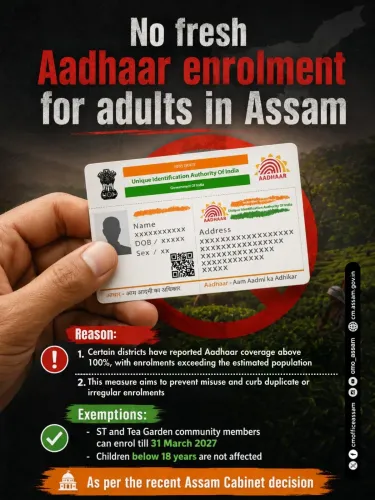
The Assam Cabinet on 13 June discontinued routine Aadhaar enrolment for individuals above 18 years .
Each adult application will now require a Deputy Commissioner recommendation before the state government grants final approval.
Aadhaar enrolment for children below 18 years continues unchanged under the existing process.
Members of SC, ST , and Tea Garden communities are exempt from the new rules until March 2027 .
Chief Minister Himanta Biswa Sarma said the move targets fraudulent acquisition of identity documents by illegal Bangladeshi immigrants, not genuine residents.
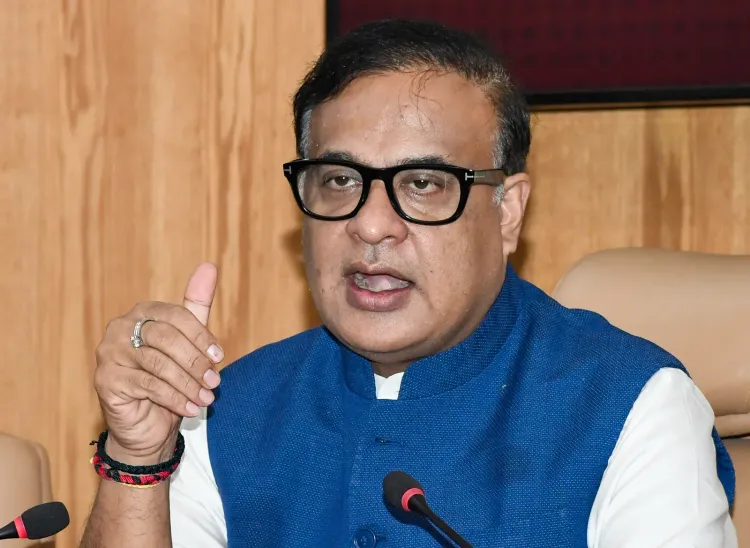
The Assam Cabinet on Saturday, 13 June decided to discontinue routine Aadhaar enrolment for adults above 18 years of age, introducing a case-by-case verification framework to prevent illegal immigrants from fraudulently acquiring identity documents. Chief Minister Himanta Biswa Sarma announced the decision in Guwahati, describing it as a critical step to plug loopholes in the state's documentation system.
What the New Framework Entails
Under the revised process, adults applying for Aadhaar for the first time will no longer receive the document through the standard enrolment route. Each application will instead undergo detailed scrutiny, after which the concerned Deputy Commissioner will submit a formal recommendation to the state government. The final authority to approve or reject the Aadhaar issuance will rest with the government.
Aadhaar enrolment for children below 18 years remains unchanged and will continue through the existing mechanism.
Special Relaxation for Vulnerable Communities
The Cabinet has carved out an exception for members of Scheduled Castes (SC), Scheduled Tribes (ST), and Tea Garden communities. Individuals from these categories will remain eligible for Aadhaar enrolment under the existing process until March 2027, acknowledging their historically limited access to formal documentation.
The Government's Stated Rationale
Chief Minister Sarma clarified that the move is not intended to deny genuine residents access to Aadhaar but to create what he described as a 'robust verification mechanism' that balances national security concerns with the rights of legitimate citizens. According to state government officials, the decision is part of Assam's broader push to strengthen documentation systems and curb attempts by illegal Bangladeshi immigrants to acquire identity papers through fraudulent means.
Notably, Sarma emphasised that adult Aadhaar enrolment has not been suspended outright — every application will be examined individually before a decision is taken.
Context and Significance
Assam has long been at the centre of debates over illegal immigration, most visibly through the National Register of Citizens (NRC) exercise that concluded in 2019. The new Aadhaar framework represents an administrative layer on top of those efforts, targeting a specific vector — identity document acquisition — that officials believe has been exploited. This is among the most direct state-level interventions on Aadhaar enrolment in India, a domain that is primarily governed by the Unique Identification Authority of India (UIDAI) at the Centre.
Critics and civil liberties groups are likely to scrutinise how the case-by-case review process will be implemented in practice, particularly given Assam's large migrant labour population and the administrative burden the new system places on Deputy Commissioners across the state.
What Happens Next
State officials indicated that the enhanced verification process will be operationalised shortly, though detailed procedural guidelines are yet to be made public. The exemption for SC, ST, and Tea Garden communities will be reviewed ahead of the March 2027 deadline. How the Centre and UIDAI respond to Assam's unilateral tightening of a nationally administered scheme will be closely watched.
Point of View
And a state government inserting a veto layer raises questions about jurisdictional overreach that will likely be challenged. The SC/ST and Tea Garden exemption until March 2027 is a pragmatic concession, but it also underscores the difficulty of drawing clean lines in a state where documentation gaps are endemic across communities, not just among undocumented migrants. The real risk is that a slow, opaque Deputy Commissioner review process ends up denying legitimate residents — particularly daily-wage workers and the rural poor — access to a document that gates welfare entitlements, banking, and mobile services. Without transparent timelines and an appeal mechanism, the policy could cause more collateral harm than it prevents.
NationPress
13 Sept 2026
Frequently Asked Questions
What has the Assam Cabinet decided about Aadhaar enrolment?
The Assam Cabinet has discontinued routine Aadhaar enrolment for adults above 18 years of age. Every new adult application will now undergo detailed scrutiny, with the Deputy Commissioner submitting a recommendation to the state government, which will take the final call on issuance.
Why has Assam tightened its Aadhaar enrolment process?
The state government says the move is aimed at preventing illegal Bangladeshi immigrants from fraudulently obtaining Aadhaar cards to establish false identity. Chief Minister Himanta Biswa Sarma stated that the new framework is meant to protect the system without denying access to genuine residents.
Who is exempt from the new Aadhaar rules in Assam?
Members of Scheduled Castes (SC), Scheduled Tribes (ST), and Tea Garden communities are exempt and can continue enrolling under the existing process until March 2027. Children below 18 years are also unaffected by the new framework.
Does this mean Aadhaar enrolment is suspended for adults in Assam?
No, enrolment has not been suspended. Chief Minister Sarma clarified that every adult application will be examined on a case-by-case basis through an enhanced verification process rather than through the routine channel.
How does this relate to Assam's broader immigration concerns?
The decision builds on Assam's longstanding efforts to address illegal immigration, which previously culminated in the National Register of Citizens (NRC) exercise concluded in 2019. The new Aadhaar framework adds an administrative layer specifically targeting fraudulent identity document acquisition, which officials say has been a persistent loophole.