CM Himanta's Assam Cabinet Takes Key Decisions on Aadhaar, Urban Growth
Synopsis
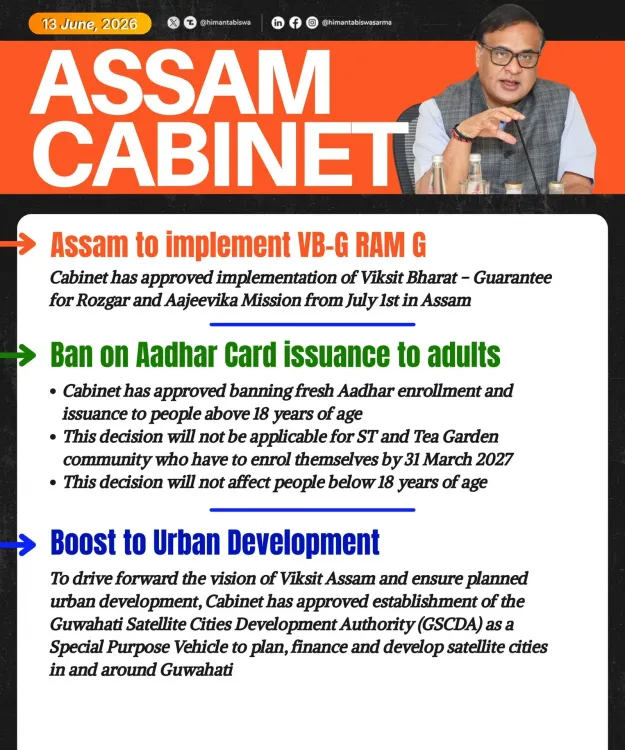
The Assam Cabinet on June 13, 2026 banned fresh Aadhaar enrolment for adults in the state, exempted ST and Tea Garden communities until March 2027, approved the Guwahati Satellite Cities Development Authority, and set July 1 as the rollout date for VB-G RAM G.
Key Takeaways
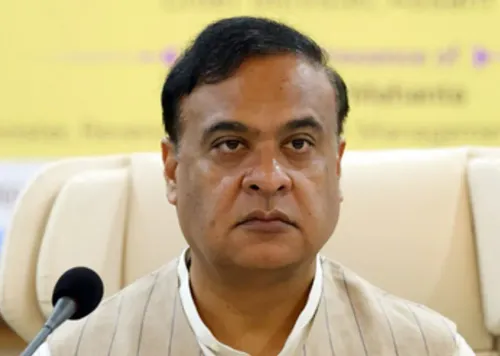
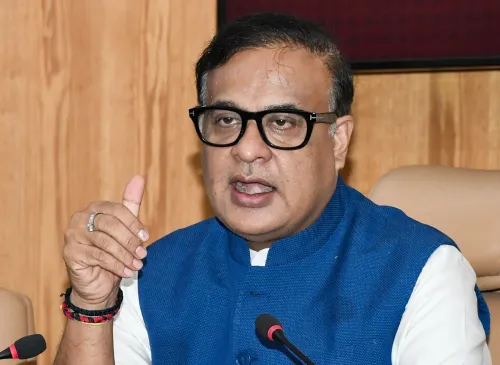
The Assam Cabinet met on June 13, 2026 under Chief Minister Himanta Biswa Sarma and cleared three major decisions.
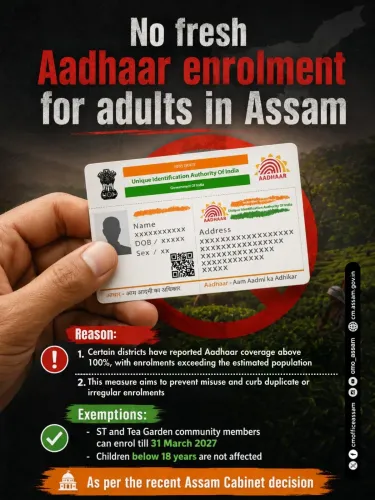
Aadhaar issuance to individuals aged 18 and above has been banned in Assam , with ST communities and Tea Garden workers exempted until 31 March 2027 .
The Guwahati Satellite Cities Development Authority is to be established to manage peri-urban growth around the state's largest city.
The VB-G RAM G scheme is set for implementation from July 1, 2026 .
The Aadhaar restriction is likely to invite scrutiny from UIDAI and the central government, as enrolment is a Union subject.
Assam Chief Minister Himanta Biswa Sarma announced a set of significant cabinet decisions on Saturday, June 13, 2026, including a ban on fresh Aadhaar enrolment for adults, the rollout of a new scheme, and the creation of a satellite city authority for Guwahati.
Context
The Assam Cabinet, chaired by Chief Minister Sarma, met on June 13 and cleared three major decisions that span identity governance, social welfare, and urban planning. The announcements were shared by CM Sarma directly on social media, signalling the government's intent to move quickly on implementation.
Among the decisions, the cabinet resolved to ban the issuance of Aadhaar cards to individuals aged 18 and above in the state — with a notable carve-out for Scheduled Tribe (ST) communities and the Tea Garden community, who will remain exempt until 31 March 2027.
Policy Backdrop
Aadhaar, India's 12-digit biometric identity system launched in 2009 and administered by the Unique Identification Authority of India (UIDAI), has been progressively linked to state welfare schemes across Assam since 2014–15. Previous governments granted periodic exemptions to indigenous communities, particularly during the National Register of Citizens (NRC) update exercise concluded in 2019.
The move to restrict fresh adult enrolment fits a broader pattern in Assam of using identity documents as a tool to distinguish citizens from undocumented migrants — a politically sensitive issue in the state. The exemption for ST and Tea Garden communities acknowledges the historically documented difficulty these groups face in obtaining standard identity papers.
The cabinet also cleared the implementation of VB-G RAM G from July 1, 2026. The precise scope of the scheme could not be independently confirmed from available records, but its imminent rollout date suggests operational groundwork is already in place.
Stakeholders and Impact
The Aadhaar restriction will affect residents of Assam who are 18 years or older and do not yet hold an enrolment. The exemption until 31 March 2027 for ST communities and Tea Garden workers — among the state's most economically marginalised groups — provides a buffer period for them to complete enrolment under existing UIDAI processes.
On the urban development front, the cabinet approved the establishment of the Guwahati Satellite Cities Development Authority. Guwahati, the largest city in Assam and the commercial hub of the Brahmaputra Valley, has experienced rapid peri-urban expansion that existing planning bodies such as the Guwahati Metropolitan Development Authority — constituted in 1992 — have struggled to keep pace with. A dedicated satellite cities authority is expected to bring structured governance to fast-growing towns on Guwahati's periphery.
What's Next
All eyes will be on the operational orders for the Guwahati Satellite Cities Development Authority, including its jurisdiction, composition, and funding structure. The July 1, 2026 implementation date for VB-G RAM G is weeks away, making administrative preparedness an immediate concern.
The state-level restriction on Aadhaar issuance is likely to draw scrutiny from the UIDAI and the central government, given that Aadhaar enrolment is a Union subject. How New Delhi responds — and whether the exemption framework for ST and Tea Garden communities is formalised through a central notification — will shape the policy's long-term viability.
Point of View
A challenge common to India's Tier-2 metros. The central government's response to a state-level restriction on a Union-administered identity scheme will be a crucial test of federal boundaries in identity governance.
NationPress
19 Sept 2026
Frequently Asked Questions
Why has Assam banned Aadhaar cards for adults?
The Assam Cabinet on June 13, 2026 banned fresh Aadhaar issuance to individuals aged 18 and above in the state. The move aligns with Assam 's long-standing policy of using identity documents to distinguish citizens from undocumented migrants, continuing the political logic of the 2019 NRC exercise.
Who is exempt from the Assam Aadhaar ban?
Scheduled Tribe (ST) communities and Tea Garden community members in Assam are exempt from the adult Aadhaar ban until 31 March 2027 , recognising the historically documented difficulty these groups face in obtaining standard identity papers.
What is the Guwahati Satellite Cities Development Authority?
It is a new planning and development body approved by the Assam Cabinet on June 13, 2026 to govern the rapidly expanding towns on the periphery of Guwahati , the state's largest city. It is intended to supplement the existing Guwahati Metropolitan Development Authority constituted in 1992 .
What is VB-G RAM G and when does it start?
VB-G RAM G is a scheme cleared by the Assam Cabinet for implementation from July 1, 2026 . The full scope and details of the scheme are yet to be officially elaborated by the state government.
Can the Assam government restrict Aadhaar enrolment on its own?
Aadhaar enrolment is administered by UIDAI under the central government, making this a legally complex step. The Assam cabinet decision is likely to invite a response from New Delhi and UIDAI on whether a state can unilaterally restrict enrolment under a Union scheme.