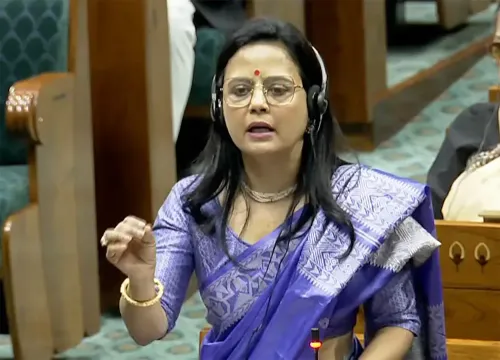
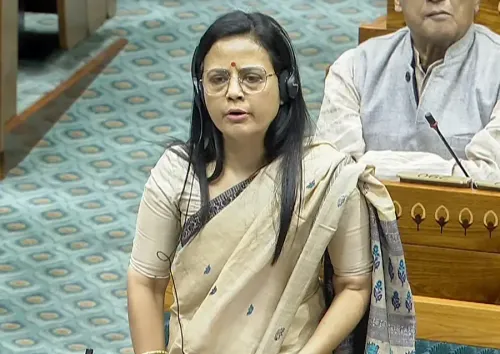
Mahua Moitra Thanks Court After Expulsion Case Ruling
Synopsis
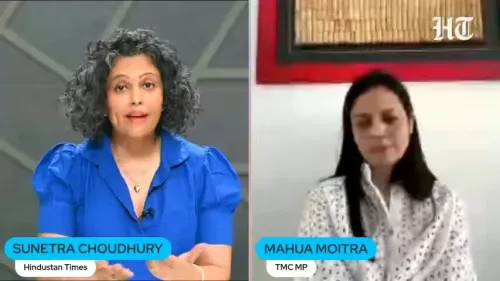
TMC MP Mahua Moitra's cryptic 'Thank you MiLord!' post on 3 July 2026 points to a positive Supreme Court development in her petition challenging her December 2023 Lok Sabha expulsion on cash-for-query grounds, reigniting debate over parliamentary privilege and judicial oversight.
Key Takeaways
Mahua Moitra , TMC Lok Sabha MP from Krishnanagar, West Bengal , posted 'Thank you MiLord!' on 3 July 2026 , implying a favourable court ruling.
The post uses 'MiLord,' the standard judicial honorific in Indian courts, strongly linking the message to her ongoing Supreme Court petition.
Moitra was expelled from the Lok Sabha on 8 December 2023 after the House adopted the Ethics Committee report on cash-for-query allegations.
Her petition challenges the expulsion and raises questions about the limits of parliamentary privilege versus judicial oversight.
The case has broader implications for how Indian courts may review parliamentary disciplinary proceedings involving opposition MPs.
TMC MP Mahua Moitra posted a pointed two-word message — 'Thank you MiLord!' — on X (formerly Twitter) on 3 July 2026, in an apparent acknowledgment of a favourable development from the Supreme Court of India in proceedings related to her December 2023 expulsion from the Lok Sabha.
Context
Moitra's post, brief but charged with legal undertone, used the traditional honorific 'MiLord' — the form of address used for judges in Indian courts. The message strongly implies a positive judicial development in her long-running petition before the Supreme Court, though the specific order has not been detailed in the post itself.
The Lok Sabha expelled Mahua Moitra on 8 December 2023 after adopting the Ethics Committee's report on cash-for-query allegations — a move that drew sharp criticism from opposition parties who called it politically motivated.
Policy Backdrop
Following her expulsion, Moitra challenged the proceedings before the Supreme Court of India, raising fundamental questions about the limits of parliamentary privilege and the judiciary's power to review expulsions by the legislature. The case sits at the intersection of two constitutional pillars: legislative autonomy and judicial oversight.
Indian courts have periodically examined parliamentary disciplinary actions, creating recurring friction over where legislative privilege ends and fundamental rights begin. Opposition MPs facing disciplinary action by ruling-party majorities have increasingly turned to the judiciary, making Moitra's case part of a broader constitutional pattern.
Stakeholders and Impact
The case directly concerns Krishnanagar constituency in West Bengal, whose representation in the lower house was affected by Moitra's expulsion. Beyond her personal political future, the outcome carries implications for all opposition parliamentarians and the precedent it sets for parliamentary ethics proceedings.
Parliamentary staff, opposition MPs, and constitutional law practitioners have closely watched the case, given its potential to redefine the scope of the Ethics Committee's authority and the conditions under which a court may intervene in House proceedings.
What's Next
Any formal Supreme Court order arising from this development will be closely scrutinised for its effect on Moitra's membership status and on pending or future parliamentary privilege disputes. A definitive ruling could reshape the legal framework governing how Parliament disciplines its members and the extent to which such decisions are subject to judicial review.
If the court has issued an interim or final order in her favour, the political reverberations — both for the Trinamool Congress and for the government — are likely to be significant ahead of future legislative sessions.
Point of View
Maximum in signal. By invoking the courtroom honorific publicly, she frames any judicial relief not merely as a personal legal victory but as a vindication of opposition rights against a parliamentary majority. The case has always been as much about political messaging as constitutional law, and this post continues that dual register. A favourable Supreme Court order, if it materialises, would add significant pressure on the government and test the durability of parliamentary privilege as a shield against judicial scrutiny.
NationPress
3 Jul 2026
Frequently Asked Questions
Why was Mahua Moitra expelled from Lok Sabha?
Mahua Moitra was expelled from the Lok Sabha on 8 December 2023 after the House adopted the Ethics Committee's report on cash-for-query allegations, which accused her of sharing her parliamentary login credentials and accepting benefits in exchange for raising questions in Parliament.
What did Mahua Moitra's 'Thank you MiLord' post mean?
'MiLord' is the traditional honorific used to address judges in Indian courts, so the post strongly implies she received a favourable development from the Supreme Court of India in her petition challenging her Lok Sabha expulsion.
Has the Supreme Court taken up Mahua Moitra's expulsion case?
Yes. After her expulsion in December 2023, Moitra filed a petition before the Supreme Court of India challenging the proceedings and raising questions about parliamentary privilege and the scope of judicial review over legislative disciplinary actions.
What is the cash-for-query case against Mahua Moitra?
The cash-for-query allegations against Mahua Moitra centred on claims that she shared her Lok Sabha login credentials with a businessman and received benefits in return for raising specific questions in Parliament. The Ethics Committee found the allegations substantiated and recommended expulsion.
Can Indian courts review a Lok Sabha expulsion?
This is a contested constitutional question. Parliament claims broad legislative privilege over its internal disciplinary proceedings, but the Supreme Court has previously examined the boundaries of such privilege. Moitra's case is one of the most prominent recent tests of this tension.