Delhi HC Rescinds Lokpal Sanction for CBI Against Mahua Moitra?

Synopsis
In a significant legal development, the Delhi High Court has overturned a Lokpal sanction that allowed the CBI to charge Trinamool Congress MP Mahua Moitra in a cash-for-query scandal. This decision mandates the Lokpal to reevaluate its earlier ruling, potentially altering the course of the ongoing investigation.
Key Takeaways
Delhi HC nullifies Lokpal's sanction Moitra's argument on due process accepted Reassessment ordered within one month Case involves serious corruption allegations Potential implications for political accountability
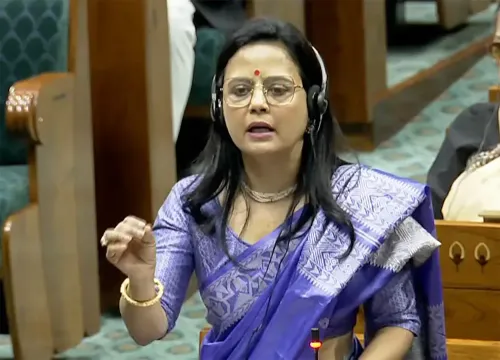
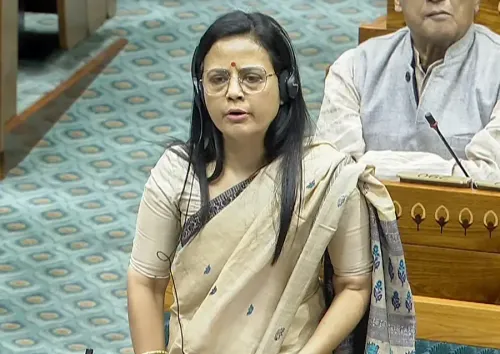
New Delhi, Dec 19 (NationPress) The Delhi High Court on Friday rescinded a Lokpal order that authorized the Central Bureau of Investigation (CBI) to submit a charge sheet against Trinamool Congress MP Mahua Moitra regarding the purported cash-for-query controversy.
A bench comprising Justices Anil Kshetarpal and Harish Vaidyanathan Shankar granted Moitra's petition contesting the Lokpal’s sanction order, instructing the Lokpal to reassess the matter following legal protocols and reach a new decision within one month.
In nullifying the disputed order, the bench led by Justice Kshetarpal acknowledged Moitra’s argument that the anti-corruption agency had inadequately assessed the necessary statutory conditions, particularly the evaluation of comments and evidence submitted by the public servant prior to sanctioning under Section 20(7)(a) of the Lokpal and Lokayuktas Act, 2013.
The allegations stemmed from claims made by BJP MP Nishikant Dubey, who accused Moitra of accepting cash and extravagant gifts from Dubai-based businessman Darshan Hiranandani in exchange for raising parliamentary questions.
Following the complaint, the Lokpal had previously mandated the CBI to investigate “all aspects” of the case under Section 20(3)(a) of the Act and to present a report within a six-month timeframe.
Subsequently, the Lokpal’s full bench exercised its authority under Section 20(7)(a) and Section 23(1) of the Lokpal Act, permitting the CBI to file a charge sheet and mandating that a copy be sent to the anti-corruption body.
Dissatisfied with the Lokpal’s ruling, Moitra approached the Delhi High Court, contending that the sanction breached principles of natural justice and the statutory framework since her written and oral arguments were disregarded.
Senior advocate Nidhesh Gupta, representing Moitra, argued that Section 20(7) clearly necessitates the consideration of a public servant’s comments prior to sanctioning prosecution.
Conversely, Additional Solicitor General S.V. Raju, representing the CBI, contended that the Lokpal’s order was executed in compliance with legal standards, asserting that the statute affords only limited rights to the accused during the sanction stage. Senior Advocate Jivesh Nagrath, on behalf of complainant Dubey, argued that Section 20 of the Act serves as a comprehensive framework and that the comments were properly presented to the Lokpal.
Point of View
This ruling by the Delhi High Court underscores the importance of due process and adherence to statutory requirements. The decision highlights the need for careful examination of all evidence before proceeding with allegations of corruption, ensuring that justice is served fairly. As the legal process unfolds, it remains crucial to uphold the integrity of our democratic institutions.
NationPress
6 Oct 2026
Frequently Asked Questions
What was the main ruling by the Delhi High Court?
The Delhi High Court annulled a Lokpal order that allowed the CBI to charge Mahua Moitra in a cash-for-query case, requiring the Lokpal to reconsider its decision.
Who accused Mahua Moitra and of what?
BJP MP Nishikant Dubey accused Mahua Moitra of accepting cash and luxury gifts from businessman Darshan Hiranandani in exchange for raising questions in Parliament.
What does Section 20(7)(a) of the Lokpal Act entail?
Section 20(7)(a) mandates that the comments and materials provided by a public servant must be considered before granting sanction for prosecution.
What is the significance of this ruling?
This ruling emphasizes the importance of natural justice and proper statutory procedures, which could set a precedent for how similar cases are handled in the future.
How long does the Lokpal have to issue a new decision?
The Lokpal is directed to reach a new decision within one month of the High Court ruling.