Supreme Court Responds to Lokpal's Petition Against Delhi HC Ruling on Mahua Moitra's Cash-for-Query Case
Synopsis
The Supreme Court has taken a significant step by issuing a notice on the Lokpal's petition that challenges the Delhi HC's ruling on the sanction against Mahua Moitra. This case raises pivotal questions regarding corruption investigations and the powers of the Lokpal.
Key Takeaways
The Supreme Court has issued a notice on Lokpal's petition.
This petition challenges the Delhi HC's ruling regarding Mahua Moitra's case.
The Lokpal's authority and procedural protocols are under scrutiny.
The case highlights issues of corruption and accountability in Indian politics.
Future implications for anti-corruption investigations are at stake.
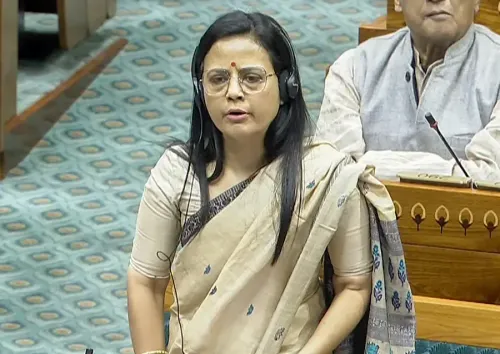
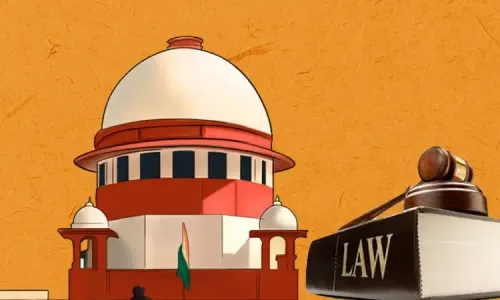
New Delhi, March 13 (NationPress) On Friday, the Supreme Court issued a notice regarding a petition from the Lokpal of India contesting the Delhi High Court's decision which annulled the sanction provided to the Central Bureau of Investigation (CBI) for filing a charge sheet against Trinamool Congress MP Mahua Moitra related to the alleged cash-for-query scandal.
A Bench comprising Chief Justice of India (CJI) Surya Kant and Justice Joymalya Bagchi requested responses within three weeks from Moitra, the CBI, and BJP MP Nishikant Dubey, who has accused Moitra of receiving cash and luxury gifts from Dubai-based businessman Darshan Hiranandani in exchange for parliamentary questions.
During the proceedings, the CJI Kant-led Bench also put a hold on the Delhi High Court’s order mandating the Lokpal to decide within 60 days whether to give sanction to the CBI for the charge sheet against Moitra.
The apex court clarified that, at present, the Lokpal is not authorized to compel the CBI to file charges against the Trinamool leader, and no coercive measures would be undertaken against her.
The CJI Kant-led Bench indicated it would review the statutory framework and the extent of authority granted to the Lokpal under the Lokpal and Lokayuktas Act, 2013. Senior advocate Ranjit Kumar, representing the Lokpal, expressed that the anti-corruption agency was dissatisfied with the Delhi High Court's interpretation of the Lokpal Act, clarifying that the petition targets procedural issues rather than any individual.
He argued that the Delhi High Court’s interpretation of Section 20, which governs inquiries and investigations, has significant implications for the operations of the anti-corruption body.
In its petition, the Lokpal sought a definitive ruling from the apex court on the protocols to be followed by the anti-corruption agency when directing investigations and granting sanctions.
The Lokpal contended that the Delhi High Court’s judgment misinterpreted the legal framework and did not adequately account for the interaction of various provisions of the Act.
The legislation is designed as a special law that establishes a unique procedure for inquiries and investigations against public officials and grants the Lokpal the authority to initiate preliminary inquiries, oversee investigations, and authorize the filing of cases or charge sheets.
“The legislative intent is to take action against public servants involved in corruption without exception, while safeguarding honest officials from frivolous complaints,” the petition asserted.
The anti-corruption agency further argued that if the High Court’s interpretation were upheld, it could allow defendants to obstruct corruption prosecutions by prompting courts to conduct “mini-trials” prior to sanction.
This issue arises from allegations made by BJP MP Nishikant Dubey, who accused Moitra of accepting cash and luxury gifts from Darshan Hiranandani for raising questions in Parliament.
Following the complaint, the Lokpal directed the CBI to begin a preliminary inquiry, which subsequently led to a full investigation into the claims. In November 2025, the Lokpal authorized the CBI to file a charge sheet before the appropriate court. However, in December 2025, the Delhi High Court overturned the Lokpal’s sanction order, ruling that Section 20 of the Lokpal Act did not allow for separate sanctions for filing a charge sheet and commencing prosecution, requiring a composite sanction.
A panel of Justices Anil Kshetarpal and Harish Vaidyanathan Shankar accepted Moitra’s argument that the Lokpal did not adequately consider the statutory obligation to review the comments and material provided by the public servant before granting sanction.
The Delhi High Court instructed the Lokpal to reevaluate the matter in accordance with legal standards and arrive at a new decision within a month.
Later, in January, the Delhi High Court granted a final two-month extension to the Lokpal to resolve the issue, emphasizing that no further extensions would be permitted.
The Supreme Court is now set to explore the broader procedural questions surrounding the Lokpal's inquiries and investigations, and the degree of judicial review applicable to its decisions.
Point of View
The outcome could redefine the legal landscape for corruption investigations involving public officials.
NationPress
27 Sept 2026
Frequently Asked Questions
What is the Lokpal's role in this case?
The Lokpal is an anti-corruption authority in India tasked with investigating allegations against public officials, and it has filed a petition against the Delhi High Court's ruling.
Who is Mahua Moitra?
Mahua Moitra is a Member of Parliament representing the Trinamool Congress party, accused of accepting bribes for parliamentary questions.
What did the Delhi High Court decide?
The Delhi High Court set aside the Lokpal's sanction for the CBI to file charges against Moitra, stating that the sanction process was not adequately followed.
What are the implications of the Supreme Court's notice?
The Supreme Court's notice indicates a review of the Lokpal's powers and the procedural framework for corruption investigations, which could impact future cases.
Why is this case significant?
This case is significant due to its potential to influence anti-corruption laws and the accountability of public officials in India.