Odisha CM Majhi: 3.01 lakh rooftop solar units under PM Surya Ghar
Synopsis
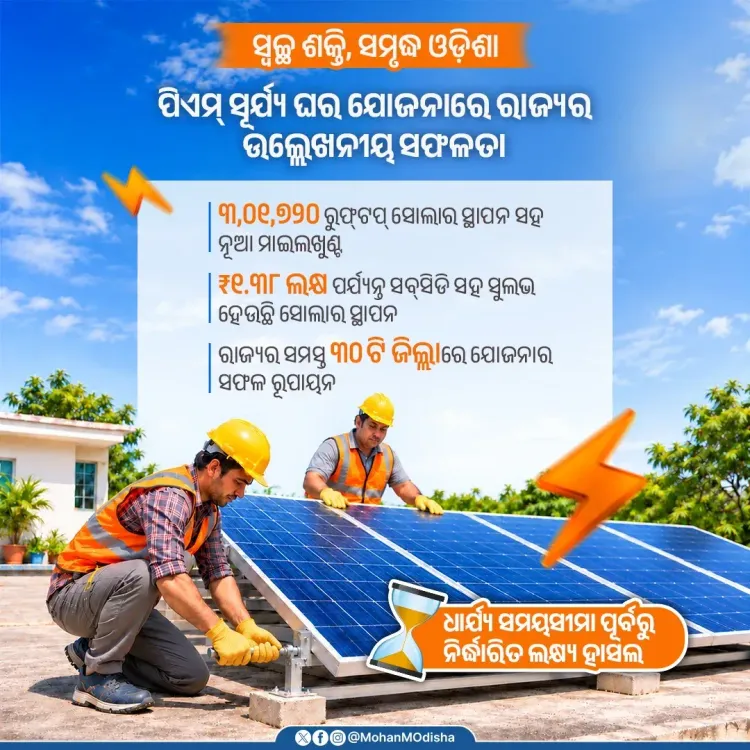
Odisha CM Mohan Charan Majhi says the state has 3,01,720 rooftop solar installations under PM Surya Ghar, beating its target early and covering all 30 districts. The 2024 central scheme offers households subsidised rooftops and up to 300 units of free electricity a month.
Key Takeaways
Chief Minister Mohan Charan Majhi said on 28 November 2026 that Odisha had installed 3,01,720 rooftop solar systems under PM Surya Ghar.
He said the state had surpassed its prescribed target ahead of schedule.
The scheme has been implemented in all 30 districts of Odisha, according to the Chief Minister.
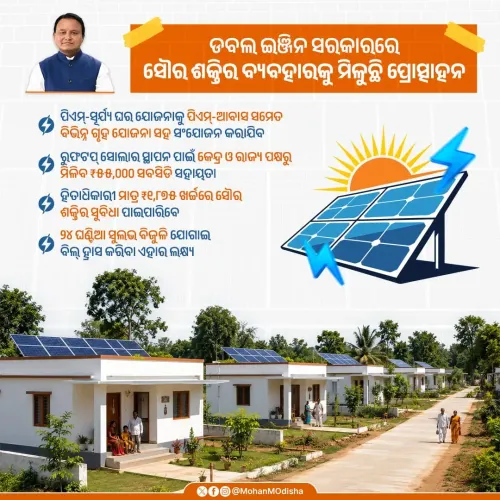
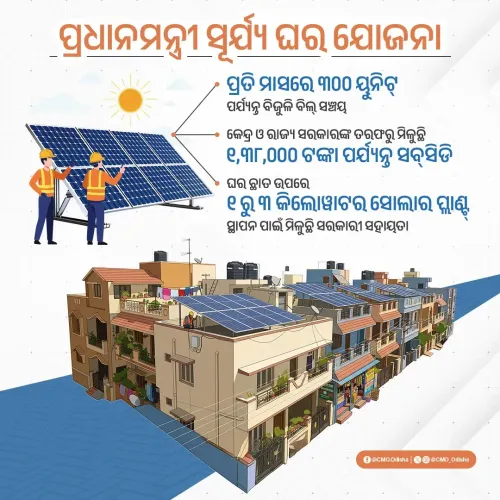
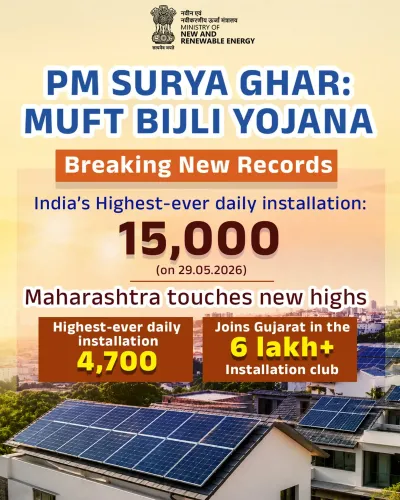
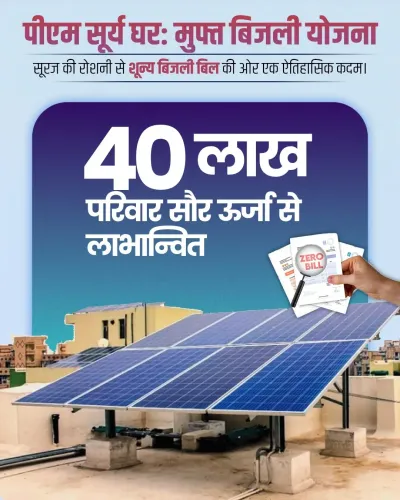
PM Surya Ghar Muft Bijli Yojana was announced in the Union Budget 2024-25 to put rooftop solar on one crore homes, with up to 300 units of free electricity a month.
India is targeting 500 GW of non-fossil capacity by 2030 .
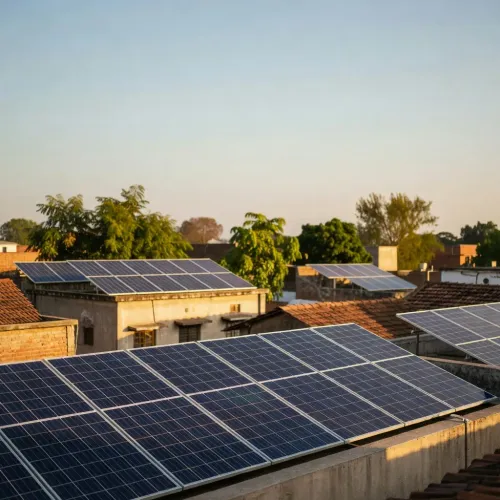
Odisha has raced past its rooftop solar target, Chief Minister Mohan Charan Majhi said on Saturday, 28 November 2026, putting the statewide tally at 3,01,720 household installations under the PM Surya Ghar scheme. Every one of the state's 30 districts, he added, is now on the map.
In a bilingual post on X, Majhi said the scheme had delivered a notable success toward clean energy and a prosperous Odisha. He wrote that the prescribed target had been met before the stipulated time, and that rollout across all districts had given new momentum to clean power. The English line of the same message put the claim in one stroke: “Odisha achieves a major milestone under the PM Surya Ghar scheme with 3,01,720 rooftop solar installations, surpassing its target ahead of schedule.”
3,01,720 rooftops, a 30-district sweep
That is not a round number chosen for a slogan. It is a household-by-household count the Chief Minister placed on the public record — more than three lakh roofs now generating power at the point of use. Majhi, who took office in June 2024 after the BJP's assembly victory, presented the result as proof that a central scheme can move at state speed when districts are lined up together.
He did not publish the original numerical target in the post. What he did say is that Odisha finished early, and that no district was left off the map.
Inside the PM Surya Ghar design
The PM Surya Ghar Muft Bijli Yojana was announced in the Union Budget 2024-25 as a flagship rooftop solar drive of the Ministry of New and Renewable Energy. The design is household-first: subsidised rooftop systems meant to supply up to 300 units of free electricity a month, with a national ambition of one crore installations.
For families, that is a bill cut and a buffer against tariff shocks. For the grid, it is generation sitting on the roof instead of travelling hundreds of kilometres. Distributed solar trims transmission losses and adds clean capacity without waiting for a new park to be carved out of farmland.
The 500 GW clock Odisha is now racing
India is chasing 500 GW of non-fossil capacity by 2030 and net-zero emissions by 2070. Rooftop solar is the unglamorous half of that race — millions of small systems rather than a handful of mega plants. States that can execute the central subsidy, empanel vendors, and get utilities to net-meter at speed decide how fast that half actually arrives.
Odisha's claim of coverage in every district is the operational point. A scheme that lives only in a few urban pockets does not change the power mix. One that reaches all 30 districts starts to. The next numbers that matter sit at the national dashboard: how many of the one-crore rooftops are actually up, and whether other states now match this pace on subsidy release and grid interconnection. Majhi has drawn a line in the sand. The test is whether those 3,01,720 systems keep generating — and whether the next lakh comes faster than the last.
Point of View
In office since June 2024, is presenting early over-delivery on PM Surya Ghar as proof of execution after the assembly change. The scheme's politics sit in the kitchen: lower bills, up to 300 units of free power, and visible panels on ordinary roofs. The policy risk is familiar — installation counts that run ahead of net-metering, subsidy credit and actual generation. If those three follow the 3,01,720 figure, Odisha becomes a benchmark other states will be measured against on the road to 500 GW.
NationPress
28 Nov 2026
Frequently Asked Questions
How many rooftop solar systems has Odisha installed under PM Surya Ghar?
Chief Minister Mohan Charan Majhi said Odisha has completed 3,01,720 rooftop solar installations under the scheme, and that this surpassed the state's target ahead of schedule.
What is the PM Surya Ghar Muft Bijli Yojana?
It is a central rooftop solar scheme announced in the Union Budget 2024-25. It seeks to install systems on one crore households and supply up to 300 units of free electricity a month.
Has PM Surya Ghar reached every district in Odisha?
Yes, according to Chief Minister Mohan Charan Majhi. He said the scheme has been successfully implemented across all 30 districts of the state.
Who is Mohan Charan Majhi?
He is the Chief Minister of Odisha and a BJP leader. He took office in June 2024 after the party's assembly election victory.
Why does rooftop solar matter for India's energy targets?
Distributed rooftop systems add clean generation at the point of use, cut transmission losses, and feed into India's goal of 500 GW of non-fossil capacity by 2030 and net-zero emissions by 2070.