Rajasthan CM hails indigenous anti-drone tests at Pokhran
Synopsis
Rajasthan Chief Minister Bhajan Lal Sharma said an indigenous anti-drone system completed development tests at Pokhran. He called the two-tier counter-swarm design a boost against enemy drones and linked it to Prime Minister Narendra Modi's Atmanirbhar Bharat drive.
Key Takeaways
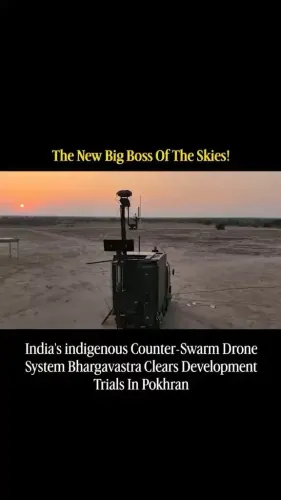
Rajasthan Chief Minister Bhajan Lal Sharma said on 28 November 2026 that an indigenous anti-drone system completed development tests at Pokhran .
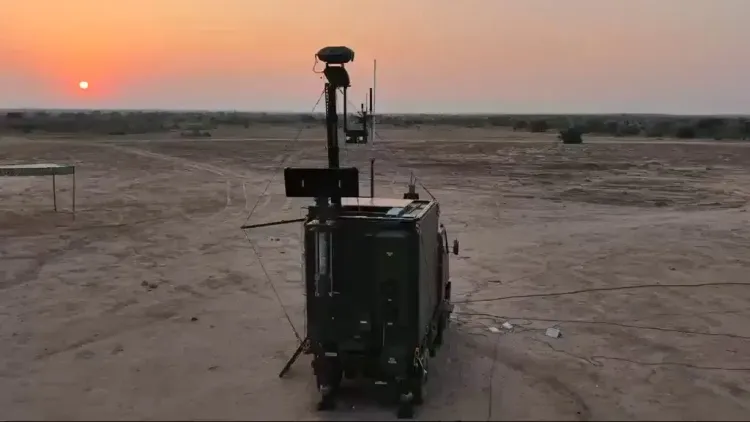
He named the system Bhargavastra and described it as a two-tier counter-swarm drone system.
He linked the trial to Prime Minister Narendra Modi 's Atmanirbhar Bharat campaign, launched in May 2020 .
Pokhran hosted nuclear tests in 1974 and 1998 and later missile and weapons trials.
The post did not announce user trials, production orders or an induction timeline.
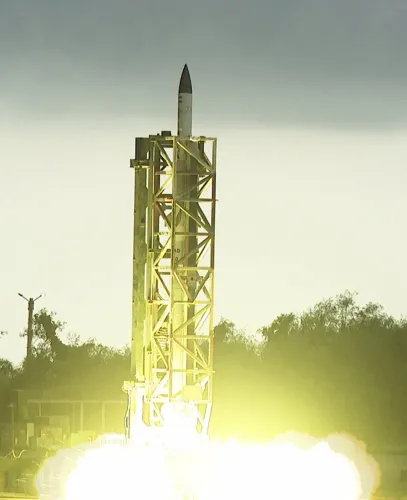
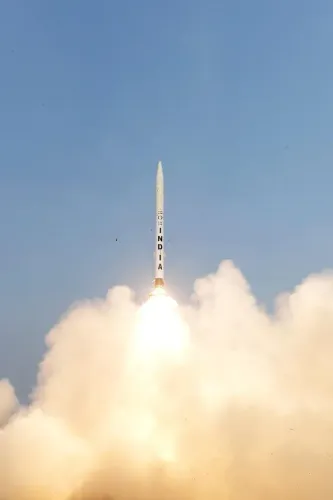
Rajasthan Chief Minister Bhajan Lal Sharma on 28 November 2026 said a homegrown anti-drone system had completed development tests at Pokhran, the desert range that once hosted India's nuclear blasts. He cast the trial as a two-tier shield against swarming enemy drones and as proof of Prime Minister Narendra Modi's Atmanirbhar Bharat bet on indigenous arms.
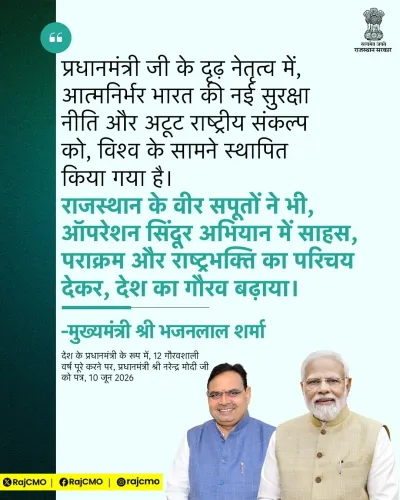
In his post, Sharma wrote that India's defence power is being strengthened by indigenous technology and self-reliance. He named the system Bhargavastra (भार्गवास्त्र) and described it as a two-tier counter-swarm drone system that would give new strength against enemy drone attacks. The success on Rajasthan's soil, he said, reflects the Prime Minister's self-reliance resolve and the country's growing indigenous defence-technical capability.
Pokhran trial in Sharma's telling
The Chief Minister located the tests at Pokhran, the western Rajasthan range used for nuclear, missile and weapons trials, including the nuclear tests of 1974 and 1998. He did not publish ranges, sensors, intercept methods or the agencies that fired. His claim is that development tests are complete.
Cheap unmanned aircraft have rewritten recent battlefields, and Indian labs have been chasing answers. Between 2021 and 2023, DRDO and private firms staged multiple counter-drone demonstrations at ranges that included Pokhran. Sharma's post places the latest claimed milestone in that line, without naming a manufacturer or a service user.
Atmanirbhar Bharat and the Thar ranges
The Atmanirbhar Bharat Abhiyan, launched in May 2020, put explicit weight on defence indigenisation and on shrinking import dependence, including through negative import lists for weapons systems. Since 2014, successive budgets have raised the share of indigenous procurement and research spending in the search for strategic autonomy.
Rajasthan's established ranges make the state a recurring venue for live-fire and development trials. Sharma, who took office as Chief Minister in December 2023, framed Saturday's message as both a national capability story and a success on Rajasthan soil.
Swarm threats after a development test
A counter-swarm system is meant to detect, track and defeat many small drones at once, not a single incoming aircraft. Low-cost UAV swarms have featured in recent conflicts as cheap ways to saturate air defences. That is the problem Sharma said the two-tier design is built to meet.
Development tests are not induction. What typically follows, if the services accept a design, are user trials, production orders and a line in later defence budgets or parliamentary statements. None of those steps was announced in the post. The political message from Jaipur is indigenous kit, tested in the Thar, sold as a shield against the drone age. The operational test is whether the armed forces put it on the line.
Point of View
Especially where recent wars showed cheap drones can punch above their price. Rajasthan's ranges give the state a cameo in national defence theatre, which a Chief Minister will naturally claim. Development-test language is still a step short of induction, so the real policy test is whether the services and the next budget convert a desert trial into inventory. Swarm defence is now a standing requirement, not a niche experiment.
NationPress
28 Nov 2026
Frequently Asked Questions
What is Bhargavastra according to Bhajan Lal Sharma?
Rajasthan Chief Minister Bhajan Lal Sharma described Bhargavastra as an indigenous two-tier counter-swarm anti-drone system. He said it had successfully completed development tests at Pokhran and would strengthen India's ability to handle enemy drone attacks. Independent technical details of the system were not set out in his post.
Where were the anti-drone development tests held?
Sharma said the development tests were completed at Pokhran in Rajasthan. Pokhran is a desert testing range used for India's nuclear tests in 1974 and 1998 as well as later missile and weapons trials.
How did Sharma link the trial to Atmanirbhar Bharat?
He said the success on Rajasthan soil reflects Prime Minister Narendra Modi's Atmanirbhar Bharat resolve and India's growing indigenous defence-technology capability. Atmanirbhar Bharat Abhiyan was launched in May 2020 with a focus on defence indigenisation and reduced import dependence.
What is a counter-swarm drone system meant to do?
A counter-swarm drone system is designed to detect, track and defeat multiple small unmanned aircraft at the same time. Sharma presented the two-tier design as a response to enemy drone attacks of that kind. Recent conflicts have shown how low-cost UAV swarms can pressure conventional air defences.
Did Sharma announce induction of the system into the armed forces?
No. He said development tests had been completed. He did not announce user trials, production orders or an induction timeline for the armed forces.