Mandaviya Hails 30% Manufacturing Jobs Surge Under Make in India
Synopsis
Union Labour Minister Mansukh Mandaviya on 6 November 2026 claimed a historic 30% rise in manufacturing sector jobs over four years under PM Modi's Make in India initiative, linking industrial policy to formal employment gains.
Key Takeaways
Union Labour Minister Mansukh Mandaviya on 6 November 2026 claimed a 30% rise in manufacturing jobs over the past four years.
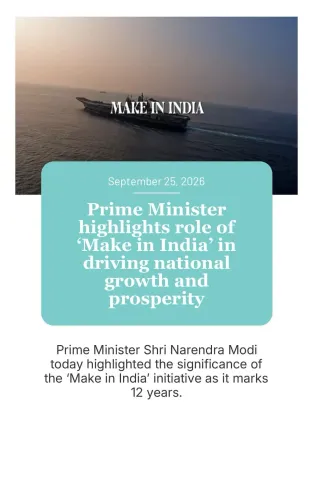
The claim is attributed to PM Narendra Modi's Make in India initiative, launched in September 2014 .
Production Linked Incentive (PLI) schemes , introduced from 2020 , form a key pillar of the government's manufacturing employment strategy.
The Periodic Labour Force Survey and Annual Survey of Industries are the authoritative datasets that will independently test the 30% figure.
India's formal manufacturing workforce has historically punched below its weight relative to the economy's size, making a sustained jump of this scale — if confirmed — a structurally significant shift.
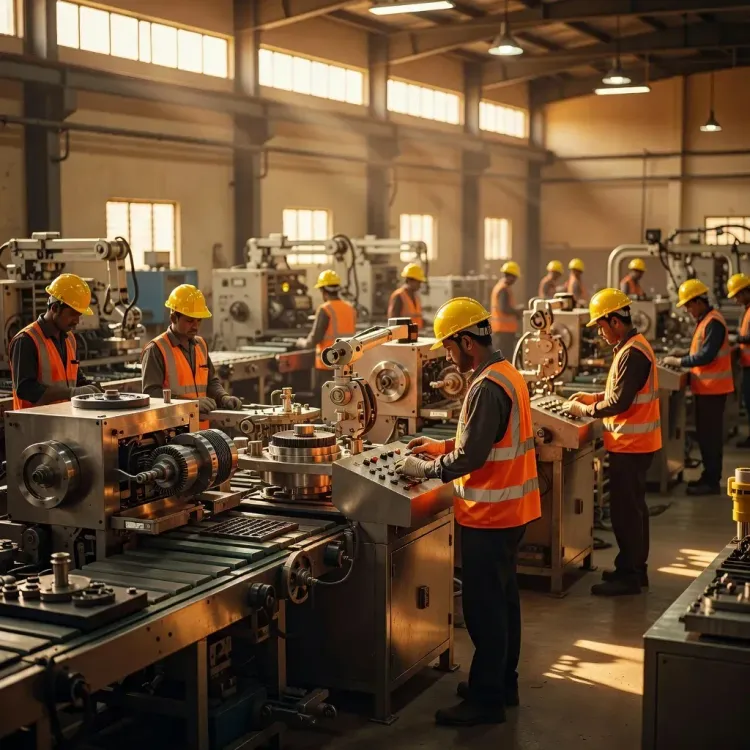
A 30 per cent jump in manufacturing jobs over four years — that is the headline figure Union Labour and Sports Minister Mansukh Mandaviya put on record on Friday, 6 November 2026, crediting Prime Minister Narendra Modi's flagship Make in India initiative for what he called a 'historic leap' in employment across India's factory floor.
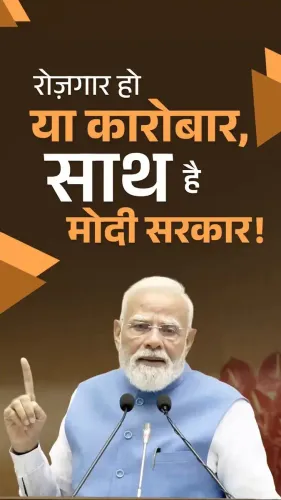
Posting on X in Hindi, Mandaviya wrote: 'पीएम श्री @narendramodi जी के नेतृत्व में 'मेक इन इंडिया' की बड़ी सफलता: पिछले 4 साल में मैन्युफैक्चरिंग क्षेत्र में नौकरियों में 30% का ऐतिहासिक उछाल!' — 'A big success of Make in India under the leadership of PM Shri Narendra Modi: a historic 30% surge in manufacturing sector jobs over the past 4 years!'
Make in India's decade-long push for factory-floor employment
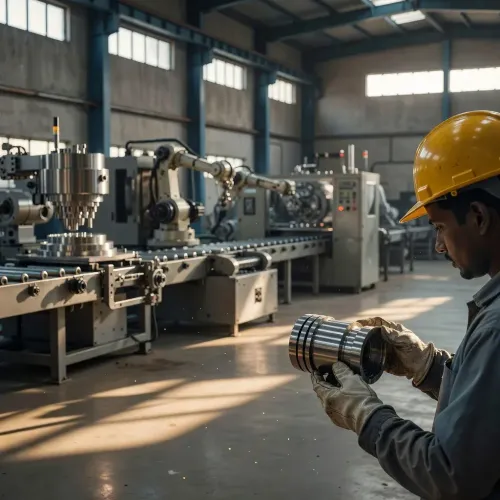
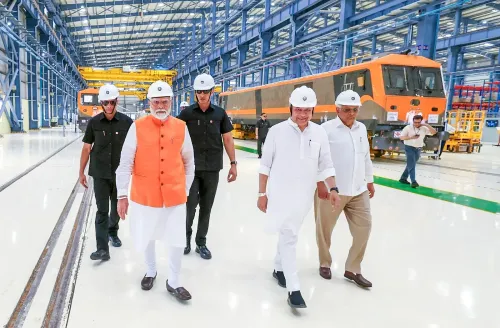
Make in India was launched in September 2014 with an explicit twin mandate: lift manufacturing's share of GDP and generate large-scale formal employment. Over the decade that followed, the government layered on complementary tools — foreign direct investment liberalisation across dozens of sectors, and from 2020 onward, Production Linked Incentive (PLI) schemes covering fourteen strategic industries from semiconductors to pharmaceuticals to mobile phones.
The cumulative logic was deliberate: use state-backed demand guarantees through PLI to draw both domestic and global manufacturers into Indian factories at scale, converting production volume into payroll. As Labour Minister, Mandaviya sits at the intersection of that industrial bet and its workforce outcome — making Friday's post squarely within his brief.
What the 30% figure means — and what to watch
A 30 per cent rise in manufacturing employment over four years would represent a structurally significant shift if confirmed by independent survey data. India's formal manufacturing workforce has historically been a stubborn underperformer relative to the economy's size, with the sector long employing a far smaller share of workers than comparable Asian manufacturing economies. A sustained jump of this magnitude would mark a genuine inflection point.
The government's own Periodic Labour Force Survey (PLFS) and the Annual Survey of Industries (ASI) are the authoritative datasets against which the claim will be tested. The next scheduled releases of both surveys will be closely watched by economists and labour researchers as independent verification of the trend Mandaviya is highlighting.
For now, the minister's post plants a data-point claim at the centre of the government's pre-budget and policy-review season — a signal that Make in India's employment dividend is being positioned as one of the administration's headline achievements heading into the political calendar.
Point of View
' the Labour Ministry is signalling that the government views manufacturing employment — not just production output — as the benchmark for Make in India's success. The claim will gain or lose credibility depending on how forthcoming official surveys like the PLFS and ASI are with corroborating data. If verified, it strengthens the BJP's core economic narrative of job creation through industrial policy; if contested, it risks putting a large headline number under uncomfortable scrutiny.
NationPress
6 Nov 2026
Frequently Asked Questions
What is Make in India and when was it launched?
Make in India is a flagship government initiative launched in September 2014 by Prime Minister Narendra Modi to boost domestic manufacturing, attract foreign investment, and generate large-scale employment in India's industrial sector.
What did Mansukh Mandaviya claim about manufacturing jobs in November 2026?
Union Labour and Sports Minister Mansukh Mandaviya claimed on 6 November 2026 that manufacturing sector jobs in India had surged by 30% over the past four years, attributing the growth to PM Modi's Make in India initiative.
What are Production Linked Incentive (PLI) schemes?
PLI schemes are government incentive programmes launched from 2020 onward covering fourteen industries including electronics, pharmaceuticals, and food processing. They offer financial incentives to manufacturers that hit incremental production targets, aiming to scale output and create formal jobs.
Which official data source will verify India's manufacturing employment figures?
The Periodic Labour Force Survey (PLFS) and the Annual Survey of Industries (ASI), both government-published datasets, are the primary official sources for tracking employment trends in India's manufacturing sector.
What is Mansukh Mandaviya's role in the Indian government?
Mansukh Mandaviya is a senior BJP leader who serves as Union Minister of Labour and Employment as well as Minister of Youth Affairs and Sports in PM Narendra Modi's cabinet.