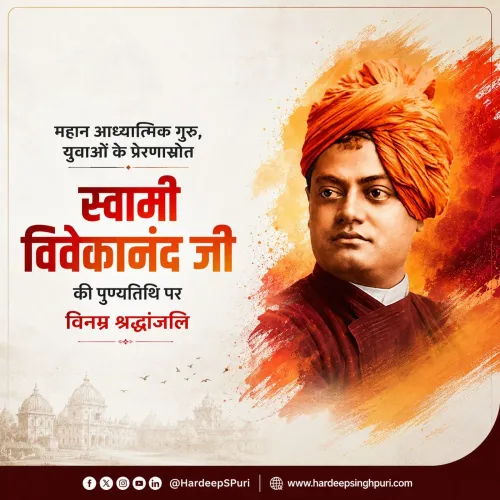
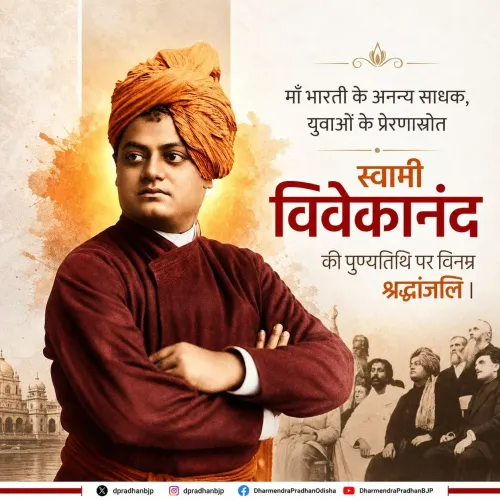
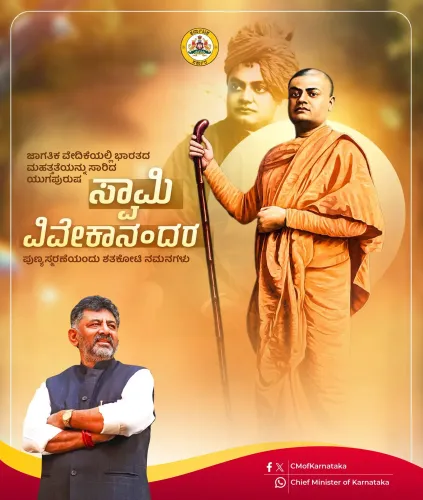
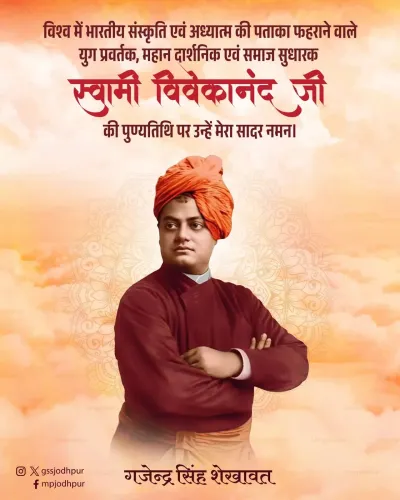
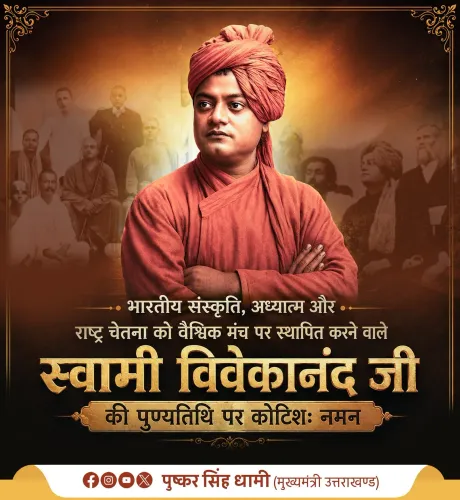
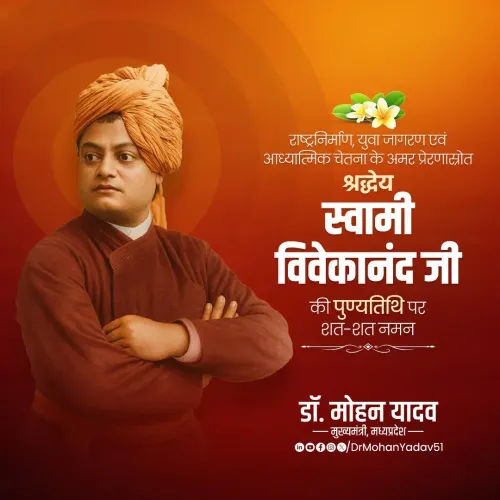
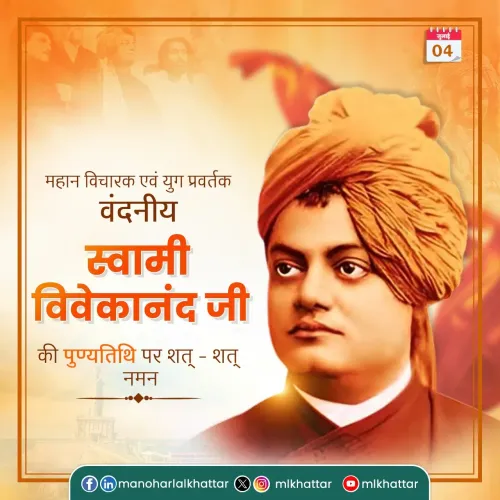
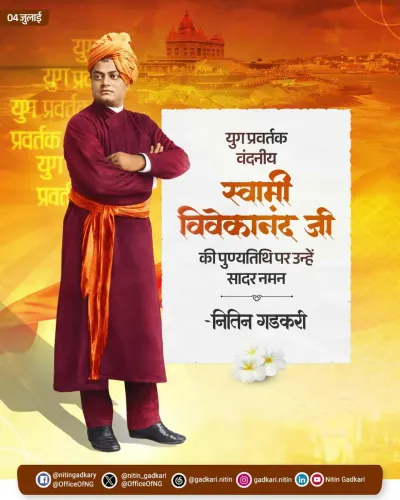
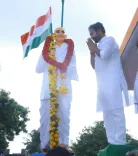
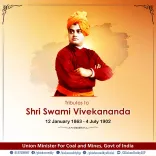
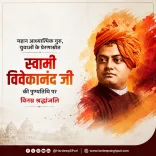
Mandaviya pays tribute to Swami Vivekananda on death anniversary
Synopsis
Union Minister Mansukh Mandaviya paid a humble tribute to Swami Vivekananda on his death anniversary on 4 July 2026, honouring the philosopher-monk as an epoch-maker whose ideas of patriotism, self-confidence and energy continue to inspire India's youth and inform national policy.
Key Takeaways
Union Minister Mansukh Mandaviya posted a tribute to Swami Vivekananda on 4 July 2026 , the monk's death anniversary.
Mandaviya described Vivekananda as a 'great philosopher and epoch-maker' who infused patriotism, self-confidence and energy into India's youth.
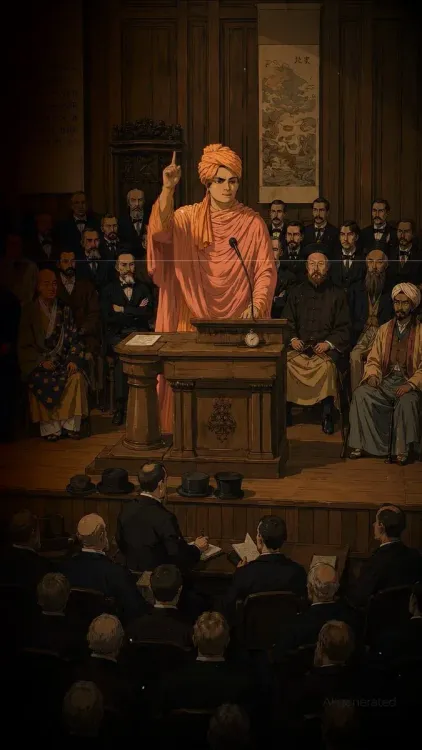
Swami Vivekananda (1863-1902) is celebrated for his address at the Parliament of the World's Religions, Chicago, 1893 and his call for youth-led national awakening.
The Government of India designated 12 January as National Youth Day in 1984 in Vivekananda's honour.
Mandaviya's Youth Affairs and Sports portfolio directly connects to Vivekananda's legacy through programmes such as the NSS and NYKS .
The next major commemorative event is the National Youth Festival in January 2027 , where new scheme announcements are possible.
Union Labour and Sports Minister Mansukh Mandaviya on Saturday, 4 July 2026, paid homage to Swami Vivekananda on the philosopher-monk's death anniversary, honouring him as a great thinker and epoch-maker who instilled patriotism, self-confidence and energy in India's youth.
Context
Mandaviya's post, written in Hindi, offered a vinamra shraddhanjali (humble tribute) to Swami Vivekananda, describing him as a mahan darshnik va yug-pravartak — a great philosopher and epoch-maker — whose 'resounding ideas infused patriotism, self-confidence and energy into the power of youth.' Vivekananda passed away on 4 July 1902 at Belur Math, West Bengal, at the age of 39, and his death anniversary is observed each year by public figures, spiritual organisations and government institutions across India.
The tribute comes from a minister who holds the Youth Affairs and Sports portfolio alongside Labour and Employment, making the invocation of Vivekananda's youth-centric philosophy particularly resonant with his official mandate.
Policy Backdrop
The Government of India declared 12 January — Vivekananda's birth anniversary — as National Youth Day in 1984, formally embedding his message of self-reliance and national service into the country's youth policy calendar. The Ministry of Youth Affairs and Sports oversees flagship programmes such as the National Service Scheme (NSS) and the Nehru Yuva Kendra Sangathan (NYKS), both of which draw on Vivekananda's ideals of selfless service and character-building.
Successive administrations have referenced Vivekananda's teachings in youth development documents, and the present government has woven his philosophy into sports-promotion messaging, framing physical fitness and self-reliance as expressions of national character.
Significance for Youth and Sports Policy
Vivekananda is perhaps best known internationally for his address at the Parliament of the World's Religions in Chicago in 1893, but within India his legacy is anchored in his call to the youth — urging physical strength, intellectual rigour and patriotic action as inseparable virtues. For the Ministry of Youth Affairs and Sports, this triad aligns closely with current policy goals linking athletic achievement, employability and civic participation.
Mandaviya's combined charge over labour and sports gives him a platform to connect workforce readiness with the kind of disciplined, self-confident character that Vivekananda championed, a linkage that officials have made explicit in recent youth-scheme communications.
What's Next
The annual National Youth Festival, typically held around 12 January each year to mark Vivekananda's birth anniversary, is the next major government event at which his philosophy is likely to be foregrounded. Observers will watch whether the Ministry of Youth Affairs and Sports announces new schemes or programme expansions in the second half of 2026 that explicitly cite Vivekananda's ideals of self-reliance and national service, continuing a pattern of aligning policy launches with commemorative moments.
Point of View
Patriotic youth and the government's current sports and employment programmes. The BJP has consistently used Vivekananda's imagery to frame youth-development initiatives as rooted in civilisational values rather than mere welfare delivery. For Mandaviya personally, the post signals that his Youth Affairs charge is not merely administrative but ideologically anchored. Watch for whether this anniversary tribute is followed by a substantive policy announcement in the coming weeks.
NationPress
4 Jul 2026
Frequently Asked Questions
When did Swami Vivekananda die and why is 4 July observed?
Swami Vivekananda passed away on 4 July 1902 at Belur Math, West Bengal , at the age of 39. The date is observed each year as his punyatithi (death anniversary) by spiritual organisations, political leaders and government institutions across India.
Why did Mansukh Mandaviya pay tribute to Swami Vivekananda?
As Union Minister for Youth Affairs and Sports , Mandaviya's portfolio is directly linked to Vivekananda's legacy of youth empowerment. He posted the tribute on 4 July 2026 to mark the philosopher-monk's death anniversary, honouring him as an epoch-maker who inspired patriotism and self-confidence in Indian youth.
What is National Youth Day and how is it connected to Vivekananda?
National Youth Day is observed on 12 January each year, the birth anniversary of Swami Vivekananda . The Government of India designated the date in 1984 to honour his message of self-reliance, service and national awakening among young Indians.
What government programmes are inspired by Swami Vivekananda's philosophy?
The National Service Scheme (NSS) and the Nehru Yuva Kendra Sangathan (NYKS) , both under the Ministry of Youth Affairs and Sports , incorporate Vivekananda's ideals of selfless service, character-building and nation-building as foundational principles.
What was Swami Vivekananda's most famous international contribution?
Swami Vivekananda is internationally celebrated for his address at the Parliament of the World's Religions in Chicago in 1893 , where he introduced Hindu philosophy to a global audience and became a symbol of India's spiritual heritage and self-confidence.