Mandaviya invokes 'Good Maharaja' to celebrate India-Poland ties
Synopsis
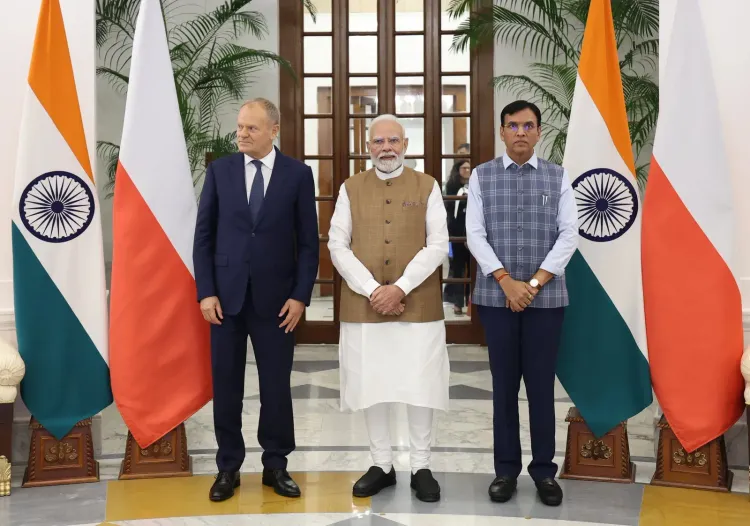
Union Minister Mansukh Mandaviya highlighted the 1942 Balachadi camp — where Jamnagar's Maharaja sheltered hundreds of Polish WWII refugee children — as the emotional foundation of India-Poland friendship, linking it to PM Modi's 'Vasudhaiva Kutumbakam' foreign-policy vision.
Key Takeaways
Union Minister Mansukh Mandaviya posted on 23 October 2026 celebrating the historical roots of India-Poland friendship .
In 1942 , Maharaja Digvijaysinhji Ranjitsinhji Jadeja of Jamnagar sheltered several hundred Polish refugee children at Balachadi , Gujarat, evacuated during World War II .
Poland continues to honour the Maharaja as the 'Good Maharaja' , with monuments in Warsaw and the episode taught in Polish schools.
Indian and Polish embassies jointly marked the 75th anniversary of the Balachadi settlement in 2018–2019 with exhibitions and a monument unveiling.
Mandaviya framed the bilateral friendship through the Sanskritic ideal of 'Vasudhaiva Kutumbakam' — the world is one family — a cornerstone of PM Modi's foreign-policy outreach to Central and Eastern Europe.
A wartime act of refuge in a small Gujarat village is quietly powering one of India's most distinctive diplomatic friendships — and Union Labour and Sports Minister Mansukh Mandaviya invoked it on Friday, 23 October 2026, to celebrate the deepening bond between India and Poland.
Posting in Gujarati, Mandaviya wrote: 'Balachadhithi sharu thayeli mitrta, aaje navi unchaie' — 'A friendship that began in Balachadi has today reached new heights.' He recalled how the Maharaja of Jamnagar gave a home in Balachadi to Polish children who had been rendered homeless during World War II, and how Poland still remembers him as the 'Good Maharaja'. The minister tied the spirit of that gesture to the Sanskritic ideal of 'Vasudhaiva Kutumbakam' — the world is one family — framing it as the moral engine behind Prime Minister Narendra Modi's engagement with Poland today.What Balachadi gave Poland's lost children
In 1942, as the Second World War displaced millions across Europe, Maharaja Digvijaysinhji Ranjitsinhji Jadeja of Jamnagar opened the gates of his coastal camp at Balachadi — a village near Jamnagar in Gujarat — to several hundred Polish children evacuated through Iran and the Middle East. The children, orphaned or separated from parents by Nazi and Soviet occupation, arrived with nothing. The Maharaja fed them, clothed them, and enrolled them in schools.
Poland never forgot. The episode entered Polish school curricula, monuments to the 'Good Maharaja' stand in Warsaw, and annual commemorations keep the memory alive. Balachadi itself is recalled in Polish memory as 'Little India' — a phrase that carries genuine warmth, not diplomatic courtesy.
How New Delhi has woven the story into modern diplomacy
Since 2014, successive Indian governments have deliberately elevated the Balachadi story in bilateral statements with Poland, treating it as a ready-made cultural bridge to Central and Eastern Europe. In 2018–2019, Indian and Polish embassies jointly marked 75 years of the Balachadi settlement with exhibitions and the unveiling of a monument in Warsaw — a rare instance of a WWII humanitarian act by a princely-state ruler receiving formal bilateral recognition nearly eight decades later.
Mandaviya's post lands squarely within that strategy: anchor contemporary friendship in a verified, emotionally resonant historical act, then frame it through the 'Vasudhaiva Kutumbakam' philosophy that has become a signature of PM Modi's foreign-policy messaging. The approach lets India present itself not just as an emerging economic partner for European capitals, but as a civilisation with a long institutional memory for human solidarity.
What to watch as the friendship 'reaches new heights'
The minister's phrase 'new heights' signals diplomatic momentum, even if the specific 2026 development driving it was not detailed in the post. Analysts watching India–Poland ties will look to any follow-up cultural or consular agreements that may emerge from planned political consultations or high-level visits in the coming months — and whether the Balachadi narrative gets enshrined further in joint declarations.
A village by the sea in Gujarat once sheltered Europe's children from the worst war in history. Eight decades on, that act of grace is still doing diplomatic work — proof, perhaps, that humanity's longest-lasting currency is kindness.
Point of View
Emotionally powerful historical act to build contemporary bilateral equity with a European partner. By foregrounding the 1942 Balachadi episode, New Delhi sidesteps purely transactional framing and positions itself as a partner Poland owes an older, deeper debt of gratitude to. The 'Vasudhaiva Kutumbakam' framing also aligns with the Modi government's broader effort to present India's engagement with Central and Eastern Europe as culturally grounded, not merely strategic. Whether the rhetoric translates into institutional outcomes — consular agreements, cultural exchanges, trade milestones — will determine how much diplomatic weight the story continues to carry.
NationPress
23 Oct 2026
Frequently Asked Questions
Who was the 'Good Maharaja' of Jamnagar and what did he do for Poland?
The 'Good Maharaja' refers to Maharaja Digvijaysinhji Ranjitsinhji Jadeja of Jamnagar , who in 1942 established a refugee camp at Balachadi , Gujarat, to shelter several hundred Polish children evacuated from Europe during World War II. Poland still commemorates him with monuments and in school curricula.
Where is Balachadi and why is it significant for Poland?
Balachadi is a coastal village near Jamnagar in Gujarat , India. It is significant to Poland because it was the site of a wartime refuge camp for Polish child refugees, known in Polish memory as 'Little India' , established by the local Maharaja in 1942.
What is 'Vasudhaiva Kutumbakam' and how is it used in Indian foreign policy?
'Vasudhaiva Kutumbakam' is a Sanskrit phrase meaning 'the world is one family.' The Modi government has used it as a guiding philosophy in its foreign-policy messaging, particularly to frame India's humanitarian history and inclusive global outlook to partners in Europe, Africa, and beyond.
What has India done to officially mark the Balachadi episode with Poland?
In 2018–2019 , Indian and Polish embassies jointly marked the 75th anniversary of the Balachadi settlement through cultural exhibitions and the unveiling of a commemorative monument in Warsaw , giving the episode formal bilateral recognition for the first time.
Why is Mansukh Mandaviya posting about India-Poland history?
As a senior BJP minister and part of the Modi government's diplomatic communication effort, Mandaviya is amplifying the historical Balachadi narrative to underscore growing India-Poland ties, in line with New Delhi's strategy of anchoring contemporary friendships in long-standing humanitarian and cultural bonds.