Mandaviya Chairs Porbandar DISHA Meet, Reviews Scheme Delivery
Synopsis
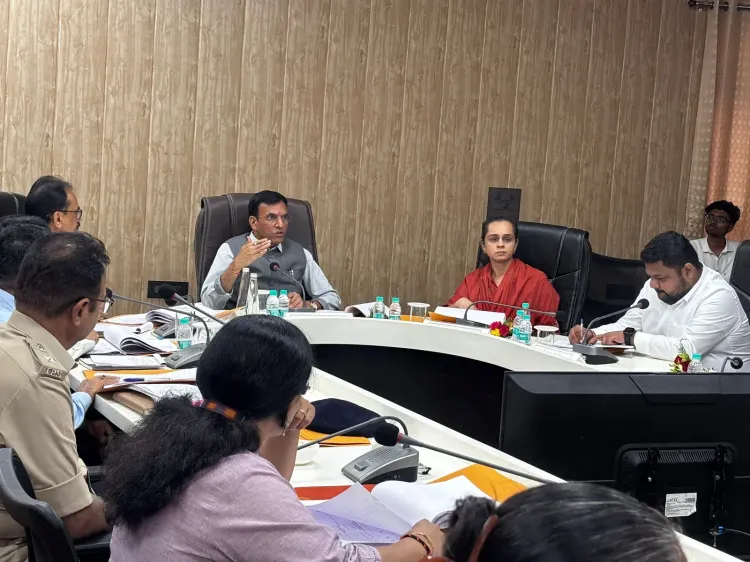
Union Minister Mansukh Mandaviya chaired Porbandar's DISHA meeting on October 17, reviewing central welfare scheme implementation and directing officials to ensure last-mile Antyodaya delivery, consistent with PM Modi's focus on reaching the poorest beneficiaries.
Key Takeaways
Mansukh Mandaviya chaired the DISHA meeting in Porbandar, Gujarat on October 17, 2026 .
DISHA (District Development Coordination and Monitoring Committee) was constituted in 2016 to oversee central rural development programmes at district level.
The minister framed the session under the motto 'Lakshya Antyodaya — Path Antyodaya' , directing that every scheme's benefits reach the last beneficiary.
The Antyodaya principle underpins flagship programmes including Antyodaya Anna Yojana (2000) and Deendayal Antyodaya Yojana-NRLM (restructured 2015).
The meeting is part of an established nationwide pattern of ministerial-level district oversight designed to close last-mile implementation gaps.
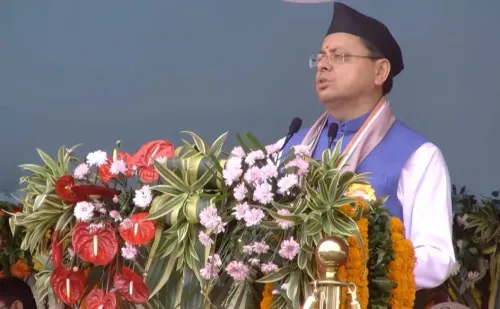
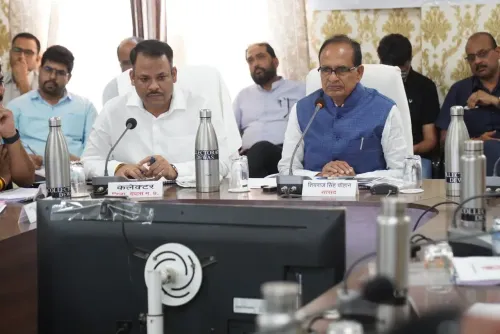
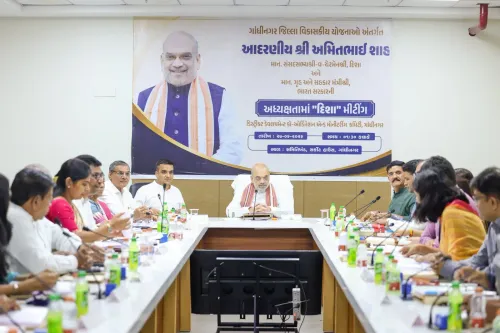
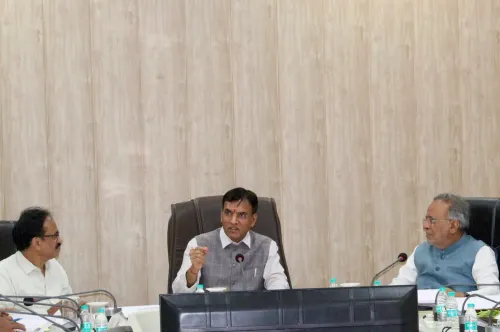
In Porbandar, Gujarat, on Saturday, October 17, 2026, Union Minister Mansukh Mandaviya chaired the district's DISHA (District Development Coordination and Monitoring Committee) meeting — a ground-level audit of whether central welfare schemes are actually reaching the people they were designed for. The minister issued directives to ensure every scheme's benefits reach the 'antyodaya' — the last person in line.
Posting on X, Mandaviya framed the session around the principle: 'Lakshya Antyodaya — Path Antyodaya' ('Goal: the last beneficiary — Path: the last beneficiary'). He wrote that, in keeping with Prime Minister Narendra Modi's resolve of Antyodaya, he gave the 'necessary directions to deliver the benefit of every scheme to the last person.'
What DISHA committees actually do — and why Porbandar
DISHA committees were constituted by the Ministry of Rural Development in 2016 to create a single, unified platform for monitoring central rural development programmes at the district level. They bring together elected representatives, district officials, and programme implementers under one roof — replacing scattered, siloed reviews with coordinated accountability. Porbandar, a coastal district in Gujarat and Mandaviya's home-state constituency area, is one of hundreds of districts running this mechanism nationwide.
The meetings are designed to catch implementation gaps before they become entrenched failures — the difference between a scheme sanctioned in New Delhi and a beneficiary in a village actually receiving it. That last-mile problem is precisely what the Antyodaya framework targets.
The Antyodaya thread running through Modi-era policy
The word 'Antyodaya' — literally, 'rise of the last' — has deep roots in Indian welfare thinking, but the Modi government since 2014 has woven it explicitly into programme architecture. The Antyodaya Anna Yojana, launched in 2000, targeted the poorest households with subsidised foodgrains. The Deendayal Antyodaya Yojana-National Rural Livelihoods Mission, restructured in 2015, pushed rural self-help groups deeper into underserved communities. Across ministries, the rhetorical and operational emphasis has remained consistent: saturation, not just coverage.
Mandaviya, who holds the Labour and Sports portfolios at the Centre, represents the kind of senior minister whose periodic appearance at district DISHA sessions signals that oversight is not delegated away from the political level — it is personally owned.
What the Porbandar review signals
The directions issued at the meeting — while their specifics are not on public record — follow a standard DISHA pattern: identifying lagging schemes, fixing timelines, and holding district machinery accountable to saturation targets. For Porbandar, a district where coastal livelihoods intersect with rural welfare gaps, the review of programmes spanning housing, nutrition, employment, and skilling carries direct consequences for thousands of households.
The next indicator to watch: whether subsequent DISHA reports from Porbandar and other Gujarat districts show improved beneficiary saturation on schemes flagged in this round. In the Antyodaya framework, the meeting is only the beginning — the proof is in the last village, the last household, the last name on the list.
Point of View
Not merely an administrative one. It fits a broader BJP governance pattern post-2014 of using the Antyodaya vocabulary to assert both moral ownership of last-mile delivery and accountability over the bureaucratic pipeline. For a coastal district like Porbandar, which carries symbolic weight as the birthplace of Mahatma Gandhi, the optics of a senior minister personally reviewing schemes carry additional resonance. The effectiveness of this oversight model, however, depends entirely on whether the directives issued in the meeting room translate into measurable beneficiary gains on the ground — a test that DISHA data from future quarters will either confirm or quietly contradict.
NationPress
17 Oct 2026
Frequently Asked Questions
What is a DISHA committee and what does it do?
A DISHA (District Development Coordination and Monitoring Committee) is a body constituted in 2016 by the Ministry of Rural Development to review the implementation of central government schemes at the district level, bringing together elected representatives and officials on a single platform.
Why did Mansukh Mandaviya attend a district meeting in Porbandar?
Mandaviya, a senior BJP leader from Gujarat and Union Minister for Labour and Sports, chaired the Porbandar DISHA meeting on October 17, 2026, to review welfare scheme delivery and issue directives to ensure benefits reach last-mile beneficiaries under the Antyodaya framework.
What does 'Antyodaya' mean in Indian welfare policy?
'Antyodaya' means 'rise of the last' and refers to the principle of prioritising the poorest individuals in welfare delivery. It underpins schemes like the Antyodaya Anna Yojana (2000) and has been a central rhetorical and operational focus of the Modi government since 2014.
Which district is Porbandar and why is it significant?
Porbandar is a coastal district in Gujarat, India, historically significant as the birthplace of Mahatma Gandhi. It falls within Mansukh Mandaviya's home state and was the location of this DISHA review meeting.
What central schemes are typically reviewed in DISHA meetings?
DISHA meetings typically review rural development and welfare programmes including housing, nutrition, employment generation, skilling, and livelihood schemes under the Deendayal Antyodaya Yojana and other central missions targeting last-mile delivery.