CM Dhami Reaffirms Last-Mile Development Push for Uttarakhand Hills
Synopsis
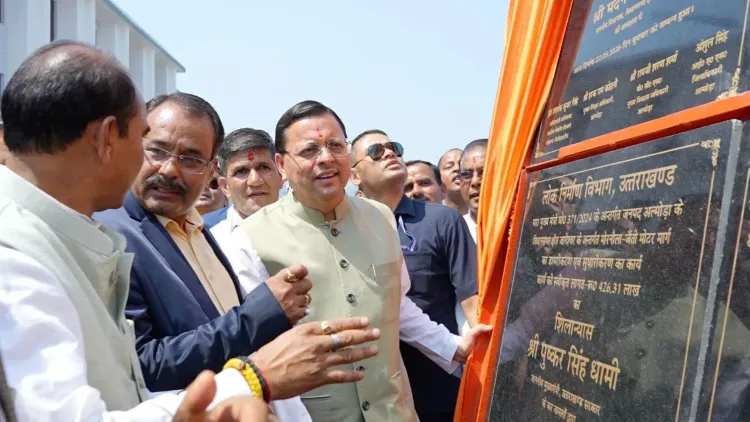
Uttarakhand CM Pushkar Singh Dhami on 27 May 2026 reaffirmed his government's Antyodaya-rooted resolve to deliver development benefits to the last person in society, with a special focus on hill-area residents. Union MoS Ajay Tamta, MLA Pramod Nainwal, and District Panchayat chief Hema Gaida were present at the event.
Key Takeaways
CM Pushkar Singh Dhami on 27 May 2026 publicly committed to last-mile delivery of development benefits to Uttarakhand's hill communities.
The statement invokes the Antyodaya framework — a policy principle centred on uplifting the most marginalised sections of society.
Union Minister of State Ajay Tamta (BJP, Almora) was present, signalling central government alignment with the state's hill-development agenda.
MLA Pramod Nainwal and District Panchayat Chairperson Hema Gaida also attended, reflecting multi-tier institutional participation.
Uttarakhand 's hill districts face structural disadvantages including out-migration and limited connectivity, making them a recurring policy focus since the state's formation in 2000 .
The next state budget and assembly session will be a key indicator of whether these commitments translate into concrete expenditure allocations.
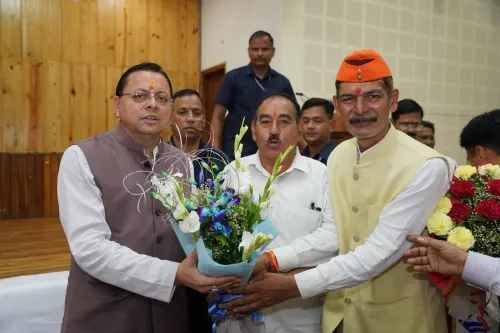
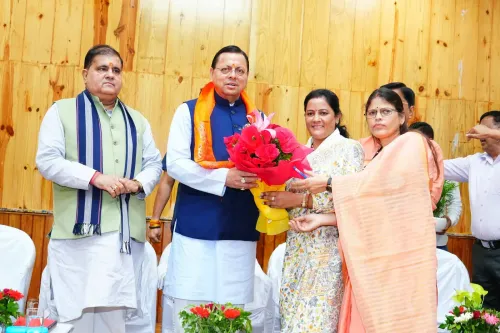
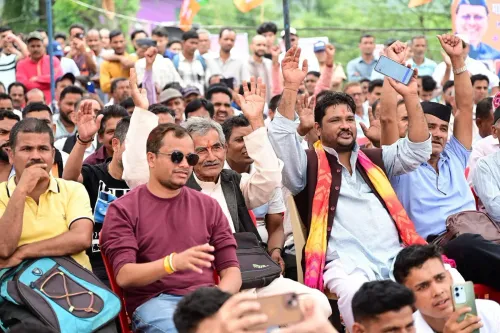
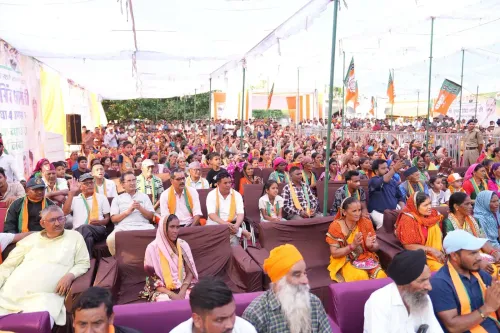
Uttarakhand Chief Minister Pushkar Singh Dhami on Wednesday, 27 May 2026 reiterated his government's commitment to ensuring that the benefits of development reach the last person in society, with a particular focus on improving facilities for residents of the state's mountainous regions. The statement was made at a public event attended by senior political figures from both the state and the central government.
Context
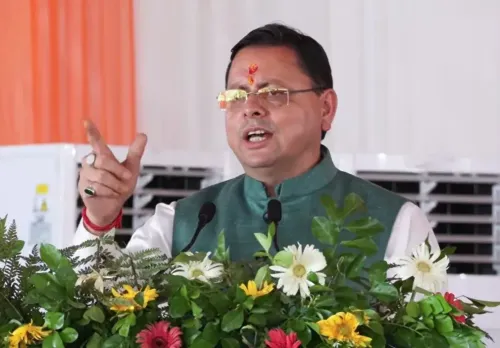
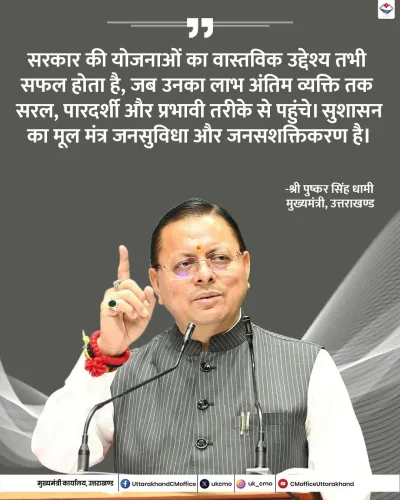
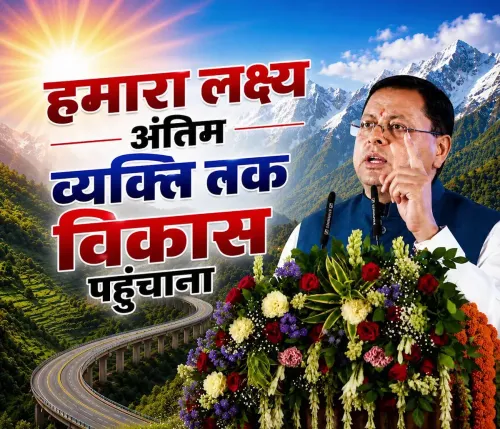
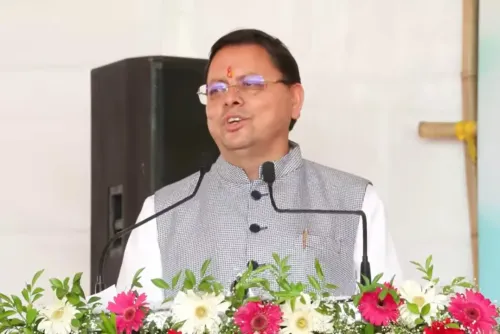
Speaking at the occasion, CM Dhami declared, 'Hamari sarkar ka spasht sankalp hai ki vikas ka labh samaj ke antim vyakti tak pahunche' ['Our government has a clear resolve that the benefits of development must reach the last person in society']. He added that people living in hilly areas must be provided better facilities. The remarks reflect the Antyodaya principle — a welfare philosophy centred on uplifting the most marginalised — that has been a recurring theme in BJP-led governance at both the state and central levels.
The event was attended by Union Minister of State Ajay Tamta, MLA Pramod Nainwal, and District Panchayat Chairperson Hema Gaida, along with other dignitaries, signalling broad institutional participation in the outreach.
Policy Backdrop
When Uttarakhand was carved out as a separate state in 2000, its founding mandate included an explicit focus on the development of remote hilly and border areas, which remain structurally disadvantaged due to terrain and connectivity challenges. Successive state governments have rolled out packages targeting roads, drinking water, electricity, and livelihood schemes in high-altitude blocks.
The Antyodaya framework, reinvigorated at the national level since 2014, prioritises last-mile delivery of welfare and infrastructure to the poorest households — a policy lineage that CM Dhami's remarks explicitly invoke. Uttarakhand's mountain districts, many of which face acute out-migration, have been designated priority zones under multiple central and state schemes.
Stakeholders and Impact
The primary beneficiaries of the stated policy direction are the residents of Uttarakhand's hill districts — communities that have historically received fewer infrastructure and welfare resources relative to the plains. District panchayat bodies, represented at the event by Hema Gaida, serve as the ground-level institutions through which state schemes are implemented and monitored.
Union Minister of State Ajay Tamta, who holds responsibilities including rural development and textiles, brings central government resources and policy coordination to the table. His presence alongside the Chief Minister underscores the convergence of state and central priorities in targeting hill-area development. MLA Pramod Nainwal's attendance signals constituency-level political ownership of the agenda.
What's Next
The key measure of follow-through will be the roll-out of any district-level infrastructure or welfare projects announced at or linked to this event. Observers will watch whether specific scheme allocations, road or water-supply contracts, or livelihood programme expansions are notified in the coming weeks.
The commitments made at this event are also likely to be reflected in the next Uttarakhand state budget and assembly session, where the government will be expected to translate the Antyodaya rhetoric into line-item expenditure. The sustained presence of central ministers at such state-level events suggests continued political prioritisation of hill-area development as a visible governance deliverable for BJP ahead of future electoral cycles.
Point of View
A state legislator, and a district panchayat chief all present — is a deliberate show of governmental alignment rather than a routine statement. It positions the BJP's hill-development narrative as a shared centre-state project, reinforcing the party's electoral messaging in a state where mountain constituencies carry significant assembly weight. The emphasis on 'the last person in society' is a well-worn but politically potent framing that allows the government to claim moral ownership of welfare delivery without committing to specific timelines or metrics. The real test will come when scheme disbursements and infrastructure completions are audited against the promise.
NationPress
11 Oct 2026
Frequently Asked Questions
What did CM Dhami say about hill area development on 27 May 2026?
CM Pushkar Singh Dhami stated that his government's clear resolve is to ensure development benefits reach the last person in society and that people living in mountainous areas receive better facilities.
Who is Ajay Tamta and why was he at the Uttarakhand event?
Ajay Tamta is a BJP MP from Almora and Union Minister of State whose portfolio includes rural development and textiles. His presence at the event reflects central government support for Uttarakhand's hill-area development agenda.
What is the Antyodaya framework referenced in Uttarakhand governance?
Antyodaya is a welfare philosophy prioritising the uplift of the poorest and most marginalised households. It has been a guiding principle in BJP-led governance at the national level since 2014 and is frequently invoked in Uttarakhand's hill-development policy.
What are the main development challenges in Uttarakhand's hill districts?
Uttarakhand's mountain districts face structural challenges including difficult terrain, limited road and water infrastructure, restricted electricity access, inadequate livelihood opportunities, and significant out-migration of working-age residents.
How does Uttarakhand's hill development policy connect to the state's formation?
When Uttarakhand was created as a separate state in 2000, its founding mandate included an explicit focus on remote hilly and border areas, making equitable mountain development a constitutional and political priority from the outset.