Manipur CM inaugurates biofertiliser plant at CSIR-NEIST Imphal, eyes organic farming push
Synopsis
Manipur is laying a scientific foundation for its organic farming ambitions — the newly inaugurated CSIR-NEIST bioreactor unit in Imphal is the state's clearest institutional step yet toward replicating Sikkim's model, with 400 hectares already under organic cultivation and another 400 in the pipeline.
Key Takeaways
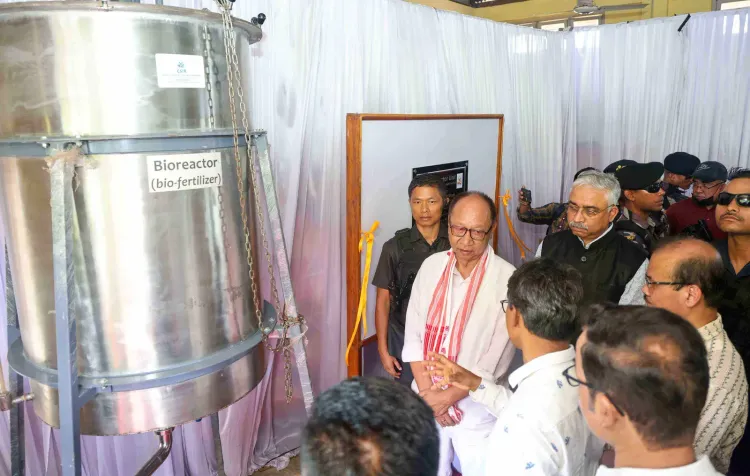
Manipur Chief Minister Yumnam Khemchand Singh inaugurated a Bioreactor Unit for Biofertiliser Production at CSIR-NEIST, Lamphelpat, Imphal on 2 July .
Approximately 400 hectares of Manipur's agricultural land is already under organic cultivation; another 400 hectares is set to be added soon.
MoUs were signed between CSIR-NEIST and two local incubates — Farmers Based Organisation (FBO) and M/s Global Bio Solutions — to scale biofertiliser production.
The initiative is framed as part of the Viksit Bharat@2047 vision, with the Chief Minister citing Sikkim's 2016 fully-organic status as a model for Manipur.
Tiwari of CSIR-NEIST noted the organisation has operated in Manipur for seven to eight years , supporting agriculture and skill development.
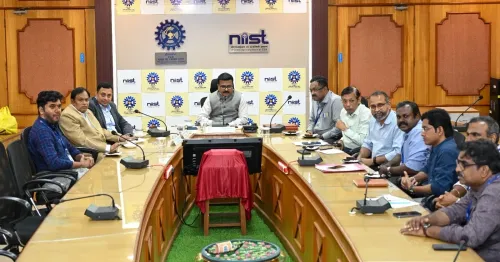
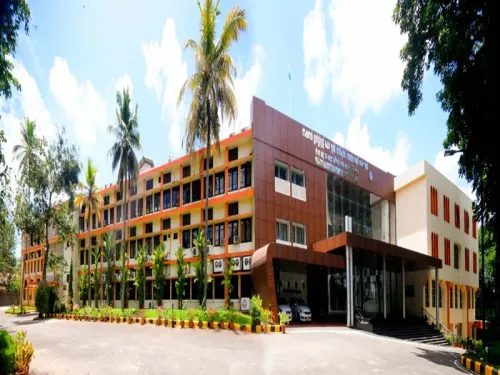
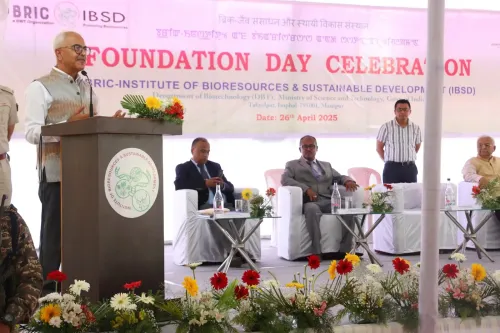
Manipur Chief Minister Yumnam Khemchand Singh on Thursday, 2 July inaugurated a Bioreactor Unit for Biofertiliser Production at the Council of Scientific and Industrial Research–North East Institute of Science and Technology (CSIR-NEIST) Branch Laboratory in Lamphelpat, Imphal, calling biofertilisers a cornerstone of the Viksit Bharat@2047 vision. The Chief Minister stressed that sustainable agricultural practices are indispensable for both public health and long-term environmental stability.
Key Developments at the Inauguration
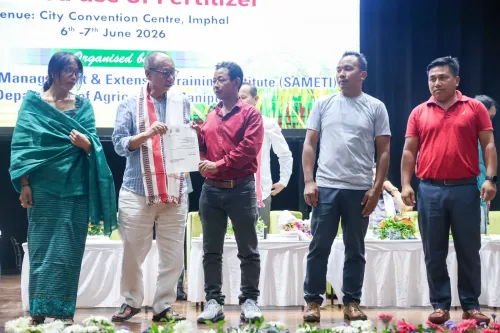
The event marked the formal launch of the bioreactor unit, designed to scale up biofertiliser production in the state. As part of the programme, Memoranda of Understanding (MoUs) were signed between CSIR-NEIST and two Manipur-based incubates — Sagolsem Nimaichand Singh, General Secretary of the Farmers Based Organisation (FBO), and Ningombam Arunkumar Singh of M/s Global Bio Solutions, Thangal Bazar, Imphal — to advance biofertiliser production and related scientific initiatives. Chief Minister Singh also planted an avocado (Persea americana Mill.) sapling under the nationwide 'Ek Ped Maa Ke Naam' tree-plantation campaign.
What the Chief Minister Said
Singh underscored that under the leadership of Prime Minister Narendra Modi, the Government of India has rolled out multiple schemes across sectors to realise the Viksit Bharat@2047 goal. He cautioned that the excessive use of chemical fertilisers damages not only human health but also depletes soil fertility and undermines long-term agricultural productivity, urging farmers to shift to eco-friendly alternatives.
Highlighting a regional benchmark, Singh pointed to Sikkim, which was declared India's first fully organic state in 2016 and has maintained that status since. He noted that Manipur has already brought approximately 400 hectares of agricultural land under organic cultivation, with another 400 hectares slated for inclusion soon. The state Agriculture Department, he said, is actively working to expand the scope of organic farming across Manipur.
CSIR's Role and Scientific Contribution
Prof. V.M. Tiwari, Director of CSIR–North East Institute of Science and Technology, Jorhat, said the organisation has contributed to society through scientific research for several decades, playing a significant role in innovation and skill development. He noted that the CSIR Mission has been implemented effectively in Manipur over the past seven to eight years, benefiting multiple sectors including agriculture.
Broader Context and What's Next
Manipur's organic farming push fits into a larger national narrative of reducing chemical dependency in agriculture — a concern that has intensified as soil degradation and input costs squeeze farmer incomes across India. This is not the first institutional step in the state's organic transition, but the CSIR-NEIST bioreactor unit adds a scientific production backbone that earlier policy announcements lacked.
With the MoUs now signed and bioreactor units being distributed to beneficiaries, the Chief Minister urged recipients to ensure that the biofertilisers produced reach farmers and consumers across the state. The collective momentum of government, scientific institutions, and farmer organisations, Singh said, will be key to Manipur's ambition of becoming a fully organic state.
Point of View
But Manipur's organic ambition will be tested by the gap between policy framing and farm-level adoption. Sikkim's success took over a decade of sustained subsidy, market linkage, and export branding — conditions Manipur has not yet replicated at scale. The MoUs with local incubates are promising, but two private partners and 400 hectares remain modest against the scale of the state's agricultural sector. The real question is whether biofertiliser supply will be matched by demand-side incentives that make organic conversion economically rational for smallholder farmers.
NationPress
3 Jul 2026
Frequently Asked Questions
What was inaugurated at CSIR-NEIST Imphal on 2 July?
A Bioreactor Unit for Biofertiliser Production was inaugurated at the CSIR–North East Institute of Science and Technology (CSIR-NEIST) Branch Laboratory in Lamphelpat, Imphal, on 2 July. The unit is designed to scale up biofertiliser manufacturing to support Manipur's organic farming transition.
How much agricultural land in Manipur is under organic farming?
Around 400 hectares of agricultural land in Manipur has already been brought under organic cultivation, according to Chief Minister Yumnam Khemchand Singh. An additional 400 hectares is expected to be added soon, with the state Agriculture Department actively working toward this target.
What is the Viksit Bharat@2047 vision and how does organic farming fit in?
Viksit Bharat@2047 is the Government of India's development framework targeting a fully developed India by the centenary of Independence. Chief Minister Singh stated that the adoption of biofertilisers and promotion of organic farming are key components of this vision, contributing to healthier citizens and a more sustainable environment.
Why is Sikkim relevant to Manipur's organic farming plans?
Sikkim was declared India's first fully organic state in 2016 and has maintained that status, making it the benchmark for state-level organic transitions in India. Chief Minister Singh cited Sikkim's achievement as a model Manipur aspires to replicate.
What MoUs were signed at the CSIR-NEIST event?
CSIR-NEIST signed MoUs with two Manipur-based incubates — Sagolsem Nimaichand Singh of the Farmers Based Organisation (FBO) and Ningombam Arunkumar Singh of M/s Global Bio Solutions, Thangal Bazar, Imphal — to promote biofertiliser production and related scientific initiatives in the state.