Should Airlines Reduce Airfares and Increase Flights?
Synopsis
On November 4, Manipur's Governor, Ajay Kumar Bhalla, along with state officials, urged airlines to cut high airfares and boost flight frequency at Bir Tikendrajit International Airport. The Governor's concerns highlight significant challenges faced by residents and the need for fair pricing in air travel.
Key Takeaways
Governor Ajay Kumar Bhalla calls for reduced airfares.
Increased flight frequencies are essential for connectivity.
High airfares impose financial burdens on residents.
Collaboration with the DGCA and airlines is necessary.
Air travel is critical due to limited transport alternatives.
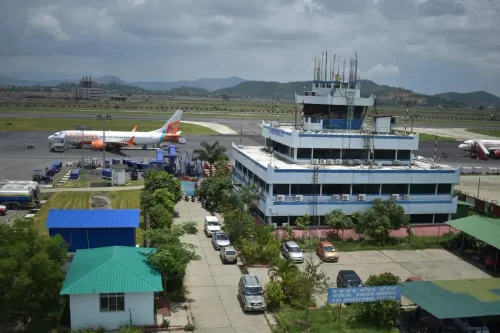
Imphal, Nov 4 (NationPress) The Governor of Manipur, Ajay Kumar Bhalla, along with senior officials from the state government, have made a fervent appeal to airline companies to lower the excessively high airfares and to increase the number of flights operating to and from Bir Tikendrajit International Airport in Imphal.
Manipur's Additional Chief Secretary for Transport, Textiles, Commerce, and Industry, Anurag Bajpai, stated that in recognition of the serious situation, the Governor has already reached out to the Union Minister of Civil Aviation, requesting prompt action to rationalize airfares and enhance flight services to and from Manipur.
The Governor's correspondence emphasizes the social and economic distress caused by the steep airfare structure and asks the Ministry to collaborate with the Directorate General of Civil Aviation (DGCA) and airlines to implement corrective measures.
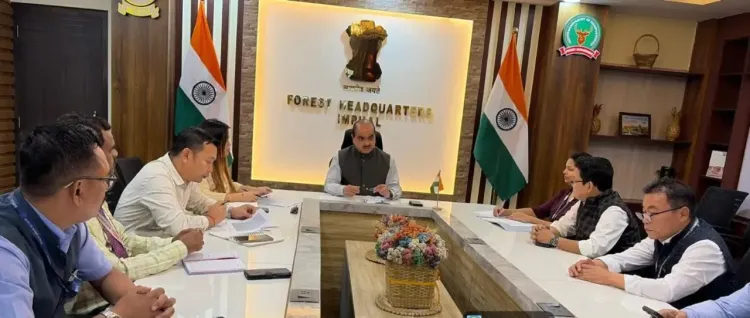
On Tuesday, ACS Bajpai convened a meeting with key representatives from the Airports Authority of India (AAI), Air India Express, IndiGo, and Alliance Air to address the issues of soaring airfares and the limited number of flights in the Imphal region.
He pointed out that the current airfare for the Imphal sector is significantly higher compared to similar routes in other Northeastern states, even when the distances traveled are comparable.
Officials from the Manipur government expressed concerns that airlines may be charging inflated prices on popular routes in the state as a way to recover losses from less profitable routes, thereby placing an undue financial burden on the residents.
A senior Transport Department official noted that due to inconsistent road connectivity and the lack of rail infrastructure, air travel remains the only viable option for transportation in Manipur.
As a result, airfare has reached alarming levels. For instance, the cost for the short Imphal–Guwahati route, which takes about 45 minutes, has reportedly increased from Rs 2,000-3,000 to as much as Rs 10,000 to 15,000 in recent times, according to the official.
A comparative analysis indicates that passengers from Imphal are paying up to seven times more than those in other Northeastern cities traveling similar distances to Guwahati. ACS Bajpai underscored the necessity for improved transparency in fare structures and a coordinated regulatory approach between airlines and the AAI.
He reiterated that, given the disruptions in surface transport and the absence of functional rail services, air travel is essential in Manipur, and the prevailing high fares are causing significant hardship for the population.
With air transport being the only feasible option, the ACS urged airline representatives to keep airfare levels comparable to those of other Northeastern states and maintain summer-level flight frequencies even during the winter months.
He also requested Alliance Air to reinstate air services between Imphal and Silchar, Aizawl, and Dibrugarh, which had been suspended, to help restore regional connectivity.
Furthermore, Bajpai encouraged Air India Express and IndiGo to contemplate the introduction of Imphal-Bangkok passenger and cargo services, as there is a strong demand for such routes.
The Additional Chief Secretary reaffirmed the government's commitment to ensuring that connectivity, both physical and economic, is preserved and enhanced for its citizens.
The meeting concluded with a call to the national aviation authorities, airlines, and other stakeholders to broaden their perspective on social equity in air travel pricing, particularly for regions like Manipur that have limited transportation options.
Present at the meeting were the Director (Transport) and the Joint Secretary (Transport).
Point of View
I recognize the critical nature of air connectivity for remote regions like Manipur. The high airfare situation must be addressed to ensure equitable access to travel for all citizens. It’s essential for the national aviation authorities and airlines to prioritize social equity in pricing, especially in areas with limited transportation alternatives.
NationPress
23 Sept 2026
Frequently Asked Questions
What actions is the Manipur government taking regarding airfares?
The Manipur government, led by Governor Ajay Kumar Bhalla, is urging airlines to reduce high airfares and increase flight frequencies at Bir Tikendrajit International Airport.
Why are airfares in Manipur so high?
Airfares in Manipur are elevated due to limited flight operations and high demand, exacerbated by the lack of road and rail connectivity.
What has been the response from airlines to the government's request?
Discussions have been initiated with airline representatives to address the high airfare issue, but concrete actions are yet to be confirmed.
How do airfare rates in Manipur compare to other regions?
Airfare rates for flights from Imphal are significantly higher than those for similar routes in other Northeastern states, sometimes up to seven times more.
What are the implications for residents if airfares remain high?
High airfares limit accessibility to essential travel, impacting both social and economic conditions for the residents of Manipur.