Kirti Azad: 'Mata Sita faced Agni Pariksha'; TMC MP vows never to visit Ram Temple
Synopsis
TMC MP Kirti Azad has declared he will never visit the Ram Temple in Ayodhya, invoking the mythological Agni Pariksha of Mata Sita to challenge the BJP's religious posturing. His remarks land amid a political row over SP chief Akhilesh Yadav's planned Ayodhya visit — and signal an opposition shift from contesting religious symbolism to questioning the values behind it.
Key Takeaways
TMC MP Kirti Azad declared on 8 November 2026 that he has never visited and will never visit the Ram Temple in Ayodhya .
Azad invoked the Agni Pariksha of Mata Sita , questioning the values attributed to the temple's political champions.
His remarks came amid a row over SP chief Akhilesh Yadav 's planned visit to the Ram Mandir on 12 December .
Azad cited visits to the Kamakhya Temple and Tripura Sundari Temple to assert his Hindu identity.
He accused the BJP of failing to deliver Ram Rajya and alleged financial misconduct at religious sites.
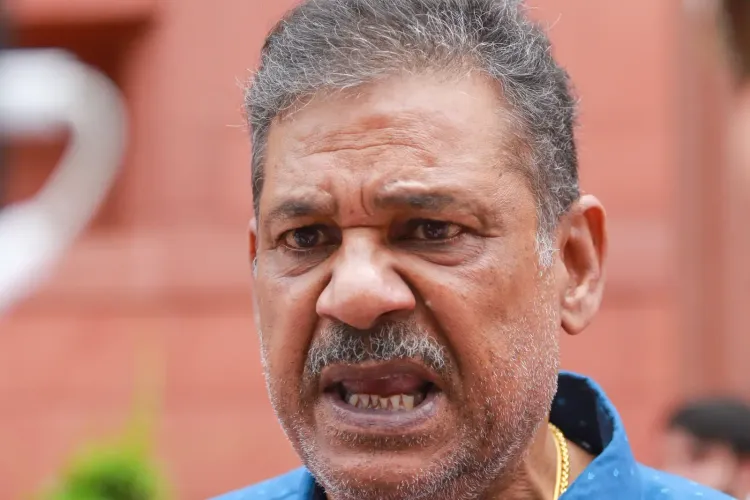
All India Trinamool Congress (TMC) Member of Parliament Kirti Azad on Sunday, 8 November 2026, launched a pointed attack on the Bharatiya Janata Party (BJP), accusing the party of weaponising religion for electoral gain while declaring that he would never visit the Ram Temple in Ayodhya. His remarks came amid a broader political storm over Samajwadi Party (SP) chief Akhilesh Yadav's announced visit to the Ram Mandir on 12 December.
Azad's Sharp Remarks on the Ram Temple
Speaking to reporters, Kirti Azad was unequivocal about his stance on the Ayodhya shrine. 'I have not visited the Ram Temple; I have visited the Kamakhya Temple. Are they suggesting that a person is not a Hindu if they worship Goddess Kamakhya?' he said. He added emphatically: 'I have not gone to Ram Temple, nor will I ever go. I'll go to Mathura.'
Azad, who hails from the region associated with Goddess Sita's birthplace, also invoked the mythological narrative of the Agni Pariksha — the trial by fire that Sita is said to have undergone — to question the values being attributed to the Ram Temple's political champions. 'Mata Sita had to undergo the Agni Pariksha, and even after passing it, she was abandoned. Is it right for any human being to treat his wife this way?' he asked.
The Political Context: Akhilesh Yadav's Ayodhya Visit
The backdrop to Azad's remarks is the controversy surrounding Akhilesh Yadav's proposed visit to the Ram Mandir and Hanumangarhi temple in Ayodhya on 12 December. The BJP has characterised that visit as nakedly political — an attempt, critics within the ruling party allege, to generate religious optics ahead of upcoming elections. Azad appeared to be broadening that critique by questioning the BJP's own religious credentials.
Allegations Against BJP's Temple Politics
Azad went further, accusing the BJP of financial misconduct at religious sites. 'They are orchestrating robberies and thefts at every temple,' he alleged, without providing specifics. He claimed the party had failed to deliver on the promise of Ram Rajya — a term evoking an ideal, just governance — and had instead, in his words, brought 'Ravan Rajya' to the country.
Notably, Azad also cited his visits to the Kamakhya Temple in Assam and the Tripura Sundari Temple in Tripura as evidence of his Hindu faith, pushing back against any suggestion that temple preference defines religious identity. 'Does that mean I am not a Hindu?' he asked.
What This Signals Politically
The remarks reflect a wider opposition attempt to shift the terms of the Ram Temple debate — from one of faith to one of accountability. This is at least the second time in recent weeks that opposition politicians have questioned the BJP's governance record by invoking religious symbolism rather than contesting the symbolism itself. With assembly elections on the horizon in multiple states, the contestation over Ayodhya's political meaning is likely to intensify.
Point of View
Making it harder to dismiss as anti-Hindu. The opposition's emerging tactic of competing on religious legitimacy rather than rejecting it altogether is a significant rhetorical pivot. What mainstream coverage tends to miss is that Azad's reference to Kamakhya and Tripura Sundari also signals a deliberate appeal to Eastern India's devotional geography — constituencies where the TMC operates and where goddess-centric worship sits apart from the Ayodhya-centric narrative the BJP has built its identity on.
NationPress
8 Nov 2026
Frequently Asked Questions
What did Kirti Azad say about the Ram Temple?
TMC MP Kirti Azad said he has never visited the Ram Temple in Ayodhya and will never do so, stating he would instead visit Mathura. He made the remarks on 8 November 2026, accusing the BJP of using the temple for political gain.
Why did Kirti Azad mention the Agni Pariksha?
Azad invoked the mythological Agni Pariksha of Mata Sita — the trial by fire she is said to have undergone before being abandoned — to question the moral values of those who claim to champion Ram's legacy. He hails from the region associated with Sita's birthplace and used the reference to challenge the BJP's religious credibility.
What is the political row surrounding Akhilesh Yadav's Ayodhya visit?
SP chief Akhilesh Yadav has announced a visit to the Ram Mandir and Hanumangarhi temple in Ayodhya on 12 December. The BJP has criticised the move as a political exercise ahead of elections, alleging it is an attempt to gain religious optics rather than a genuine act of faith.
How did Kirti Azad defend his Hindu identity?
Azad cited his visits to the Kamakhya Temple in Assam and the Tripura Sundari Temple in Tripura, arguing that devotion to these goddess-centric shrines is equally valid and that not visiting Ayodhya does not make a person less Hindu.
What did Azad allege about the BJP's governance?
Azad alleged that the BJP had failed to establish Ram Rajya — a term for just, ideal governance — and had instead brought what he called 'Ravan Rajya.' He also alleged, without providing specifics, that the party had been involved in financial misconduct at temples across the country.