UP Dy CM Maurya slams Rahul, Akhilesh over SIR 'misinformation', cites EC's unanimous stand
Synopsis
UP Deputy CM Keshav Prasad Maurya escalated the SIR controversy on Sunday, demanding public apologies from Rahul Gandhi, Akhilesh Yadav, and Mamata Banerjee — and invoking a children's fable to argue the Opposition's credibility is spent. With Assembly elections on the horizon and the BJP-SP battle intensifying over voter rolls and caste arithmetic, the SIR row is shaping up as a high-stakes pre-election skirmish.
Key Takeaways
UP Deputy CM Keshav Prasad Maurya on 27 September 2026 demanded that Rahul Gandhi , Akhilesh Yadav , and Mamata Banerjee apologise for spreading misinformation over the Special Intensive Revision (SIR) .
Maurya cited the Election Commission of India's clarification that the SIR decision was taken unanimously by Chief Election Commissioner Gyanesh Kumar and Election Commissioners Sukhbir Singh Sandhu and Vivek Joshi .
He dismissed the Samajwadi Party's PDA (Backward, Dalit, Minority) coalition strategy as having 'no future' .
Maurya paid tribute to Ashok Singhal on his birth centenary year, crediting him with advancing the Ram Janmabhoomi movement and the eventual construction of the Ram Temple in Ayodhya .
The BJP leader argued that politics driven by caste equations and propaganda cannot outlast governance based on inclusive development.
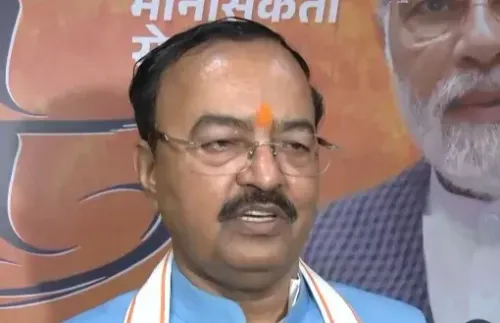
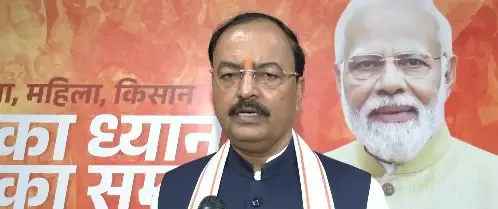
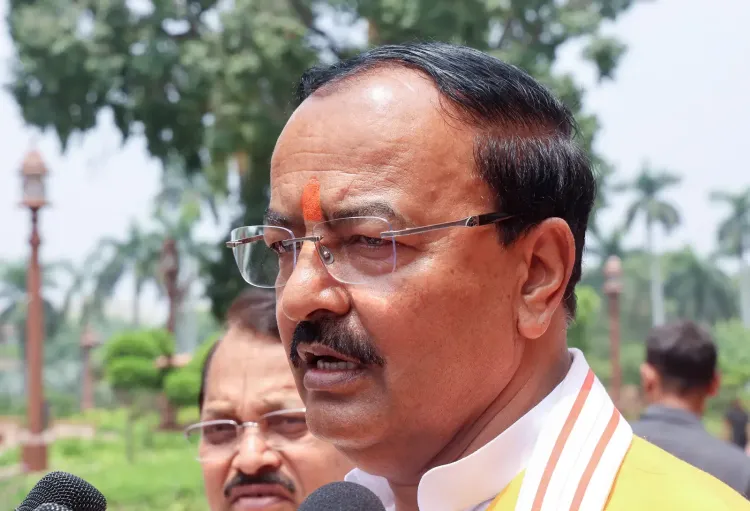
Uttar Pradesh Deputy Chief Minister Keshav Prasad Maurya on Sunday, 27 September 2026, launched a sharp attack on the Opposition — including Congress, Samajwadi Party (SP), and All India Trinamool Congress (TMC) — demanding that their leaders apologise to the country for what he called deliberate misinformation over the Special Intensive Revision (SIR) process. Maurya made the remarks while speaking to reporters in Lucknow before departing for Delhi.
Maurya on the Election Commission's Clarification
The Deputy Chief Minister was categorical in defending the Election Commission of India (ECI), stating that the poll body had already clarified that decisions related to the SIR were taken unanimously by Chief Election Commissioner Gyanesh Kumar and the two Election Commissioners, Sukhbir Singh Sandhu and Vivek Joshi. He argued that Opposition leaders — specifically Rahul Gandhi, Akhilesh Yadav, and Mamata Banerjee — were attempting to manufacture confusion on an issue that the constitutional body had already settled.
Maurya insisted that the Opposition's arguments should be grounded in facts rather than political rhetoric, adding that the public has grown sufficiently aware to distinguish between genuine grievances and partisan propaganda.
The 'Boy Who Cried Wolf' Analogy
In a pointed rhetorical move, Maurya invoked the fable of 'The Boy Who Cried Wolf' to characterise the Opposition's posture. He argued that just as repeated false alarms erode public trust, the constant stream of allegations from opposition leaders is failing to resonate with voters. He contended that politics based on misleading citizens — whether at the state or national level — cannot sustain itself over time.
This comes amid a broader escalation of political tensions around the SIR process, with multiple opposition parties accusing the Election Commission of conducting the exercise in a manner that could disenfranchise voters — a charge the ECI has denied, asserting that the revision is procedurally standard and unanimously approved.
Attack on SP's PDA Equation
Maurya also took aim at the Samajwadi Party's so-called PDA (Backward, Dalit, Minority) coalition strategy, which SP chief Akhilesh Yadav has been projecting ahead of upcoming Assembly elections. The Deputy Chief Minister dismissed the formula, saying the PDA grouping has 'no future'.
He contrasted the SP's approach with what he described as the Bharatiya Janata Party (BJP)'s inclusive governance model, claiming the BJP serves the poor, farmers, youth, women, and marginalised communities without discrimination. 'The BJP is serving every section of society and working in the interest of the poor, farmers, youth, women, and marginalised groups,' he said.
Tribute to Ashok Singhal on Birth Centenary
On the same occasion, Maurya paid tribute to Ashok Singhal, a prominent leader of the Ram Janmabhoomi movement, as part of his birth centenary year observances. He credited Singhal with accelerating the Ram Janmabhoomi agitation and fostering what he described as widespread devotion to Lord Ram and a spirit of nationalism within Hindu society.
Maurya stated that the construction of the grand Ram Temple in Ayodhya was made possible in part by Singhal's decades-long organisational efforts and the sustained struggle of Ram devotees. He called commemorating Singhal's contributions a 'matter of pride', and said his legacy in strengthening cultural consciousness would be remembered for generations.
Political Context and What to Watch
Maurya's remarks signal that the SIR controversy is set to remain a flashpoint as Uttar Pradesh politics heats up ahead of the next electoral cycle. The BJP's consistent line — that the Opposition is weaponising procedural electoral processes to stoke public anxiety — is likely to sharpen further as opposition parties intensify their campaign on voter roll integrity.
All eyes will be on whether the Election Commission releases further public communications on the SIR's scope, and whether opposition parties escalate their campaign into formal legal or parliamentary challenges.
Frequently Asked Questions
What is the Special Intensive Revision (SIR) that Maurya is defending?
The Special Intensive Revision (SIR) is an Election Commission of India process for comprehensively updating electoral rolls, typically carried out ahead of elections. The ECI has clarified that the SIR decision was taken unanimously by Chief Election Commissioner Gyanesh Kumar and Election Commissioners Sukhbir Singh Sandhu and Vivek Joshi — a point Maurya repeatedly cited to counter Opposition criticism.
Why is the Opposition opposing the SIR process?
Opposition parties including Congress, Samajwadi Party, and TMC have raised concerns that the SIR could be used to disenfranchise voters, a charge the Election Commission has denied. Deputy CM Maurya has characterised these objections as a 'misinformation campaign' driven by the Opposition's absence from power, rather than a substantive procedural concern.
Who did Maurya call on to apologise, and why?
Maurya specifically named Congress leader Rahul Gandhi, SP chief Akhilesh Yadav, and TMC chief Mamata Banerjee, demanding they apologise for rhetoric he described as misleading the public on the SIR. He argued that since the Election Commission had already clarified its unanimous stand, continued criticism amounted to deliberate disinformation.
What did Maurya say about the SP's PDA strategy?
Maurya dismissed the Samajwadi Party's PDA (Backward, Dalit, Minority) coalition as having 'no future,' arguing that the BJP's broader, inclusive development model — serving farmers, youth, women, and marginalised communities — is a more durable electoral proposition than caste-based arithmetic.
Why did Maurya pay tribute to Ashok Singhal?
Maurya paid tribute to Ashok Singhal, a key leader of the Ram Janmabhoomi movement, as part of observances marking his birth centenary year. He credited Singhal with a pivotal role in advancing the movement that ultimately led to the construction of the Ram Temple in Ayodhya, and called his legacy in promoting cultural nationalism a lasting contribution.