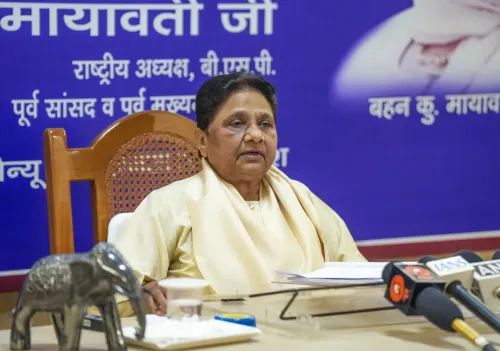
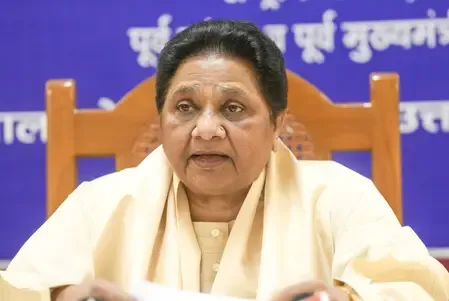
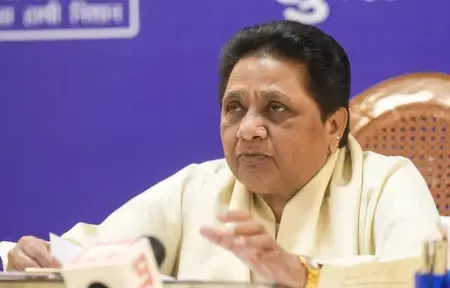
Mayawati calls for Parliament debate on inflation, Ram Temple donations
Synopsis
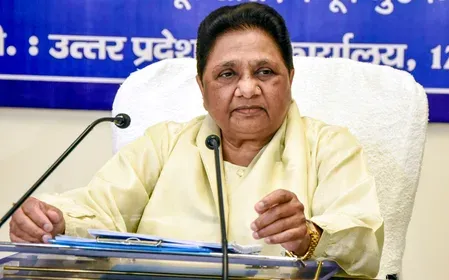
Ahead of Parliament's Monsoon Session, BSP chief Mayawati broke from the usual opposition script — instead of calling for a boycott or walkout, she demanded that both the ruling alliance and opposition actually debate inflation, unemployment, and the politically explosive Ram Temple donation scandal. It is a rare cross-aisle accountability call from a party that holds no Lok Sabha seats.
Key Takeaways
BSP chief Mayawati posted on X on Sunday urging a productive Monsoon Session of Parliament beginning 20 July .
She flagged alleged theft and misuse of donations at the Ayodhya Ram Temple as a matter of widespread public outrage.
Other issues raised include inflation , unemployment , women's safety , paper leaks , and deaths of pregnant women allegedly due to administrative negligence in Rajasthan .
Mayawati also cited the Iran conflict and rupee depreciation as national economic concerns requiring parliamentary debate.
She warned that failure to address these issues could worsen conditions for the country's underprivileged sections .
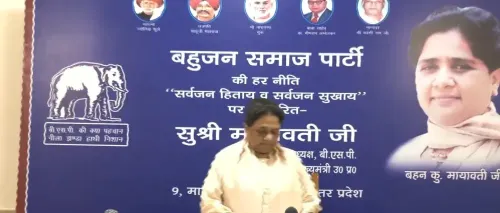
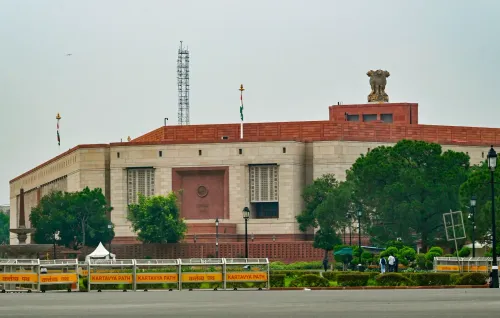
Bahujan Samaj Party (BSP) chief Mayawati on Sunday, 20 July urged both the ruling National Democratic Alliance and the opposition INDIA bloc to set aside political rivalry and conduct a substantive debate on issues plaguing ordinary citizens — from inflation and unemployment to alleged donation irregularities at the Ayodhya Ram Temple. Her appeal came ahead of the opening of the Monsoon Session of Parliament on 20 July.
The Core Appeal
In a post on X, Mayawati posed a pointed question to the political establishment: would the Monsoon Session descend into disruptions, protests, and adjournments, or would lawmakers rise to sincerely address the pressing concerns of the common man? She called on all parties to prioritise national interest over narrow political calculations and blame games.
The BSP supremo warned that failure to engage meaningfully with these concerns could worsen the condition of the country's underprivileged sections and leave their futures uncertain.
Ram Temple Donation Controversy
Mayawati specifically flagged the alleged theft, misuse, and embezzlement of donations at the Ayodhya Ram Temple, describing the issue as having triggered widespread public outrage across Uttar Pradesh and the rest of the country. She noted that those who, in the public's view, had politicised religion for electoral gains were now being held accountable for the controversy. The allegation has drawn sharp attention given the temple's centrality to the ruling Bharatiya Janata Party's (BJP) political narrative.
Governance and Women's Safety Concerns
Beyond the Ram Temple issue, Mayawati raised a broad spectrum of governance failures. These included the post-election situation in West Bengal, the reported deaths of pregnant women allegedly due to administrative negligence in Rajasthan, growing concerns over women's safety across multiple states, alleged irregularities in welfare schemes and election-related freebies, corruption in government programmes, police encounters, and demolition drives.
She argued that such developments had collectively weakened the welfare-oriented spirit of the Constitution and raised serious concerns over governance and citizens' rights.
Economic Pressures and External Factors
Mayawati also drew attention to external economic pressures, including the ongoing conflict involving Iran and its ripple effects on the Indian economy. The depreciation of the rupee, she said, compounded hardships for ordinary citizens and demanded collective parliamentary attention. She stressed that paper leaks and unemployment continued to erode public trust in institutions.
What Parliament Must Deliver
The BSP chief called for the Monsoon Session to be conducted in a smooth, peaceful, and constructive manner, in keeping with democratic traditions. She urged all institutions to ensure that the social, political, and economic burdens already weighing on citizens do not increase further. With Parliament set to convene amid a charged political atmosphere, her call reflects a broader demand from regional parties for substantive legislative engagement over performative disruption.
Point of View
She targets a fault line within the BJP's own voter base — temple devotees who feel the institution they backed has been tainted by financial mismanagement. Her broader demand for parliamentary debate, however, rings hollow without BSP representation in the Lok Sabha; the party's influence in the House is negligible. What the statement does accomplish is to reposition BSP as a constitutional watchdog ahead of state elections in Uttar Pradesh, where the Ram Temple narrative was decisive in 2024. Whether Parliament heeds the call or dissolves into adjournments, as it has in several recent sessions, will be the real test.
NationPress
18 Oct 2026
Frequently Asked Questions
What did Mayawati say about the Ram Temple donation controversy?
Mayawati alleged that donations at the Ayodhya Ram Temple had been subject to theft, misuse, and embezzlement, calling it a matter of widespread public outrage across Uttar Pradesh and the country. She said those who had politicised religion for electoral gains were now being held accountable for the controversy.
Why did Mayawati issue this appeal ahead of the Monsoon Session?
The Monsoon Session of Parliament was set to begin on 20 July, and Mayawati used the occasion to urge both the ruling alliance and the opposition to conduct substantive debates rather than allow disruptions and adjournments. She argued that pressing issues affecting ordinary citizens deserved sincere legislative attention.
What other issues did Mayawati raise besides the Ram Temple?
Mayawati highlighted inflation, unemployment, women's safety, paper leaks, the post-election situation in West Bengal, deaths of pregnant women allegedly due to administrative negligence in Rajasthan, corruption in government programmes, police encounters, demolition drives, and the economic impact of the Iran conflict and rupee depreciation.
Who is Mayawati and why does her statement matter?
Mayawati is the chief of the Bahujan Samaj Party (BSP), a major political force representing Dalit and Other Backward Class communities, primarily in Uttar Pradesh. Her statements carry weight on welfare and constitutional issues, even as the BSP currently holds limited parliamentary representation.
What did Mayawati say about the economic situation?
She pointed to the continuing conflict involving Iran and its impact on the Indian economy, as well as the depreciation of the rupee, as external factors of national importance requiring collective parliamentary attention alongside domestic concerns like inflation and unemployment.