Mayawati slams 'politics of provocation', backs constitutional path for justice
Synopsis
Mayawati's Lucknow press conference was a pointed double move: a rebuke of rivals accused of manufacturing unrest among marginalised communities, and a restatement of BSP's Ambedkarite identity at a time when the party's electoral relevance is under pressure. The 'master key' of the vote, she argued, remains more powerful than the street — a message aimed as much at her own base as at her critics.
Key Takeaways
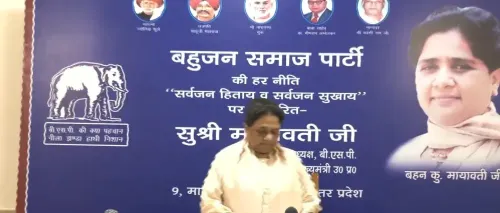
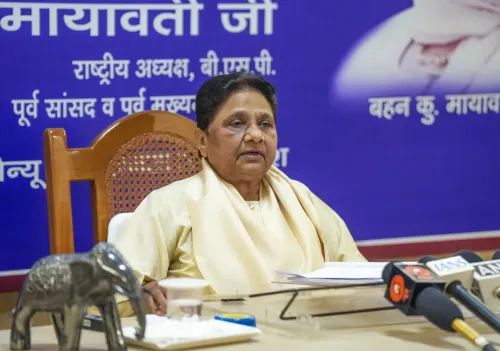
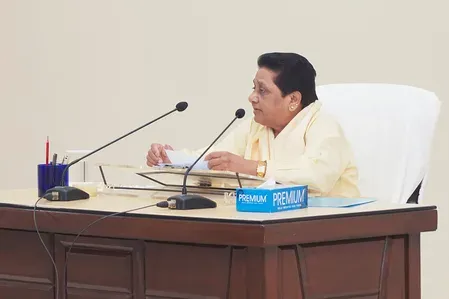
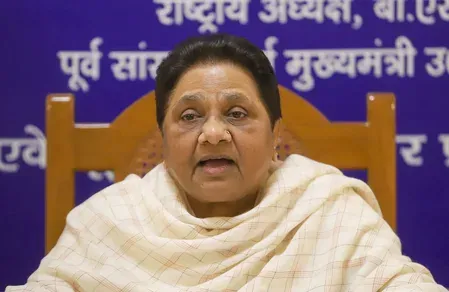
BSP president Mayawati held a press conference in Lucknow on 10 July , accusing political parties of exploiting marginalised communities for electoral gain.
She cited recent unrest in Meerut , Saharanpur , Prayagraj , and Hardoi as examples of manufactured provocation.
Mayawati invoked Dr B.R.
Ambedkar 's teachings, urging Dalits and deprived sections to seek justice through constitutional and legal channels, including higher courts.
She called the vote 'the master key' to resolving social and economic challenges, reaffirming the BSP's commitment to democratic empowerment over street agitation.
The BSP chief argued that protest-driven politics ultimately weakens victims' pursuit of justice while enabling parties to gain political mileage from sensitive incidents.
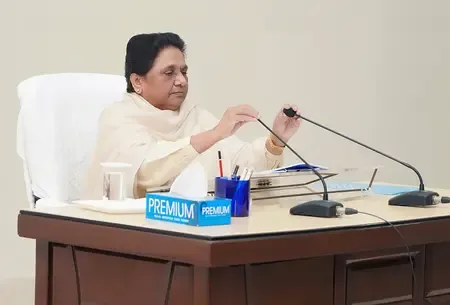
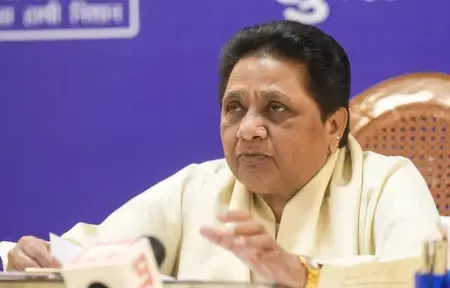
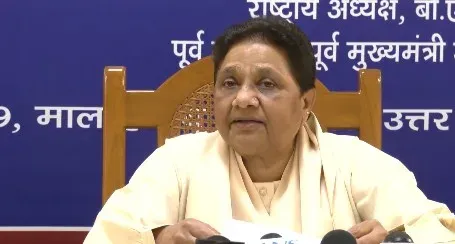
Bahujan Samaj Party (BSP) president Mayawati on Friday, 10 July accused political parties of systematically exploiting the grievances of marginalised and deprived communities for electoral gain, urging affected sections to pursue justice through constitutional and democratic means rather than street agitation. Her remarks came at a press conference in Lucknow, where she cited recent incidents in Meerut, Saharanpur, Prayagraj, Hardoi, and other locations across Uttar Pradesh.
The Charge Against Political Parties
Mayawati alleged that certain parties and organisations deliberately stoke unrest among aggrieved communities, engineering protests, road blockades, and public disturbances — only for their leaders to arrive later, express sympathy, and harvest political capital from the fallout.
'Various political parties and organisations bring suffering and distressed people onto the streets by provoking and misleading them. They first create unrest through violence, protests, road blockades and other disturbances. Then their leaders arrive at the scene, shedding crocodile tears and using the incident for political gain. This does not help the victims receive justice,' she said.
The BSP chief argued that this cycle of provocation ultimately weakens the victims' quest for justice while allowing political actors to benefit from sensitive situations without delivering tangible relief.
Ambedkar's Constitutional Path, Invoked
Invoking the legacy of Dr B.R. Ambedkar, Mayawati said the architect of the Constitution had shown Dalits, the deprived, and other marginalised sections a clear path: securing rights and empowerment through democratic participation, not confrontation.
She stressed that Ambedkar's approach centred on fighting injustice within the framework of the Constitution and the rule of law. 'If justice is not obtained from lower courts, people should seek remedies in higher courts rather than resorting to violence, confrontation or actions that disturb public life,' she said.
This framing positions the BSP — often under scrutiny for its electoral decline — as the ideologically faithful heir to Ambedkarite politics, distinct from parties that, in Mayawati's telling, use Dalit and marginalised causes as tactical instruments.
The 'Master Key' Argument
Mayawati reiterated her long-standing position that political empowerment through unity and the ballot box is the most effective tool for addressing social and economic hardship. 'The solution lies in following the peaceful and lawful path shown by Babasaheb Ambedkar — through unity and the strength of the vote to attain political power, which is regarded as the master key to resolving countless hardships,' she said.
She added that the BSP remains firmly committed to this objective and will continue working towards it without deviation.
Context and What It Signals
The press conference comes amid a charged political atmosphere in Uttar Pradesh, where a series of incidents involving marginalised communities have drawn competing responses from multiple parties. Notably, Mayawati's broadside is not directed at any single party by name, but the timing — with protests and road blockades reported from several districts — makes the target audience clear.
This is consistent with the BSP's broader electoral strategy of differentiating itself from both the ruling Bharatiya Janata Party (BJP) and the opposition Samajwadi Party (SP) by positioning constitutional propriety at the centre of its politics. Whether that message resonates with communities currently seeking urgent redress will be tested in the months ahead.
Point of View
Which allows the BSP to occupy moral high ground without triggering a direct political firefight. The deeper signal is defensive: with BSP's vote share eroded across successive Uttar Pradesh elections, the 'constitutional path' argument is also a pitch to reclaim Ambedkarite legitimacy from rivals who have moved aggressively into Dalit political space. The risk is that communities experiencing acute distress may find the 'go to the high court' counsel tone-deaf to ground realities. Whether the BSP's ballot-box-first message can convert into organisational momentum — not just press conference soundbites — remains the real question heading into the next electoral cycle.
NationPress
8 Oct 2026
Frequently Asked Questions
What did Mayawati say at the Lucknow press conference on 10 July?
Mayawati accused political parties of provoking marginalised and deprived communities into protests and unrest to extract political gain, citing recent incidents in Meerut, Saharanpur, Prayagraj, and Hardoi. She urged affected communities to seek justice through constitutional means and the courts rather than street agitation.
Which incidents did Mayawati refer to in her remarks?
The BSP president referred to recent incidents in Meerut, Saharanpur, Prayagraj, Hardoi, and other locations in Uttar Pradesh, alleging that certain groups were attempting to provoke aggrieved sections of society into agitation rather than helping them secure legal redress.
How did Mayawati invoke Dr B.R. Ambedkar in her address?
Mayawati cited Ambedkar's philosophy of securing rights through democratic participation and the rule of law, arguing he had shown Dalits and marginalised communities the path of constitutional empowerment. She said if justice is denied in lower courts, people should approach higher courts rather than resort to violence.
What is the BSP's stated position on protests and agitation?
The BSP holds that protests, road blockades, and public disturbances engineered by political parties ultimately harm victims by delaying justice and enabling political exploitation. The party advocates unity, democratic participation, and the ballot box — what Mayawati called the 'master key' — as the most effective tools for social and economic change.
Why is Mayawati's statement politically significant?
It signals the BSP's attempt to differentiate itself from both ruling and opposition parties in Uttar Pradesh by positioning constitutional propriety at the heart of its politics. The statement also reflects the party's effort to reclaim Ambedkarite ideological ground at a time when rivals have encroached on Dalit political space.