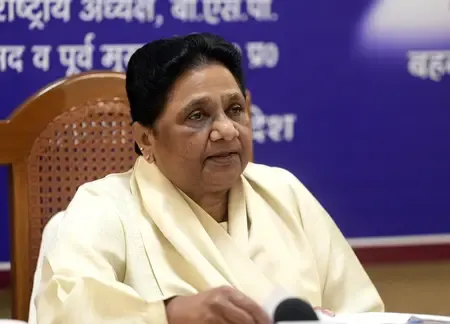
Mayawati urges Centre, Bengal govt to uphold secularism amid post-poll violence
Synopsis
Mayawati's broadside on post-election violence in West Bengal is more than a law-and-order appeal — it is a constitutional argument. By invoking Ambedkar's framework and High Court directions in the same breath, the BSP chief is signalling that the Bengal crisis is a test of whether India's secular guarantees hold under electoral pressure.
Key Takeaways
BSP chief Mayawati on 18 May called on the Centre and state governments to protect India's secular identity and act on post-election violence in West Bengal .
She invoked the Constitution framed by Babasaheb Dr Bhimrao Ambedkar , calling it a 'protective shield against anti-India propaganda abroad.' Mayawati urged strict action against anarchy in West Bengal , citing directions already issued by the High Court .
She demanded equal enforcement of laws across all religions, warning against caste or religious bias in governance.
The BSP chief cautioned governments against 'destructive image-building exercises,' urging focus on genuine social, economic, and political challenges.
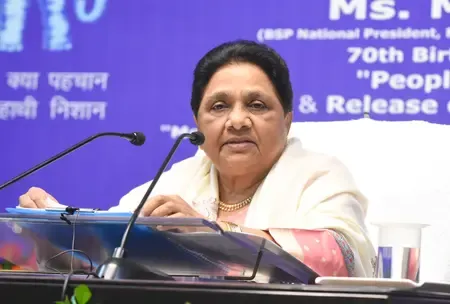
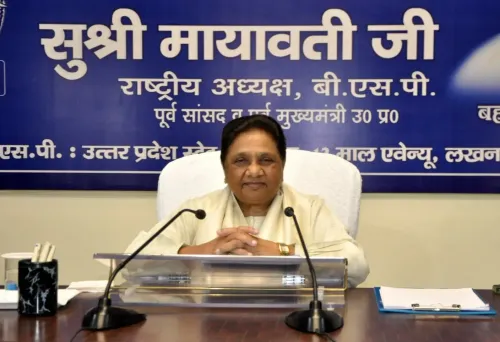
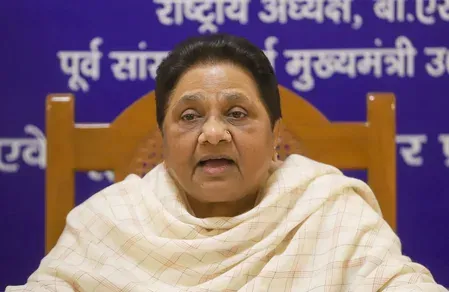
Bahujan Samaj Party (BSP) chief Mayawati on Monday, 18 May called on both the Centre and state governments to protect India's secular identity, honour the Constitution, and take firm action against post-election violence in West Bengal. Her remarks came via a post on X, framing constitutional fidelity as a matter of national interest — not partisan politics.
The Constitutional Argument
Mayawati grounded her appeal in the foundational document drafted by Babasaheb Dr Bhimrao Ambedkar, arguing that India's global standing rests on the Constitution's principles of secularism and equal respect for all religions. She said the country's humanitarian values guarantee protection of life, property, and religious freedom for followers of every faith.
'India's Constitution acts as a protective shield against anti-India propaganda abroad. Therefore, it is the responsibility of both the Central and state governments to ensure that nothing is done, or allowed to happen, that raises unpleasant questions about the country and its governance,' she said.
West Bengal Violence: A Direct Warning
Turning specifically to West Bengal, the BSP supremo said governments must become more alert and deal strictly with anarchy, particularly in light of directions already issued by the High Court. She said it should be a matter of serious concern if any government faces allegations of narrow politics, religious discrimination, caste hatred, or bias.
Notably, post-election violence in West Bengal has been a recurring flashpoint after successive state elections, drawing both judicial scrutiny and political censure from opposition parties across the spectrum.
Equal Enforcement of Law
Mayawati stressed that any existing or new laws enacted for public safety must be implemented equally for people of all religions. 'To uphold the dignity of the Constitution and the rule of law, legal provisions must be enforced without religious or caste-based discrimination, prejudice or hatred,' she said, adding that such an approach would strengthen public confidence that governments are working in the interest of all communities.
Broader Concern: Governance Over Image-Building
The BSP chief also flagged what she described as difficult social, economic, and political conditions facing the country. She urged governments to focus on resolving these pressing issues rather than diverting public attention through what she termed a 'destructive image-building exercise.' She warned that such attempts would deepen the crisis rather than resolve it — an outcome she said would be against the interest of both the nation and its people.
With assembly election cycles and communal tensions intersecting across multiple states, Mayawati's intervention signals the BSP's intent to position itself as a constitutional anchor amid polarised political discourse.
Point of View
A posture that lets the BSP claim constitutional high ground without being tagged as a BJP proxy. The invocation of Ambedkar is deliberate: it anchors the critique in Dalit political identity rather than Hindu-nationalist framing. What mainstream coverage often misses is that BSP interventions on communal flashpoints are rarely spontaneous; they track voter-base anxiety in Uttar Pradesh, where the BSP's Muslim-Dalit coalition is perpetually under stress. The real question is whether this statement translates into organisational mobilisation or remains a social media posture.
NationPress
1 Oct 2026
Frequently Asked Questions
What did Mayawati say about West Bengal post-election violence?
Mayawati called on both the Centre and the West Bengal government to deal strictly with post-election violence, citing directions already issued by the High Court. She said governments must become more alert and treat anarchy firmly, regardless of political considerations.
Why did Mayawati invoke the Constitution in her statement?
She argued that India's global standing and protection against anti-India propaganda rest on the Constitution framed by Babasaheb Dr Bhimrao Ambedkar, which enshrines secularism and equal respect for all religions. Compromising these principles, she said, is not in the national interest.
What did Mayawati mean by a 'destructive image-building exercise'?
She used the phrase to criticise governments she believes are diverting public attention from real social, economic, and political challenges. She warned such tactics would deepen the country's crisis rather than resolve it.
Who is affected by Mayawati's appeal?
Her statement is directed at both the Union government and state governments — with West Bengal specifically named. Citizens of all faiths are implicitly addressed, as she demanded equal enforcement of laws across all religious and caste communities.
Has Mayawati spoken on West Bengal violence before?
Post-election violence in West Bengal has drawn repeated political and judicial attention after successive state elections. Mayawati's latest remarks continue a pattern of BSP interventions on constitutional and communal issues, though the specific timing — referencing current High Court directions — makes this statement particularly pointed.