What is the Latest on the Reservation for Mayoral Posts in 29 Civic Bodies?
Synopsis
The recent announcement of mayoral post reservations in Maharashtra's 29 municipal corporations raises questions and controversies, particularly regarding the exclusion of BMC from specific categories. How will this impact the political landscape and representation in local governance?
Key Takeaways
29 municipal corporations in Maharashtra will have reserved mayoral posts.
The process is governed by the Maharashtra Municipal Corporations (Reservation of Offices of Mayors) Rules, 2006 .
Controversy arose regarding the classification of BMC into the General category.
The draw process was conducted transparently using a rotating drum.
Reservations are made for ST, SC, OBC, and women.
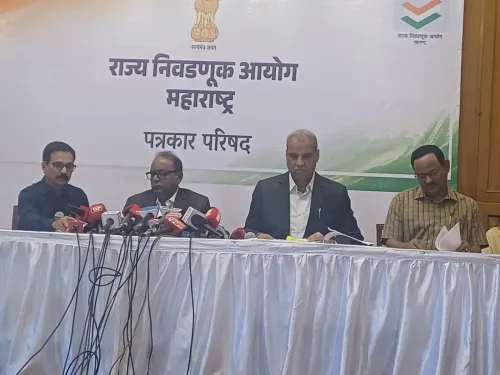
Mumbai, Jan 22 (NationPress) The announcement regarding the reservation of mayoral positions in 29 municipal corporations of Maharashtra was made on Thursday, adhering to a category-wise rotational framework established under the Maharashtra Municipal Corporations (Reservation of Offices of Mayors) Rules, 2006.
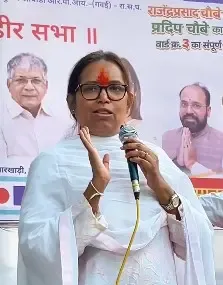
Concerns were raised when the opposition Shiv Sena - UBT criticized the decision to classify the Brihanmumbai Municipal Corporation (BMC) as part of the General category, which it has occupied for the previous two terms.
Former Mumbai mayor and SS-UBT representative Kishori Pednekar expressed her discontent, questioning the exclusion of BMC from the Scheduled Tribes or OBC categories, deeming it a slight against the OBC community.
Nevertheless, Minister of State (Urban Development Department) Madhuri Misal dismissed these claims, asserting that the procedure was conducted lawfully and transparently. The mayors' term will extend for the next two and a half years.
The Maharashtra Municipal Corporations (Reservation of Offices of Mayors) Rules, 2006 have been effective since the 2007 local body elections. A senior urban development official noted that the rotational cycle for the reservation of mayoral roles has been in effect since 2007. These rules have only seen one amendment since their introduction, in 2010, to ensure a 50 percent reservation for women in mayoral positions.
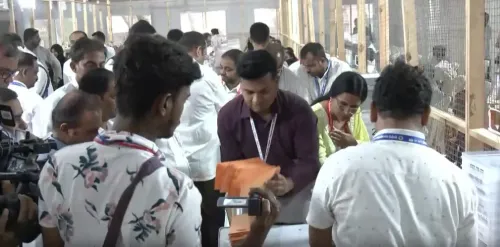
During the drawing process, a transparent rotating drum was utilized, with chits placed inside and drawn sequentially.
The first draw was designated for the Scheduled Tribes (ST) reservation, which was allocated to a single urban body reserved for the ST category. This decision was taken based on the 2011 census data regarding the ST population in urban areas.
Municipal corporations with over three ST corporators included Kalyan-Dombivli, Chandrapur, Jalgaon, Thane, Dhule, Nagpur, Nashik, Pimpri-Chinchwad, and Vasai-Virar. Following the rotation since 2006, the mayoral position has been reserved for ST in Dhule, Nagpur, Nashik, and Pimpri-Chinchwad.
Consequently, chits for Kalyan-Dombivli, Chandrapur, Jalgaon, Thane, and Vasai-Virar were utilized, resulting in Kalyan-Dombivli being chosen in the draw.
The second draw focused on the Scheduled Castes (SC) reservation across three urban bodies, determined by the SC community's population in urban settings based on the 2011 census.
Identified corporations with more than three SC members included Akola, Amravati, Ahilyanagar, Ichalkaranji, Ulhasnagar, Kalyan-Dombivli, Kolhapur, Chandrapur, Chhatrapati Sambhajinagar, Jalgaon, Jalna, Thane, Dhule, Navi Mumbai, Nanded-Waghala, Nagpur, Nashik, Panvel, Parbhani, Pimpri-Chinchwad, Pune, Brihanmumbai, Bhiwandi-Nizampur, Malegaon, Mira-Bhayandar, Latur, Vasai-Virar, Sangli-Miraj-Kupwad, and Solapur.
Corporations that had previously been reserved for SC included Akola, Amravati, Ahilyanagar, Ulhasnagar, Kalyan-Dombivli, Kolhapur, Navi Mumbai, Nanded-Waghala, Nashik, Panvel, Parbhani, Brihanmumbai, Mira-Bhayandar, Sangli-Miraj-Kupwad, and Solapur, all of which were excluded.
The remaining 14 corporations were entered into the draw, leading to the selection of Thane, Jalna, and Latur. Given that two of these posts were reserved for women, a follow-up draw designated Jalna and Latur for the SC Women category.
The third draw pertained to the OBC reservation. With a 27 percent reservation, mayoral positions in eight out of 29 corporations were set aside for OBCs. All corporations, except Jalna, Ichalkaranji, and Panvel, had previously experienced an OBC Mayor.
Since Jalna was already allocated for SC Women in the earlier draw, it was excluded. Ichalkaranji and Panvel, which had not previously had an OBC reservation, were automatically designated for this category.
The remaining names were then arranged alphabetically in Marathi, with the first six—Akola, Ahilyanagar, Ulhasnagar, Kolhapur, Chandrapur, and Jalgaon—reserved for OBCs.
A draw was then conducted to reserve four of the eight OBC posts for women. The final draw focused on the General category reservation. Out of 17 mayoral positions, nine were allocated for women, with the remaining 17 corporations entering the draw to determine the nine posts reserved for women.
Point of View
The recent reservation announcement in Maharashtra’s municipal corporations reflects a complex interplay of political strategies and community representation. It’s crucial to understand how these decisions affect governance at the grassroots level and ensure equitable representation across all communities.
NationPress
2 Oct 2026
Frequently Asked Questions
What is the basis for mayoral reservations in Maharashtra?
The reservations are based on the Maharashtra Municipal Corporations (Reservation of Offices of Mayors) Rules, 2006, following a category-wise rotational basis.
How long is the term for the newly elected mayors?
The tenure for the newly elected mayors is set for the next two and a half years.
What categories are included in the mayoral reservation?
The categories include Scheduled Tribes (ST), Scheduled Castes (SC), Other Backward Classes (OBC), and General category, with specific reservations for women.
How are the mayoral posts allocated among the categories?
The allocation is done through a transparent draw process based on the population statistics from the 2011 census for ST and SC communities.
What changes have been made to the reservation rules since their implementation?
The only amendment made to the reservation rules since their implementation in 2007 was in 2010, which ensured a 50% reservation for women in mayoral posts.