MEA Fact Check debunks fake claims of world leaders falling ill at BRICS Summit
Synopsis
India's MEA Fact Check called out at least six viral posts falsely claiming world leaders including Ramaphosa and Xi Jinping fell ill at the BRICS Summit in India — some even fabricating a BBC attribution. The swift, post-by-post rebuttal signals India is taking a more aggressive stance against geopolitical disinformation targeting its diplomatic hosting credentials.
Key Takeaways
MEA Fact Check on 17 September 2026 flagged multiple social media posts as misleading for falsely claiming world leaders fell ill at the BRICS Summit in India.
Posts falsely implicated South African President Cyril Ramaphosa and Chinese President Xi Jinping , with some fabricating a BBC attribution.
At least six separate posts were individually identified and rebutted by the MEA's official fact-checking handle on X .
One post went as far as falsely claiming Xi Jinping and Ramaphosa had been 'killed' at the summit.
Neither the South African government nor Chinese state media corroborated any of the illness claims.
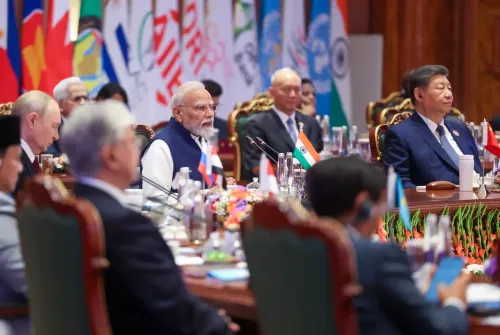
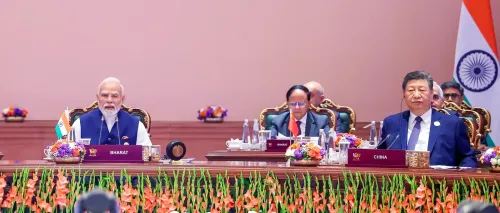
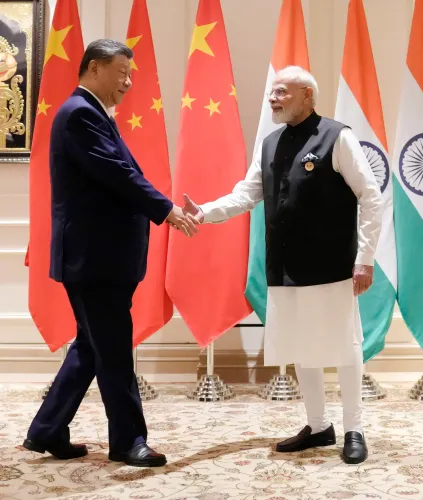
India's Ministry of External Affairs (MEA) Fact Check unit on Thursday, 17 September 2026 issued a public warning against a wave of misleading and malicious posts spreading across social media platforms, falsely claiming that several world leaders — including South African President Cyril Ramaphosa and Chinese President Xi Jinping — had fallen ill after attending the BRICS Summit in India. The MEA's official fact-checking handle took to X to caution users, stating: 'Misleading! We caution against such malicious posts on social media platforms.'
What the False Posts Claimed
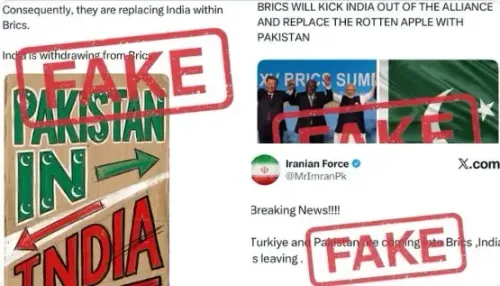
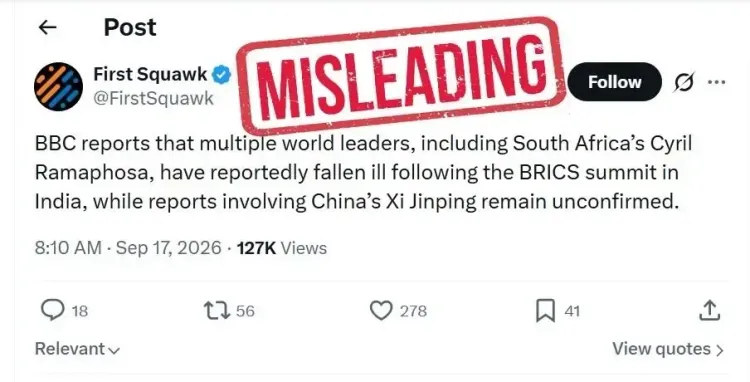
The viral disinformation wave included multiple posts on X, several of which falsely attributed their claims to BBC reporting. One post by an account called 'First Squawk' alleged: 'BBC reports that multiple world leaders, including South Africa's Cyril Ramaphosa, have reportedly fallen ill following the BRICS summit in India, while reports involving China's Xi Jinping remain unconfirmed.'
Another post from the account 'unusual_whales' echoed similar claims, again citing BBC without verified basis. A third post, from 'Raw Egg Nationalist', went further — sharing a video captioned as purported 'exclusive footage' of BRICS summit catering, and falsely implying that Xi Jinping and Ramaphosa had been killed. The MEA Fact Check handle flagged each of these posts individually as misleading.
Scope of the Disinformation Campaign
The MEA identified at least six separate posts as part of the coordinated misinformation spread. These included a post by user 'Dakkadakka' alleging food poisoning at a BRICS event in India, a post from the 'BRICS News' account on X claiming Ramaphosa had become ill, a post by 'Emmanuel Kimutai Motelin' stating multiple leaders had 'reportedly fallen ill', and a post by user 'Maverick' making crude insinuations about world leaders returning from India in poor health.
Notably, several posts specifically invoked India as the venue for the alleged illnesses — a framing that the MEA appeared particularly concerned about, given the potential for diplomatic reputational harm to India as a BRICS host.
Why the MEA Responded Publicly
India hosted the BRICS Summit, making the false illness claims directly damaging to the country's image as a safe and capable international host. Disinformation attributing health crises to a diplomatic event hosted in India could, critics note, be intended to undermine India's standing in multilateral forums. The MEA's decision to publicly catalogue and rebut each post individually reflects a more assertive approach to countering geopolitical disinformation online.
This comes amid growing concerns globally about coordinated inauthentic behaviour targeting major diplomatic summits. The speed at which the false BBC attribution spread also raises questions about how quickly unverified claims can piggyback on credible news brands to gain traction.
Official Position
The MEA Fact Check handle did not confirm any illness among any world leader attending the BRICS Summit. No official statement from the governments of South Africa or China corroborated the claims. As of the time of the warning, neither Ramaphosa's office nor Chinese state media had issued any communication suggesting the Chinese President was unwell. The MEA's blanket characterisation of all such posts as 'misleading' constitutes an official denial of the underlying claim.
With disinformation about major diplomatic events increasingly weaponised, India's proactive fact-check posture at the BRICS Summit could set a precedent for how host nations manage the information environment around future summits.
Point of View
Post-by-post rebuttal is not routine fact-checking — it is a defensive diplomatic communication exercise. When false narratives specifically frame India as the venue for foreign leaders' health crises, the reputational stakes extend beyond misinformation management into host-country credibility. What the mainstream coverage underplays is the BBC attribution angle: fabricated media sourcing is a known amplification tactic, and its appearance across multiple unconnected accounts in a short window warrants scrutiny beyond a single 'misleading' label. India's BRICS presidency and hosting ambitions make it a target for exactly this kind of summit-adjacent disinformation.
NationPress
17 Sept 2026
Frequently Asked Questions
What did MEA Fact Check say about the BRICS Summit illness claims?
MEA Fact Check on 17 September 2026 labelled multiple viral social media posts as 'misleading' and cautioned the public against sharing them. The posts falsely alleged that world leaders including South African President Cyril Ramaphosa and Chinese President Xi Jinping had fallen ill after attending the BRICS Summit in India.
Did any world leader actually fall ill at the BRICS Summit in India?
There is no official confirmation of any world leader falling ill at the BRICS Summit. Neither the South African government, Chinese state media, nor any other official source corroborated the claims. The MEA's blanket rebuttal constitutes an official denial.
Which social media posts did MEA Fact Check flag?
MEA Fact Check flagged at least six posts on X, from accounts including 'First Squawk', 'unusual_whales', 'Raw Egg Nationalist', 'Dakkadakka', 'BRICS News', 'Emmanuel Kimutai Motelin', and 'Maverick'. Several posts falsely attributed their claims to BBC reporting.
Why did the MEA respond so publicly to these social media posts?
India hosted the BRICS Summit, making false illness claims at the event directly damaging to India's reputation as a safe diplomatic host. The MEA's public response was aimed at countering geopolitical disinformation that could harm India's standing in multilateral forums.
Is it common for fake news to target major diplomatic summits?
Disinformation targeting major diplomatic events has become increasingly common globally, with false claims often using fabricated media attributions — such as a fake BBC citation — to gain rapid credibility. India's proactive fact-checking approach at the BRICS Summit reflects growing awareness of this threat.