CM Conrad Sangma witnesses Meghalaya-SBI MoU for govt staff
Synopsis
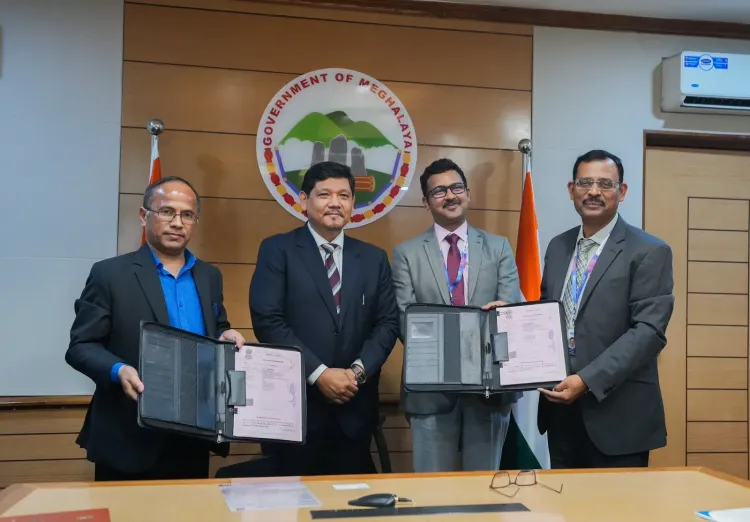
Meghalaya Chief Minister Conrad Sangma on 23 July 2026 witnessed the signing of a revised MoU between the state government and SBI for the State Government Salary Package, introducing enhanced insurance, concessional loans, digital banking upgrades, family benefits, and zero-balance salary accounts for thousands of state employees.
Key Takeaways
Conrad Sangma witnessed the signing of a revised Meghalaya–SBI MoU on 23 July 2026 for the State Government Salary Package.
The revised package includes improved insurance coverage , concessional loan facilities , and zero-balance salary accounts .
Upgraded digital banking services and family banking benefits have been added to the existing arrangement.
The agreement is designed to benefit thousands of government employees across Meghalaya's twelve districts.
The MoU continues a national pattern of state governments partnering with SBI to improve employee welfare without direct fiscal outlay.
Roll-out timelines for revised insurance limits and loan interest concessions are yet to be publicly disclosed.
Meghalaya Chief Minister Conrad Sangma on Thursday, 23 July 2026, witnessed the signing of a revised Memorandum of Understanding between the Government of Meghalaya and the State Bank of India (SBI) for the State Government Salary Package (SGSP), aimed at strengthening financial benefits for state government employees.
Context
The revised MoU updates an existing banking arrangement under which SBI manages salary accounts for Meghalaya's government workforce. Chief Minister Sangma described the agreement as 'reaffirming our commitment to the welfare of our Government employees,' signalling a deliberate policy push to improve compensation-linked financial services without additional direct fiscal burden on the state exchequer.
The revised package introduces a range of enhanced offerings: improved insurance coverage, concessional loan facilities, upgraded digital banking services, family banking benefits, and zero-balance salary accounts. Together, these are intended to deliver 'greater financial security and convenience for thousands of Government employees across the State,' as the Chief Minister stated in his post.
Policy Backdrop
The State Government Salary Package is a customised banking product offered by SBI to state governments across India, bundling salary disbursement with insurance, credit, and digital services. Such arrangements have been a feature of public sector banking since the mid-2010s, when the Government of India accelerated financial inclusion programmes, particularly in the Northeast.
Indian states regularly revise these MoUs to keep pace with evolving banking technology and employee expectations. Meghalaya's updated agreement fits a well-established pattern of leveraging India's largest public sector bank to extend credit access and reduce transaction costs for government servants — a model that avoids direct salary revision while improving effective take-home value.
SBI, as India's largest public sector lender, holds salary account relationships with state governments across all regions, giving it both the infrastructure and the risk appetite to offer concessional terms that private lenders typically do not extend to sub-national government payrolls.
Stakeholders and Impact
The primary beneficiaries are thousands of state government employees spread across Meghalaya's twelve districts. For many, particularly those posted in remote hill areas, zero-balance accounts and digital banking upgrades can meaningfully reduce travel costs and dependence on informal credit.
The family banking benefits component extends the package beyond the individual employee, potentially covering spouses and dependants under group insurance or linked account products. This broadens the welfare impact beyond the immediate payroll recipient, reinforcing the administration's stated goal of building an 'employee-friendly administration.'
For SBI, the revised MoU consolidates its institutional relationship with the Government of Meghalaya and deepens its retail banking footprint in a state where branch penetration in rural and tribal areas remains a strategic priority.
What's Next
The immediate focus will be on the roll-out timeline for the revised insurance limits and concessional loan interest rates, details of which were not disclosed in the Chief Minister's announcement. Observers will also watch whether Meghalaya announces parallel MoUs with other public sector or regional banks as part of a broader employee welfare strategy.
Chief Minister Conrad Sangma framed the agreement within the National People's Party-led government's larger governance agenda, invoking themes of #GoodGovernance, #EmployeeWelfare, and #FinancialInclusion. The revised SGSP is likely to serve as a reference point for future salary-linked welfare negotiations with other financial institutions in the state.
Point of View
The Conrad Sangma administration delivers visible employee benefits without straining state finances. This approach mirrors a broader Northeast governance trend where digital financial infrastructure is used as a substitute for direct expenditure. For the NPP-led government, the timing — mid-term in the legislative cycle — suggests a deliberate effort to consolidate support among the organised public sector workforce. The absence of specific benefit quantum figures, however, limits independent assessment of the package's actual value to employees.
NationPress
22 Oct 2026
Frequently Asked Questions
What is the Meghalaya SBI State Government Salary Package MoU?
It is a revised Memorandum of Understanding between the Government of Meghalaya and the State Bank of India that governs salary accounts for state government employees, bundling benefits such as insurance, concessional loans, digital banking, and family banking services under a single arrangement.
What new benefits does the revised Meghalaya SBI MoU include?
The revised agreement adds improved insurance coverage, concessional loan facilities, upgraded digital banking services, family banking benefits, and zero-balance salary accounts for Meghalaya's state government employees.
Who signed the Meghalaya SBI MoU in July 2026?
Chief Minister Conrad Sangma witnessed the signing between representatives of the Government of Meghalaya and the State Bank of India on 23 July 2026; the post does not name the individual signatories.
How many government employees benefit from the Meghalaya SBI salary package?
Chief Minister Sangma's statement refers to 'thousands of Government employees across the State,' though an exact figure was not disclosed in the announcement.
Why do Indian state governments sign MoUs with SBI for salary packages?
Such MoUs allow states to offer employees enhanced financial products — insurance, credit, and digital services — through India's largest public sector bank without incurring direct salary expenditure, making them a cost-effective welfare tool.