Mehbooba Mufti alleges Omar govt cleared Sheshnag BRO road
Synopsis
Mehbooba Mufti says Omar Abdullah’s Cabinet on 23 January 2026 extended a BRO Project Beacon MoU to clear a road to Sheshnag, a glacial lake on the Amarnath route. She was stopped from visiting a day earlier. BRO calls it post-Yatra work; the Mirwaiz and Congress have joined the protest, while the BJP calls it manufactured controversy.
Key Takeaways
Mehbooba Mufti alleged on Wednesday that the Omar Abdullah -led Cabinet on 23 January 2026 cleared a Sheshnag road by extending a BRO MoU with Project Beacon.
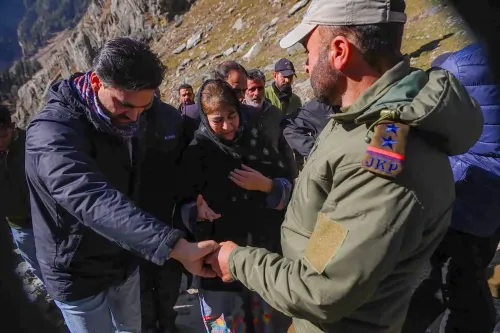
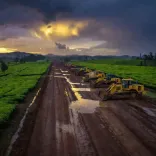
She was stopped on Tuesday from going to Sheshnag, where earth-moving machines have been reported on the Amarnath route.
BRO said it was doing post-Amarnath Yatra work in line with safety and environmental safeguards.
Mirwaiz Umar Farooq and JKPCC chief Tariq Hameed Karra questioned the activity; the Mirwaiz signed a petition and asked Abdullah to speak.
The Jammu and Kashmir BJP , through Girdhari Lal Raina , called the campaign an attempt to manufacture controversy around the pilgrimage.
Prof Muzaffar Ahmad demanded an expert committee visit the glacial lake in Anantnag and brief the public.
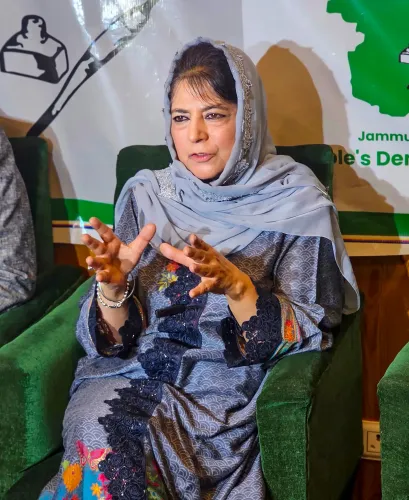
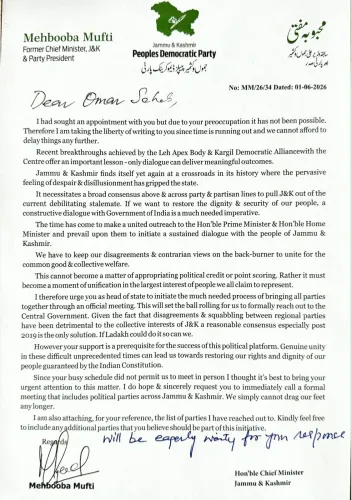
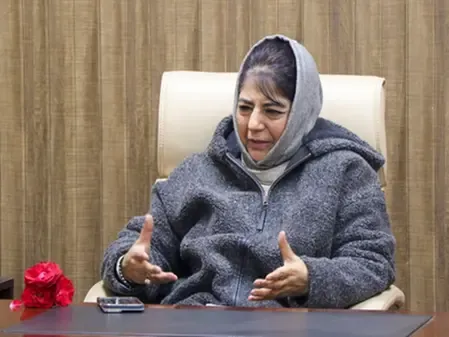
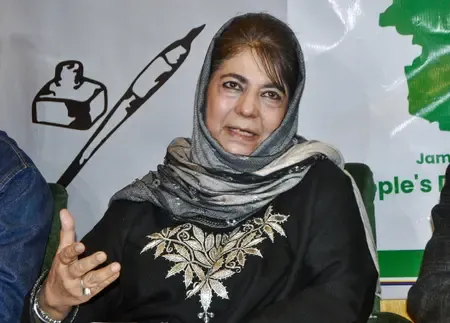
Former Jammu and Kashmir chief minister and Peoples Democratic Party (PDP) president Mehbooba Mufti on Wednesday alleged that the government headed by Chief Minister Omar Abdullah cleared a road through the Sheshnag area by extending a memorandum of understanding with the Border Roads Organisation (BRO). The charge, posted on X, follows her being stopped a day earlier from travelling to the glacial lake in Anantnag, where earth-moving machines have been reported laying a stretch towards the Amarnath cave shrine.
Mufti said the Omar Abdullah-led Cabinet on 23 January 2026 cleared the road to Sheshnag by extending the MoU with BRO’s Project Beacon. She called the work an assault on fragile ecology that put both the Sheshnag ecosystem and the Amarnath Yatra at risk, and demanded that the Chief Minister and the Tourism Department explain the clearance and withdraw it before irreversible damage was done.
What Mehbooba Mufti alleged
In her post on X, Mufti wrote: “Shockingly, on 23 January 2026, the Omar Abdullah-led Cabinet cleared the road to Sheshnag by extending the MoU with BRO’s Project Beacon. In the name of development, it is an assault on our fragile ecology, putting both the Sheshnag ecosystem and the Amarnath Yatra at risk. Will the Chief Minister and Tourism Department explain this MoU and the clearance granted? Will they withdraw it before irreversible damage is done?”
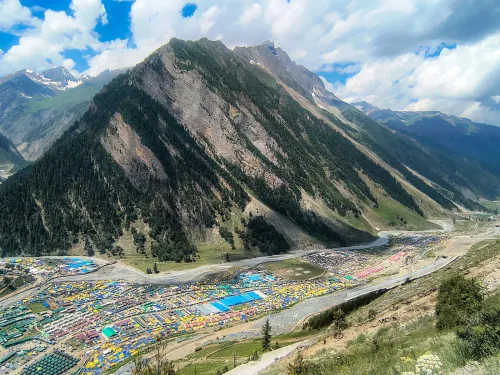
Sheshnag is a glacial lake in Anantnag district on the traditional high-altitude approach to the Amarnath cave. Ordinary residents, political leaders, religious preachers, social organisations and environment experts have raised concerns that construction could damage the lake and the alpine character of its surroundings. This comes amid a wider Kashmir debate over Himalayan road-building, glacier stress and the dual-use nature of BRO projects.
BRO’s position and the ground picture
The Border Roads Organisation said on Tuesday that it was carrying out post-Amarnath Yatra work in compliance with all safety norms and environmental safeguards. Those public remarks did not specifically confirm or deny a Cabinet-level MoU extension dated 23 January 2026.
Notably, Mufti was stopped from going to Sheshnag on Tuesday even as machines were reportedly operating on the route. Jammu and Kashmir Pradesh Congress Committee (JKPCC) chief Tariq Hameed Karra separately questioned the deployment of an excavator near the lake. The resulting confusion has left residents guessing about the exact scope of the reported road work in an ecologically sensitive Himalayan belt.
Clerical and political pushback
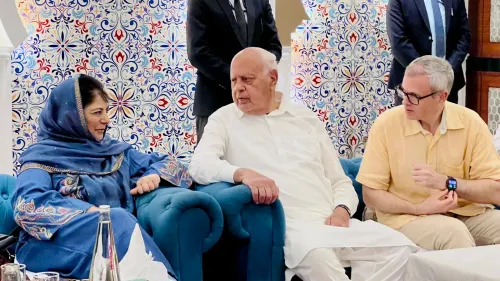
Kashmir’s chief cleric, Mirwaiz Umar Farooq, who also signed a petition against the activity, said: “We all have to collectively raise our voice to stop the mindless destruction of our ecology at its most fragile places.” He challenged Abdullah to speak as a public representative.
On X, the Mirwaiz asked: “Why is our Chief Minister @omarabdullah mute? As people’s elected representative, it is his duty to speak up and do the needful to ensure this plunder is stopped! I have signed this petition and urge all those who want to save Kashmir’s fragile ecology to do so.” This is among the more direct public rebukes Abdullah has faced from the Mirwaiz since taking office.
BJP’s counter and the demand for facts
The Jammu and Kashmir Bharatiya Janata Party (BJP) accused critics of selective environmental activism and said it would firmly oppose any move to communalise development, undermine the annual pilgrimage or disturb peace in the Valley. Party spokesperson and former MLC Girdhari Lal Raina said: “What is being projected as an environmental issue increasingly appears to be an attempt to manufacture controversy, disturb the peaceful atmosphere and exploit religious sentiments for narrow political gains.”
Retired college principal Prof Muzaffar Ahmad called for an expert visit. He said: “It is high time a committee of experts visited the area and later held a press conference to address the doubts and fears of the common man.” The clash of claims — a Cabinet MoU versus routine post-Yatra maintenance — has so far not been settled by a detailed official disclosure of the agreement, alignment or environmental clearances.
Why it matters and what happens next
Sheshnag sits on a pilgrimage corridor used by large numbers of Amarnath Yatris in a typical season, while also being a glacial waterbody in a warming Himalaya. Any road work there therefore sits at the intersection of faith, tourism, security logistics and ecology. The PDP, Congress and the Mirwaiz have framed the machines as a threat to the lake; the BJP has framed the protest as politics around a pilgrimage; BRO has framed the activity as regulated post-Yatra work.
What remains unanswered in public is whether the January 2026 Cabinet decision cited by Mufti exists in the form she described, what Project Beacon’s extended MoU actually authorises, and whether an independent ecological assessment preceded the excavators. Until the Chief Minister’s office and the Tourism Department put the MoU and clearances on record, people in Anantnag — and pilgrims who will return next Yatra season — will be left with competing political narratives rather than verified facts. Pressure is now on Abdullah to speak, and on BRO to show the safeguards it says it is following.
Point of View
Security infrastructure and a glacial ecology already under climate stress. Mehbooba’s charge that a January 2026 Cabinet extension of the BRO MoU quietly green-lit the work deserves a documented reply, not silence. Treating every ecological objection as communal politics, as the BJP has done, risks shutting down legitimate scrutiny of Himalayan construction. Publish the MoU, the safeguards BRO claims to follow, and an independent site assessment before earth-movers decide the fate of a glacial lake that also sits on the Amarnath route.
NationPress
25 Nov 2026
Frequently Asked Questions
What did Mehbooba Mufti allege about the Sheshnag road?
Mehbooba Mufti alleged that the Omar Abdullah-led Cabinet on 23 January 2026 cleared a road to Sheshnag by extending a MoU with BRO’s Project Beacon. She said the work threatened the glacial lake’s ecology and the Amarnath Yatra, and asked the Chief Minister and Tourism Department to explain and withdraw the clearance.
What has the Border Roads Organisation said about the Sheshnag work?
BRO said on Tuesday it was carrying out post-Amarnath Yatra work in compliance with all safety norms and environmental safeguards. It has not, in those public remarks, specifically confirmed or denied the Cabinet MoU extension cited by Mehbooba Mufti.
Why are leaders opposing construction near Sheshnag lake?
Political leaders, the Mirwaiz, social groups and environment experts say earth-moving near Sheshnag, a glacial lake in Anantnag on the Amarnath route, could damage the lake and its alpine surroundings. Mehbooba Mufti was stopped from visiting the site on Tuesday as machines were reportedly operating there.
What is the BJP’s stand on the Sheshnag controversy?
The Jammu and Kashmir BJP has accused critics of selective environmental activism and said it will oppose any attempt to communalise development, undermine the Amarnath Yatra or disturb peace. Spokesperson Girdhari Lal Raina called the campaign an attempt to manufacture controversy and exploit religious sentiments.
What do residents want the government to do next?
Retired college principal Prof Muzaffar Ahmad has asked for a committee of experts to visit Sheshnag and then hold a press conference to address public doubts. Opposition voices have also demanded that Chief Minister Omar Abdullah and the Tourism Department place the MoU and clearances on record.