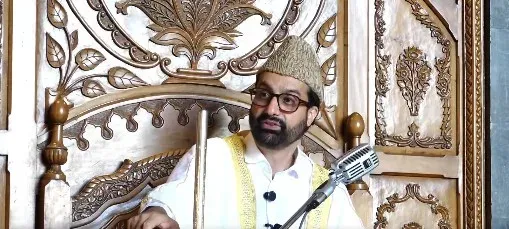
Mirwaiz Umar Farooq urges media responsibility at Srinagar Jama Masjid
Synopsis
At Srinagar's Central Jama Masjid, Mirwaiz Umar Farooq invoked a Prophetic saying on guardianship to argue that media — mainstream and social — carries a moral and spiritual responsibility it is increasingly failing to honour. A viral video of a minor child being used for social media engagement was his sharpest example of what irresponsible content looks like.
Key Takeaways
Mirwaiz Umar Farooq addressed the Friday congregation at Central Jama Masjid, Srinagar , calling for responsible media conduct.
He cited a Prophetic saying on guardianship to argue every individual — including media professionals — is accountable for their influence.
Mirwaiz warned that media driven by TRP, followers, or viewership without regard for impact 'can cause serious harm.' He raised concern over a viral video in which a minor child's impolite response was widely shared, calling it an example of using children as tools for engagement.
He appealed to journalists, content creators, and social media users to share content with wisdom, discretion, and moral responsibility.
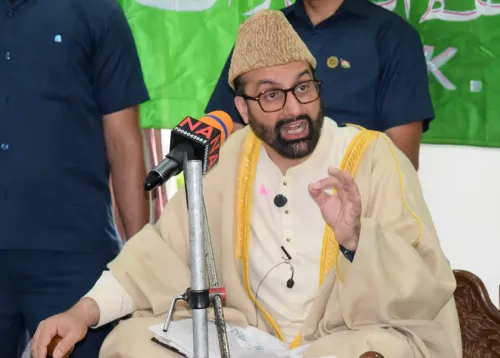
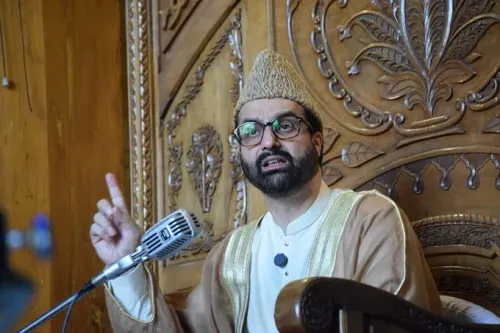
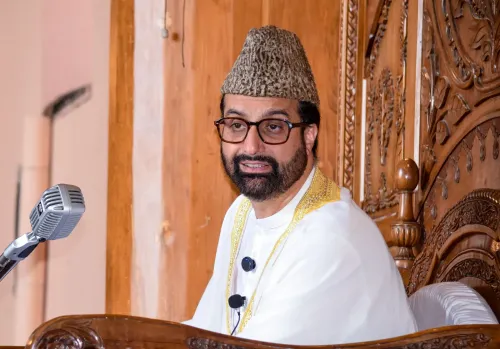
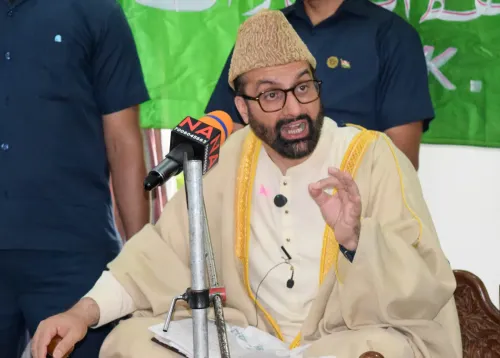
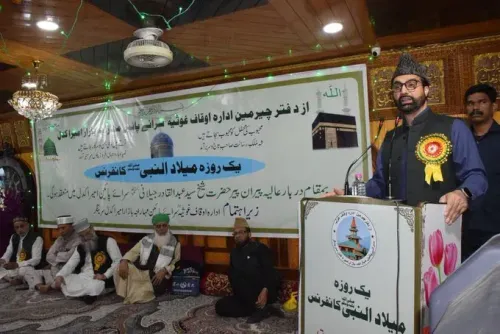
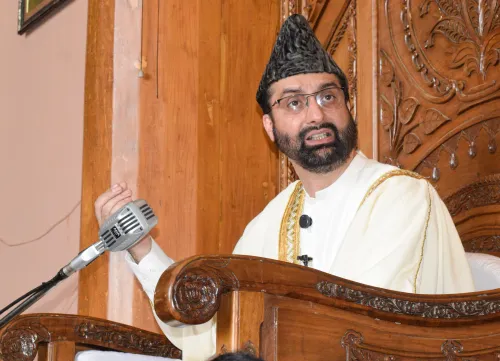
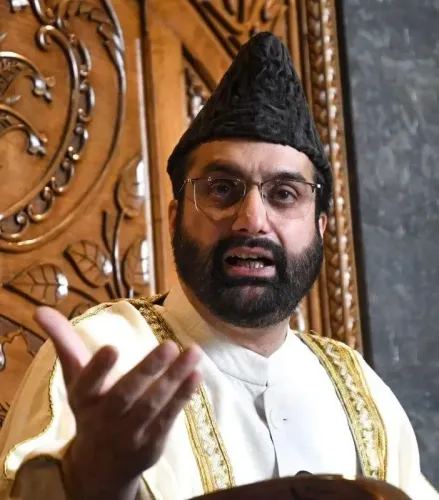
Mirwaiz Umar Farooq, the chief cleric and senior Kashmiri religious leader, on Friday, 4 July 2025, called on media professionals, content creators, and social media users to exercise responsibility, restraint, and moral accountability in their public conduct. He delivered the appeal during the weekly Friday congregation at the historic Central Jama Masjid in Srinagar.
The Core Message
Drawing on a Prophetic saying — 'Beware, every one of you is a guardian/shepherd, and every one of you will be questioned about those under his care' — Mirwaiz argued that accountability is universal. He extended this principle to parents, teachers, traders, leaders, public figures, and, notably, the media, which he described as a major force in shaping public opinion.
'When used with wisdom and responsibility, it informs and strengthens society,' he said of media and social media. 'However, when used only to gain followers, viewership or TRP, without considering its impact, it can cause serious harm.'
The Viral Video That Prompted Concern
Mirwaiz cited a specific recent incident to illustrate his concerns: a viral video in which a minor child was asked about heat and school holidays, and whose impolite response was widely aired and shared across platforms. He questioned whether children should be exposed to and used for public social media reactions without any understanding of the consequences.
'Children cannot be treated as tools for entertainment, publicity or social media engagement,' he said. He stressed that the questions asked of children and the content they are exposed to directly shape their thinking and values, calling them 'the future' of society.
Responsibility Before Society and God
The Mirwaiz directed his appeal specifically at those who hold cameras and microphones, reminding them that their responsibility extends beyond professional ethics — it is also a moral and spiritual obligation. 'Those who hold cameras and microphones must remember that they carry a responsibility before the society and before Allah,' he said.
He urged all stakeholders — from mainstream journalists to individual social media users — to share content with wisdom and discretion. Public discourse, he added, even in disagreement, should reflect maturity, respect, and moral responsibility so that children have worthy examples to follow.
Broader Significance
This comes amid growing national and global debate over the role of social media in amplifying harmful or irresponsible content, particularly content involving minors. Mirwaiz's remarks carry weight beyond the Valley, touching on a tension that regulators, platforms, and civil society across India are grappling with. Notably, the call for media accountability from a prominent religious platform underscores the cross-institutional nature of concerns around digital responsibility. The kind of society that emerges, Mirwaiz warned, will depend greatly on what people choose to watch, like, and share.
Point of View
And there is no binding framework preventing minors from being used as content subjects without consent. The fact that a senior religious figure in Kashmir is now addressing digital ethics from the pulpit reflects how deeply social media has penetrated public life even in conflict-sensitive regions. What mainstream coverage may miss is the implicit critique embedded in his TRP remark: it targets not just amateur creators but established news channels whose competitive pressures produce the same irresponsible output. The accountability he demands is one that neither regulation nor self-regulation has yet delivered.
NationPress
2 Oct 2026
Frequently Asked Questions
What did Mirwaiz Umar Farooq say about media responsibility?
Mirwaiz Umar Farooq called on media professionals and social media users to act with restraint, wisdom, and moral accountability. Speaking at Srinagar's Central Jama Masjid, he warned that media driven purely by TRP, followers, or viewership — without regard for its impact — can cause serious harm to society.
Why did Mirwaiz raise the issue of a viral video involving a child?
He cited a recent viral video in which a minor child's impolite response to a question about heat and school holidays was widely aired and shared. Mirwaiz used it as an example of how children are being used as tools for social media engagement without understanding the consequences for their development.
Where and when did Mirwaiz deliver this message?
Mirwaiz Umar Farooq delivered the message during the Friday congregation at the historic Central Jama Masjid in Srinagar on 4 July 2025.
Who did Mirwaiz hold responsible for shaping public discourse?
Mirwaiz extended the principle of moral accountability to parents, teachers, traders, leaders, public figures, journalists, content creators, and everyday social media users — arguing that every individual is a guardian answerable for their influence on others.
What was the religious basis for Mirwaiz's appeal?
He drew on a Prophetic saying — 'Beware, every one of you is a guardian/shepherd, and every one of you will be questioned about those under his care' — to ground his call for media accountability in Islamic ethical tradition.